A personal email newsletter is a founder super power

Email newsletters are a direct, personal way for founders to connect with their audience and drive growth. Unlike social media or blogs, newsletters land directly in inboxes, ensuring visibility and engagement. Here's why they're effective:
- High ROI: 86% of marketers report strong returns from email newsletters.
- Trust Building: Sharing personal stories and insights builds credibility and relationships.
- Direct Access: You own your email list, bypassing algorithms and distractions.
- Thought Leadership: 82% of decision-makers value thought leadership in choosing vendors.
- First-Party Data: Subscribers' interactions provide actionable insights for better targeting.
Focus on solving problems, sharing real stories, and delivering value - not just promotions. Consistency, clear messaging, and compliance with email rules are key. A founder-led newsletter isn't just marketing - it's a tool for trust, engagement, and growth.
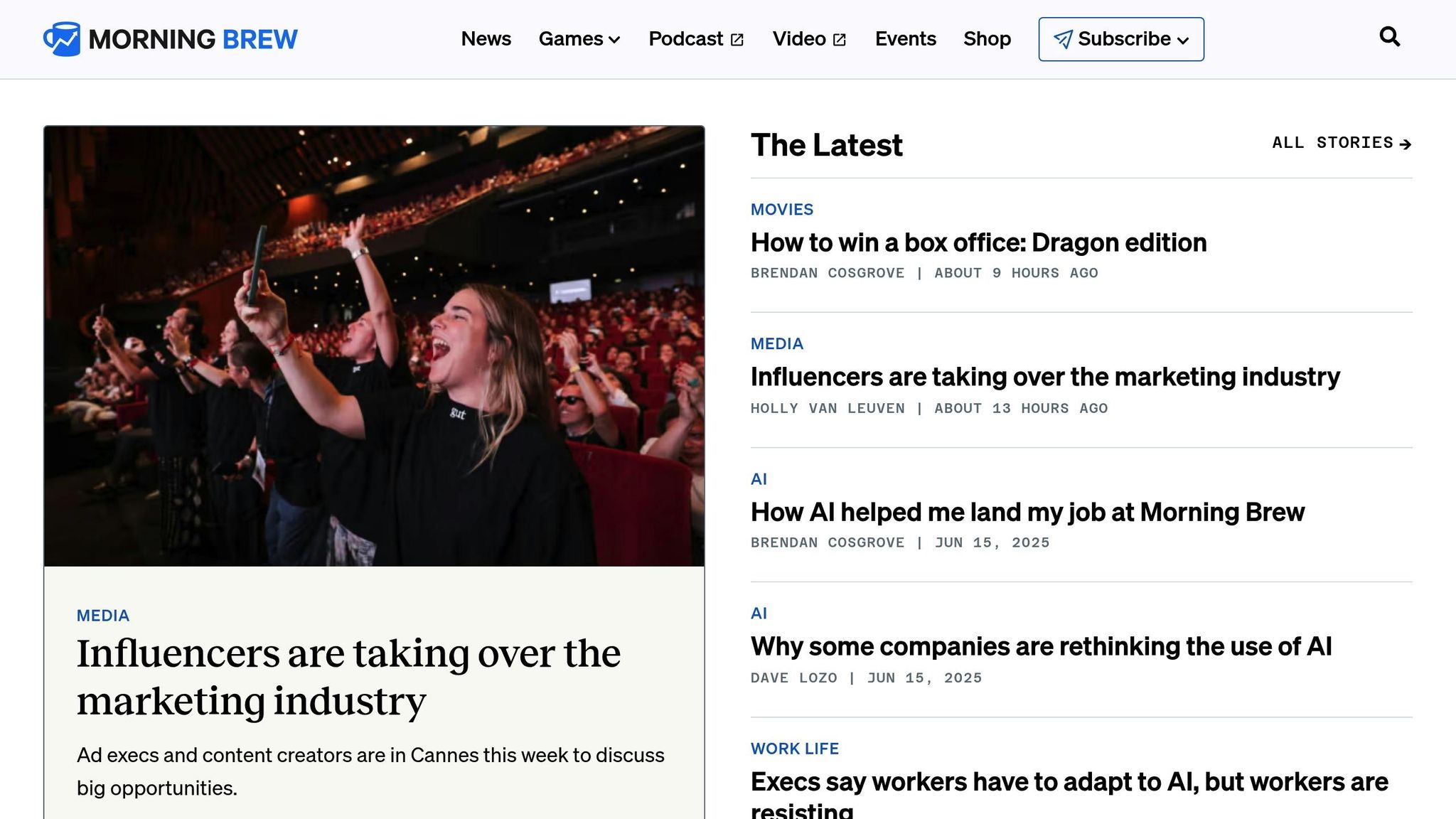
Morning Brew’s Alex Lieberman: How to Write Emails People Actually Want to Read
The Main Benefits of Founder-Led Email Newsletters
Founder-led newsletters offer unique advantages that other marketing channels simply can't replicate. Writing directly to your audience helps you build genuine relationships and provides consistent, measurable reach.
Direct Access to Your Audience
Newsletters give you a direct line to your audience - straight to their inbox. Unlike social media, where algorithms control visibility, or blog posts that rely on users actively searching, newsletters land exactly where your audience looks daily.
This direct access is a game-changer. By 2025, billions of emails will be exchanged every day, but your newsletter ensures your message reaches the right people without detours or distractions. Your insights go straight to your readers, cutting through the noise of other platforms.
What makes this even more powerful? Ownership. You control your email list. It’s your data, your audience, and your communication channel.
"Modern marketing is about building trust first. And people trust people way faster than they trust brands."
With this ownership comes predictability. You know exactly how many people receive your newsletter, who opens it, and who engages with it. This consistency allows you to plan campaigns, measure outcomes, and maintain meaningful connections with your audience - all while telling your story.
Building Trust Through Personal Stories
Trust is at the heart of every B2B relationship. In fact, 81% of buyers say trust is a key factor in purchasing decisions. This creates a huge opportunity for founders who are willing to share their personal stories.
Why do personal stories work so well? They humanize your brand. Sharing your journey - challenges, failures, and lessons learned - makes your communication relatable and authentic. And it works: 36% of consumers are more likely to engage with brands they trust.
The secret is to be real. Talk about the obstacles you've faced and the pivotal moments that shaped your business.
"Trust happens in a loop. You go first. You share something real - messy, uncertain, human. Your audience sees it. They relate. They lean in. They respond - by engaging, opening up, or simply trusting you more. The loop completes. Trust is built."
This personal approach sets you apart from the sterile, overly polished messaging many companies use. By being open and honest, you connect with decision-makers who are tired of generic sales pitches.
A great example of this is Patagonia. Through its email campaigns, the company shares its sustainability efforts, from fair labor practices to environmental initiatives. This transparency resonates with customers who care about ethical practices, strengthening their trust in the brand.
And while trust is invaluable, the data you collect from these interactions can drive your business forward.
First-Party Data for Business Growth
Every subscriber to your newsletter provides more than just an email address - they offer insights into your ideal customers, their interests, and how they interact with your content. This is the power of first-party data.
Unlike third-party data, which can be outdated or irrelevant, first-party data is both accurate and actionable. When someone subscribes to your newsletter, they’re signaling their interest in what you have to say. Their actions - opening emails, clicking links, or replying - give you a clear picture of their preferences and intent.
This data allows for highly targeted and personalized messaging. You can identify which topics spark the most engagement, which calls-to-action drive clicks, and which subscribers are most likely to convert. Considering that 77% of B2B buyers expect personalized content, this level of insight is a major advantage.
"First-party data is the best for ABM because it is the most accurate and relevant to your business. It lets you target your ideal clients with laser precision and personalize your marketing messages."
But it doesn’t stop there. First-party data helps you spot trends in your market - what topics resonate, what pain points your audience faces, and what solutions they’re searching for. This feedback informs everything from your marketing strategy to product development and sales.
Unlike purchased data, which can become outdated quickly, first-party data stays fresh because it’s built on ongoing interactions. Each email you send generates new insights, creating a feedback loop that continuously sharpens your marketing efforts over time.
How to Create Effective Newsletters
Sending out a newsletter to your B2B audience isn’t just about hitting "send." The best newsletters, especially those led by founders, combine strategic planning with genuine storytelling to deliver meaningful value.
Identify Your Target Audience and Their Challenges
Before crafting your first newsletter, take the time to understand your audience. B2B markets often target niche segments, and without proper research, you risk wasting time on the wrong contacts or irrelevant messaging. Start by defining your Ideal Customer Profile (ICP) using details like industry, company size, job roles, and specific pain points.
"I like to build ICPs based on pain points. This is the most important distinguishing factor when I look at our customer groups."
– Mike Sanchez, VP of Revenue at GrowthGenie
Competitor research can also help you uncover untapped niches or better understand how others engage their audiences. Dive into your website and social media analytics to spot new B2B groups already interacting with your content. And don’t underestimate the power of direct feedback - customer interviews and surveys can reveal valuable insights into what drives their challenges. Once you’ve nailed down your audience, focus on developing a unique founder voice to connect with them.
Develop Your Founder Voice and Message
Your newsletter should reflect a personality that’s distinct and relatable. Start by identifying your brand’s core values and tone, ensuring it strikes the right balance between being genuine and professional for B2B readers. Storytelling is a powerful tool - share industry insights, trends, and lessons learned while backing them up with data. This approach not only builds trust but also keeps your audience engaged. Creating a style guide can ensure your voice stays consistent as your newsletter evolves.
Provide Content That Solves Problems
The best B2B newsletters focus on delivering value directly within the email, rather than pushing for conversions. Keep your content concise - emails with 50 to 125 words often see response rates above 50%. Use clear headers, short paragraphs, and visuals to make your content easy to skim.
Address your audience’s specific challenges head-on, offering practical solutions to the issues that keep them up at night.
"The difference between email marketing and [B2B] newsletters is really a difference between performance marketing and content marketing."
Incorporate a mix of content types, such as:
- Industry insights with your unique perspective
- Case studies from your experience (while respecting confidentiality)
- Market trends and predictions
- Actionable tips your readers can use right away
- Behind-the-scenes stories from running your business
Consistency in your messaging and timing is the next step to building trust.
Set a Consistent Schedule and Manage Expectations
Consistency is key to staying top-of-mind. Over 60% of customers prefer receiving weekly emails from the brands they follow. Choose a schedule you can realistically maintain and be transparent about what your audience can expect in terms of content and frequency. This builds trust and helps reduce unsubscribes.
Use a content calendar to plan ahead, tying your topics to industry events, seasonal trends, or key business milestones. Each email should have a clear purpose - whether it’s nurturing relationships, showcasing your expertise, or gently moving prospects through the sales funnel. A well-thought-out schedule reinforces trust and keeps your audience engaged.
Stay Compliant with US Email Rules
Following email compliance rules isn’t just about avoiding legal trouble - it’s about building trust and maintaining a solid sender reputation. In the U.S., follow the CAN-SPAM Act by:
- Using opt-in methods for subscriptions to ensure genuine engagement.
- Including a clear unsubscribe option in every email and honoring requests quickly.
- Adding your real business address in the email footer for credibility.
- Writing honest subject lines that accurately reflect the content.
- Keeping records of how subscribers opted in, so you’re prepared for any disputes.
sbb-itb-9354cf2
Tools to Make Newsletter Creation Easier
Once your newsletter strategy is in place, the right tools can simplify the process and make it more efficient. With tools that support direct communication and personalized storytelling, you can ensure smooth execution and better results.
Boost Content Strategy and Lead Generation with RevBoss
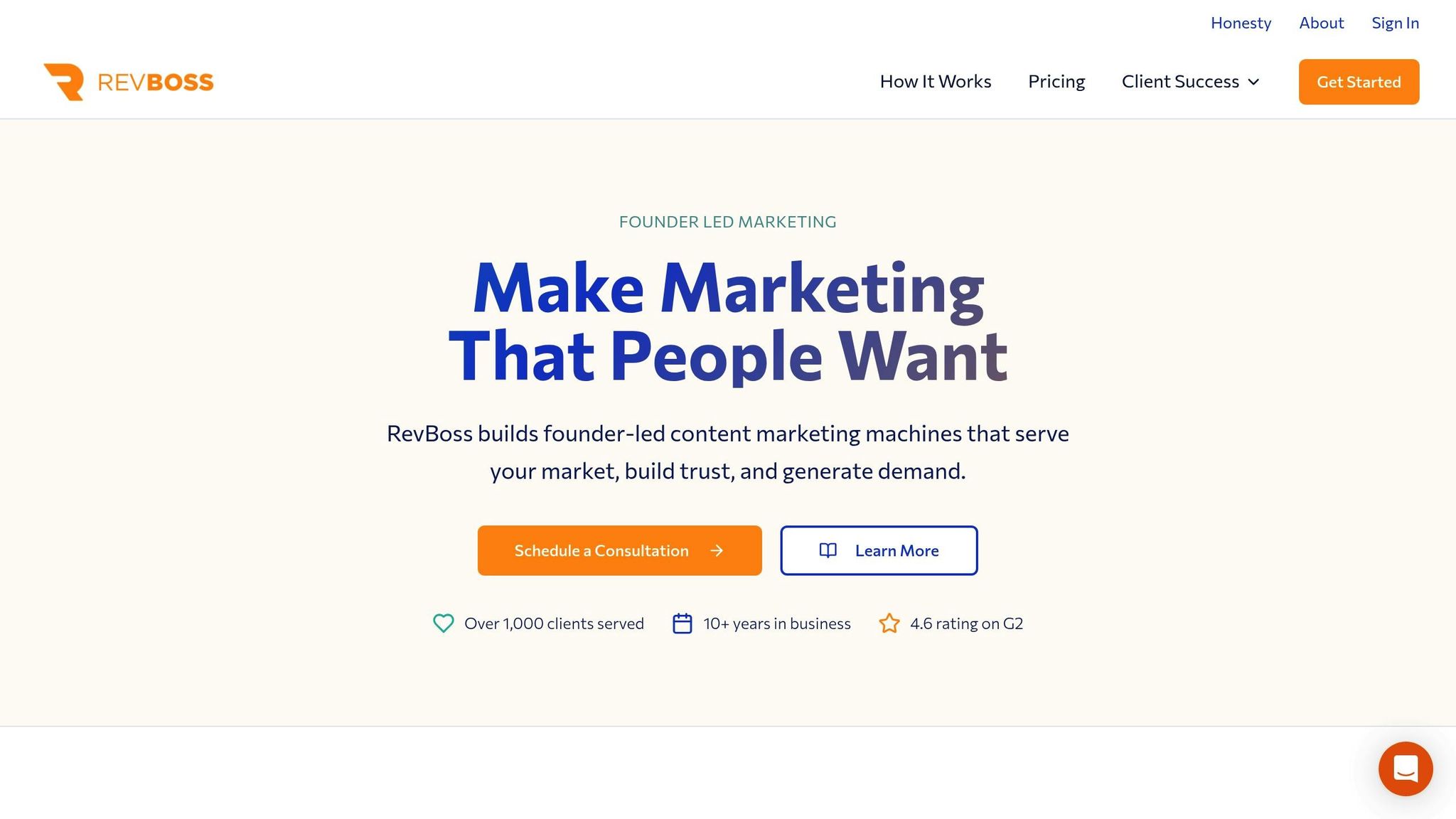
RevBoss specializes in turning founder-led marketing into a powerful lead-generation machine by managing your entire content ecosystem.
This platform helps craft tailored content strategies that establish a consistent founder voice across multiple channels. Their LinkedIn audience growth campaigns align with your newsletter efforts, helping you build a qualified subscriber base even before sending your first email.
What makes RevBoss stand out is its focus on activation campaigns rooted in personal branding. Instead of relying on generic email blasts, they help you create workflows that leverage your unique founder story and expertise. Your newsletter becomes part of a larger system that incorporates LinkedIn outreach, SEO-driven content, and targeted campaigns - designed to convert subscribers into leads.
RevBoss also handles onboarding efficiently, managing your content and audience needs while allowing you to retain your personal touch in the process.
Simplify with Email Marketing Platforms
Email marketing platforms provide the automation and personalization tools needed to scale newsletters without losing their human touch. Personalized emails have been shown to increase open rates by 29%, boost click-through rates by 41%, and drive six times more transactions.
When selecting a platform, look for features like personalization, automation workflows, detailed analytics, and integration options. These tools also ensure compliance with regulations like GDPR and CAN-SPAM while using AI to enhance audience segmentation and content optimization.
Before committing to a platform, define your email marketing goals and take advantage of free trials. Research user reviews and case studies to gauge real-world performance. Choose a platform that can handle growing email volumes as your audience expands.
With the right platform, you can automate tasks, personalize content, and analyze performance - all while maintaining compliance. This investment pays off, as email marketing generates strong returns when planned and executed effectively.
Leverage Analytics for Better Results
Data-driven insights are essential for improving newsletter performance. Metrics like open rates, click-through rates, and engagement levels can guide your strategy.
Focus on key metrics tied to your goals. For example, open rates can reveal which subject lines resonate most, while bounce and unsubscribe rates can help you improve your email list quality. Advanced analytics can also provide a deeper understanding of list health, including growth rates and engagement patterns. In fact, marketers who used segmentation in 2020 saw a 760% increase in revenue.
To optimize performance, use A/B testing to refine subject lines, design, and calls-to-action (CTAs). Experiment with send times, content formats, and personalization techniques to discover what works best for your audience. Automated processes can manage hard and soft bounces, ensuring your emails consistently reach inboxes.
"The most underrated email marketing metric is spam rate/FBL complaints because it gives an idea about how many people are marking the emails as spam and how relevant or irrelevant your email campaign was for your users."
Exit surveys can also provide valuable feedback from unsubscribers, helping you fine-tune your content and targeting for future campaigns. Email marketing offers an impressive return on investment, making analytics a crucial part of your strategy.
Key benchmarks to monitor include bounce rates under 1%, deliverability rates above 80%, spam rates below 1%, and unsubscribe rates under 0.3%. While these benchmarks vary by industry, establishing your own baseline and striving for continuous improvement is essential.
How to Measure Success and Improve Results
Tracking the right metrics is essential to directly improving business outcomes. Email marketing, for instance, boasts an impressive average return on investment of $25.80 for every dollar spent. Even more striking, 8% of companies attribute over half of their total revenue to newsletters. These figures highlight the power of a strong, founder-led content strategy to build authority and generate leads. Let’s dive into the key metrics that can drive your success.
Track Important Performance Metrics
The foundation of a successful newsletter lies in consistently monitoring metrics that align with your business goals. Start with open rates, which measure how compelling your subject lines are and whether your audience sees value in your content. For media and publishing companies, the average open rate is around 34%.
Next, consider click-through rates (CTR), an indicator of how engaging your content is. The average click-to-open rate stands at 9%. As Erin Aguilar, Senior Customer Success Manager at Klaviyo, explains:
"Click rate is a true indicator of customer engagement."
The conversion rate is arguably the most critical metric, as it shows how effectively your newsletter drives specific actions, whether that’s booking demos, downloading resources, or making purchases.
Another vital metric is the unsubscribe rate. A low rate signals strong audience retention, while a spike might mean it’s time to rethink your content strategy or adjust your sending frequency.
Finally, revenue per recipient (RPR) provides a direct measure of your newsletter's financial impact. Randy McHugh, Founder of Stimulate Agency, highlights the importance of segmentation in improving RPR:
"The best way to optimize email revenue per recipient is by refining your segmentation strategy."
Optimize Content with A/B Testing
A/B testing takes the guesswork out of your email strategy, allowing you to make data-backed decisions by comparing two versions of your newsletter. This method helps refine elements like subject lines and calls to action based on performance metrics.
Subject line testing often delivers the greatest improvements. Research shows that subject lines between 61-70 characters can boost open rates by over 14%. Experiment with different tones, emojis, and personalization techniques to see what resonates most with your audience.
Similarly, call-to-action (CTA) optimization can have a significant impact. Using buttons instead of text links for CTAs has been shown to increase click-through rates by 27%. Test various button colors, placements, and wording to find the most effective combination.
Even small tweaks can make a noticeable difference. For example, HubSpot tested personalized sender names against generic company names and achieved a 0.53% higher open rate and a 0.23% higher click-through rate, leading to 131 additional leads. Despite the potential, 39% of brands don’t test their broadcast or segmented emails, missing key opportunities to improve performance.
Use Feedback and Data to Improve Your Approach
Metrics are essential, but audience feedback offers insights that numbers alone can’t provide. Surveys and polls included in your newsletter can create a meaningful dialogue with subscribers. Ephraim Gopin from Your Daily Dose of Nonprofit newsletter puts it best:
"Feedback is gold."
Anonymous surveys encourage honest responses and typically see higher participation rates. Keep them concise and focused, and let your audience know how their input will be used.
Feedback also enables segmentation, helping you tailor content to different audience groups. Rose-Marie Clément, a Content Strategist and Email Marketing Specialist at Novatize, advises:
"Segment people as much as you can. Make the email content mean something to them. Make them see themselves in your content."
Tracking first-party data - such as which topics spark the most engagement or the questions subscribers ask - can offer valuable insights for refining your product, sales approach, and overall strategy.
Customer feedback often reflects broader trends. As Immad Akhund, CEO and Co-founder of Mercury, explains:
"By the time something becomes frustrating or annoying enough to a customer that they message you, it's usually a signal that there are 10 more customers dealing with that same issue who haven't messaged you yet."
Closing the loop by acknowledging feedback and sharing how it has influenced your strategy not only strengthens relationships but also encourages continued engagement with your newsletter.
Conclusion: Build Your Brand and Drive Growth
A personal email newsletter gives you a direct way to build meaningful business relationships while establishing yourself as a go-to expert in your industry.
Here’s what the numbers tell us: founders who use newsletters often see faster decision-making, and 64% of marketing executives prioritize strategies rooted in data. This highlights the edge you gain when you embrace newsletter marketing as part of your toolkit.
Consistency is key to building trust. Setting up clear brand guidelines, using reusable templates, and batching your content can make it easier to stay on schedule without feeling overwhelmed. Plus, email marketing consistently beats social media when it comes to driving sales. It gives you full control over your messaging and audience, creating a reliable rhythm that supports clear, growth-focused strategies.
Focus on solving your audience’s challenges, fine-tune your founder voice through data and testing, and use feedback from subscribers to keep improving. Think of your newsletter as your ultimate tool for driving success. It’s not a “set it and forget it” strategy - it requires regular analysis, learning, and tweaking. By taking action based on what you learn, you can turn insights into real growth.
In a world where only 30% of consumers say they trust companies, your newsletter can help bridge that gap. It brings a human touch to your business, making your outreach more personal and relatable. Your consistent communication and authentic voice can set you apart in today’s crowded marketplace.
Take advantage of this powerful tool to grow your business and build lasting connections.
FAQs
How can founders use personal stories in their email newsletters to build trust with their audience?
Founders can establish trust by weaving personal stories into their communication. Sharing experiences - whether they’re about overcoming challenges, celebrating wins, or learning tough lessons - creates a genuine connection with the audience. These glimpses into their journey not only make them feel more approachable but also showcase their values, which naturally builds trust.
Incorporating storytelling into newsletters can also make them far more engaging and memorable. When founders are consistent and transparent with their narratives, it solidifies their credibility and strengthens relationships. Over time, this approach helps position them as a reliable voice, boosting both audience loyalty and engagement.
How can I stay compliant with email marketing laws while keeping my audience engaged?
To align with U.S. email marketing laws and keep your audience engaged, always secure clear consent from recipients before sending emails. Implement a double opt-in process to verify subscriptions, and make sure every email includes a straightforward and visible unsubscribe link. Use accurate sender details and avoid misleading subject lines to maintain trust and ensure compliance.
For better engagement, focus on segmenting your audience to deliver more targeted messages, and personalize your content to make it more relevant to each recipient. Timing matters too - optimize your send times to improve open rates. Lastly, craft subject lines that grab attention and encourage clicks. By combining compliance with thoughtful, tailored content, you can build trust and strengthen relationships with your audience.
How can founders use first-party data from their email newsletters to boost business growth and improve marketing strategies?
First-party data collected from email newsletters is an invaluable tool for boosting business growth and fine-tuning marketing efforts. By diving into this data, businesses can craft personalized, targeted campaigns that truly connect with their audience, driving stronger engagement and improving conversion rates.
It also opens the door to audience segmentation, allowing businesses to group subscribers based on behaviors, preferences, or purchase history. This means more tailored messaging, which enhances the overall customer experience. Beyond that, these insights can help refine strategies, measure ROI, and strengthen customer relationships - leading to increased loyalty and long-term growth.