We'll orchestrate an integrated process that builds your audience and drives demand.
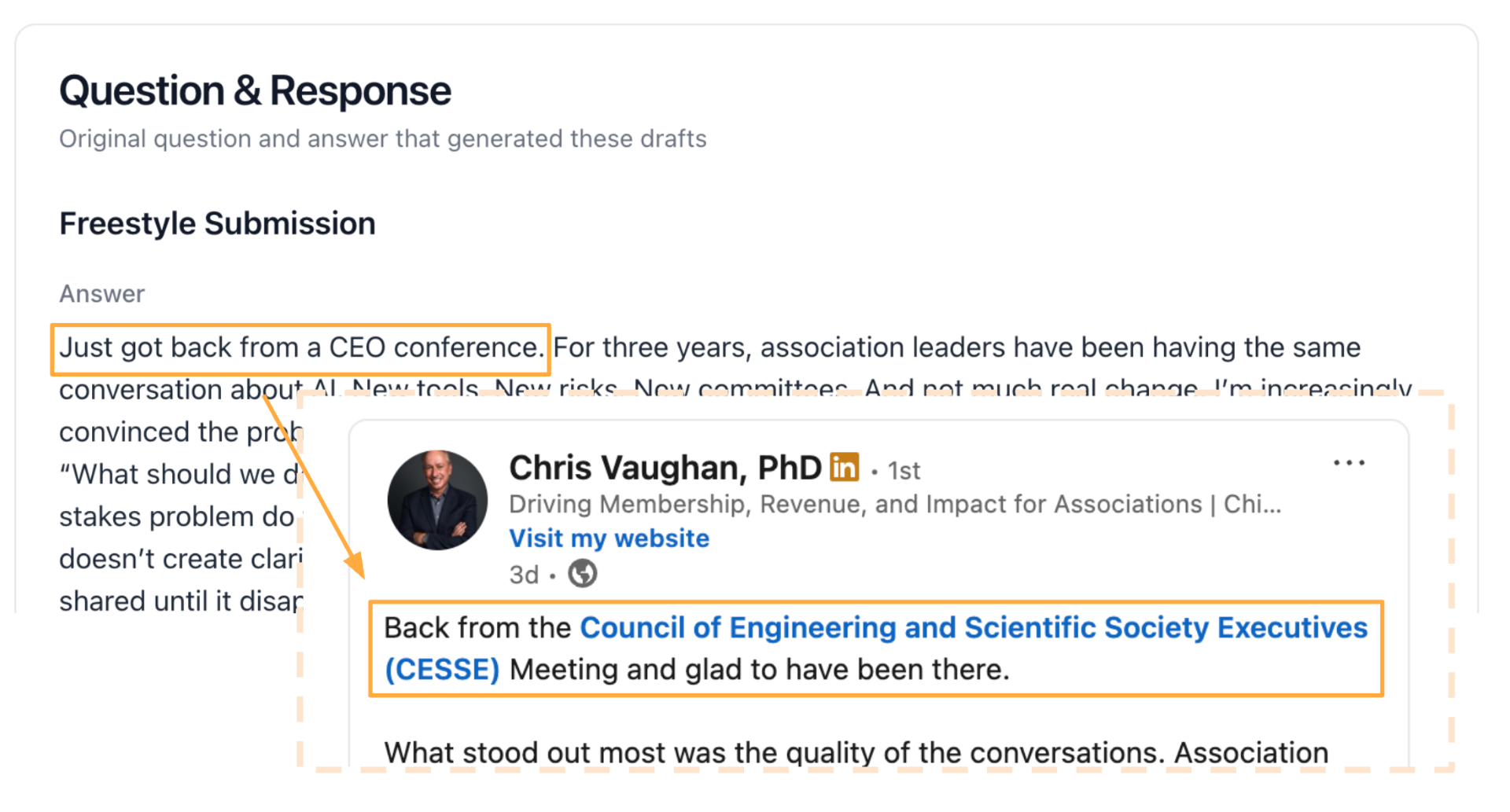
We make it easy to transform your expertise and personal narrative into trust-building LinkedIn content. The process is simple -- just talk to our team and respond to the prompts emailed by our Content Agent. We'll handle the rest and send drafts for your approval.

We'll increase the depth and quality of your LinkedIn audience by targeting existing connections (current clients, old leads) and new prospects that match your ICP.
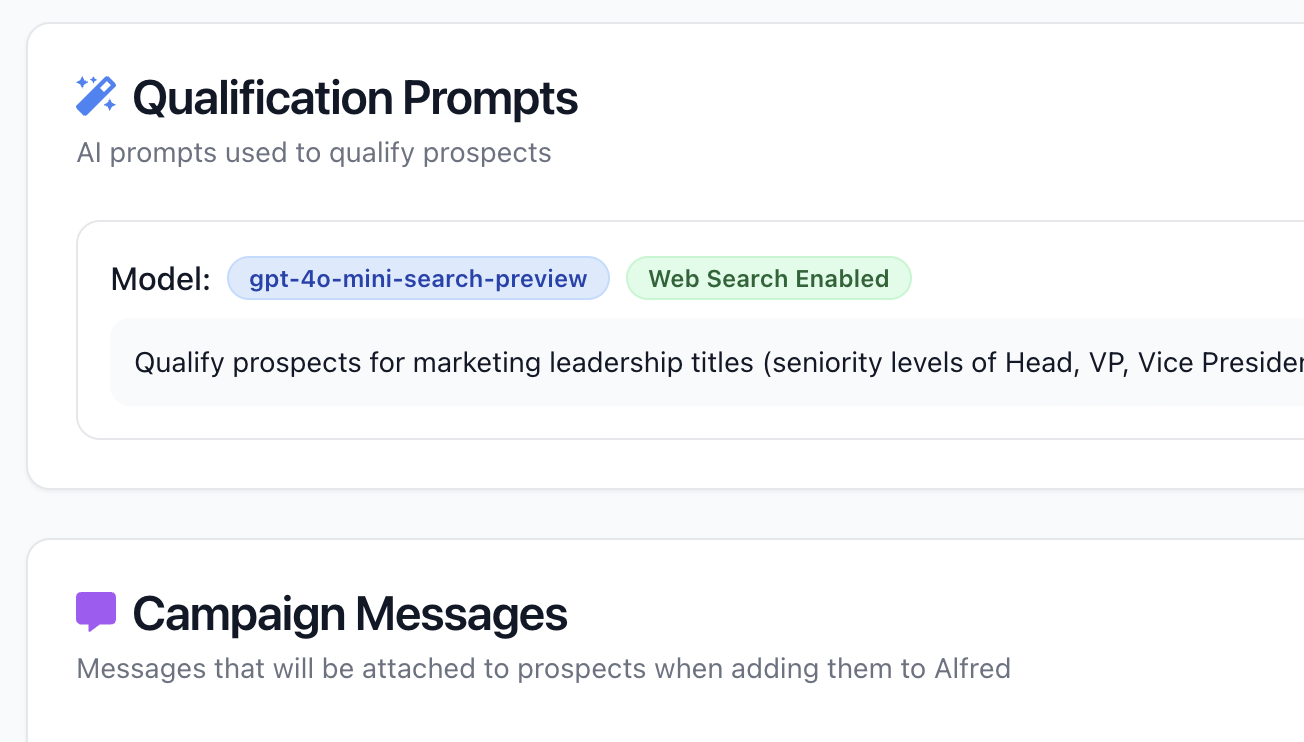
The audience we build through our content and connections becomes our target market. We'll create campaigns (email and DM) that target your ICP with context and "easy yes" messaging that will drive engagement and conversations.

The RevBoss platform ties it all together with integrations, agents, and reporting. It keeps our process organized and emails you each week with what you need to know and what you need to do.

We offer a number of extensions to our core process, including done-for-you email newsletters and event attendee acquisition programs that integrate with our content and campaign process. Just ask our team if it's the right fit.
We'll build a demand generation system that we'll operate and optimize together.
Get to know you; set the workflow, tools, and cadence.
Define your archetype / voice, set our v1 content plan.
Clarify who you're for and what they care about; start prospecting.
Turn the insights into a 90-day content + campaign plan.
Content, connections, and campaigns running, weekly production and reporting.
It takes time to develop an audience and build influence. And it takes even longer for that audience to turn into leads and referrals. But you'll know when you're on the right track.
You're generating high-quality, high-trust content that reflects your story.
You're growing a LinkedIn audience that is full of ICP-match connections.
You're getting impressions, likes, and comments from your ICP that build trust.
You're hearing customers and leads say how much they like your content.
Your inbox and sales pipeline are filling up with more leads and referrals.
You have more time to focus on serving your clients and building your business.
Think of the game as getting the fish a little closer to the boat. We build familiarity with your audience first, so when we reach out, they already half-recognize you and there's a relationship to build on.
Three things work together. We turn your expertise into two to three LinkedIn posts per week and a twice-monthly email newsletter. We build your LinkedIn audience from current customers, past customers, dead leads, and lookalikes of your ICP. We run engagement campaigns that turn that warm familiarity into conversations.
The audience is the asset. The content fills it. The campaigns convert it.
We were an outbound email agency for our first ten years, and we still run that motion through a sister entity. We're not bashing the channel.
The difference is the starting position. Cold email walks in cold: 'Hi, you've never heard of me, what do you think about RevBoss?' The audience approach builds familiarity first through newsletter content, LinkedIn connection, and content engagement. By the time we message someone directly, there's context and a much higher conversion rate. It's a lower-volume play and it takes patience, but it works in categories where cold outreach has gotten too noisy.
About an hour every other week, plus four hours of onboarding up front (which can run in a single week or spread out).
The ongoing input is a twice-monthly content call. It's basically an interview: how's it going, who'd you talk to this week, what came up. Our research agent also surfaces news articles and posts to react to. You reply with a quick 'agree' or 'disagree, here's why' and we turn that into content.
If you have sales or customer call transcripts (Granola, Fathom, Gong), hand those to us and we'll mine them for content. That's the most passive way to feed the system.
We do all of it. You don't write anything.
Onboarding goes deep on you, your customers, and what they care about. By the end you have a 90-day content and campaign plan we're executing against.
From there it's recursive. Everything goes to you for approval before it publishes. Some clients approve in 60 seconds, others edit every character. If you tell us 'don't say it that way,' we stop saying it that way. The system learns.
We start with the people most likely to convert next: current customers, old customers, dead leads. From there we use your ICP to find lookalikes and send connection requests to that audience.
When someone accepts, LinkedIn's algorithm puts you in their feed for several days. A few days later, we send a light intro: 'Appreciate the connect, I write a newsletter about [your topic], would love to have you in the community.' A surprising number say yes.
It's a slow drip that compounds into an audience asset you couldn't have bought.
Through engagement campaigns we build for you and run to your audience.
Campaigns take many forms. One client gives away something valuable for free. Another routes everything through their conference and event schedule ('I'm in your city next month, let's grab coffee'). The simplest play: 'Hey, I've seen you engaging with my content. What made you comment on that post?'
Campaigns work because they engineer context and relationship at scale, which converts much better than interruption outreach. We design and approve each campaign together, run it through your LinkedIn, and you get a Monday summary email with responses, comments, and anything that needs your attention.
Both, depending on the situation. We see and track everything that comes in.
For real campaign responses (the good ones, the prospect ones), you'll usually want to respond personally. You know more than we do and the timing matters. Same for comments on posts. We coach you and set up notifications when something needs you.
The Monday summary email covers everything: responses, good comments, engagement worth attention. Nothing gets missed.
Onboarding takes a couple of weeks. The first real meetings and calendar activity usually show up in the 60-90 day window.
It's not magic. We don't promise leads in week two. You can cancel after 30 days, but most clients don't, because by then there's enough motion to see where things are going. The deal we ask for is a month-to-month contract with a 90-day plan we agree to execute together. After that, you decide whether to keep going.
Programs start at $3,500/month for the Core System (content, connections, campaigns) and $4,500+/month for the Full Stack System (adds email newsletters, email outreach, and custom content). All month-to-month.
Included: LinkedIn posts, audience-building motions, engagement campaigns, bi-monthly strategy calls, and access to the RevBoss platform. Onboarding (four hours of working sessions plus a 90-day plan) is included. A few software tools need OAuth connections, all covered in the price.
Founders, CEOs, and execs at B2B SaaS or services companies willing to be the face of the brand and willing to show up once or twice a month for a working session.
The narrower the niche, the better. Companies serving a very specific vertical, role, or use case do unusually well here because the audience is easier to identify, the content has natural specificity, and relationship signals are stronger. 'We sell to ophthalmology practices in the southeast' is much easier to work with than 'we sell to all SMBs.'
It also fits companies where pipeline currently comes from referrals and word-of-mouth and needs a more predictable system, or where the existing GTM motion is producing less than it used to.
Generic, commodity offerings where the work could be done by hundreds of other vendors. A generic offshore dev shop is a hard fit because the market is too noisy and the messaging too generic. An offshore dev shop focused specifically on Salesforce implementation for nonprofits is a great fit. That kind of specificity gives us something to work with.
Anyone expecting immediate results. We're not a microwave, and RevBoss cooks low and slow. The compounding starts in the 60-90 day window and gets meaningfully better from there. If you need leads in week two, this isn't the program.
That's a familiar starting point for us.
With minimal existing marketing, we build the foundation: content, audience, newsletter, campaigns. Once those are running, layering on events, ads, or outbound is much easier because there's an audience and a narrative to plug into.
With substantial existing marketing, the playbook shifts to amplification. We connect to your existing motion and make it work harder.
The first 30 days of onboarding figures out which version of the program fits your situation.
Yes, and these are some of our best engagements.
We run programs with full leadership teams: CEO plus VPs, founder plus head of sales, and similar setups. Different people carry different parts of the brand narrative, focus on different ICP verticals or segments, and we coordinate the campaigns across all of them.
The math gets interesting. Three people producing in isolation gives you 1+1+1=3. Three people coordinated under one strategic program, cross-pollinating messaging and campaigns, ends up being meaningfully bigger than 3. Audiences overlap. Engagement compounds. Campaigns reinforce each other across executives.
Starting with one person and adding others over time is also common. The program scales up cleanly.