Executive-Led Visibility That Supports Campaigns, Not Random Posting

Most executives misuse LinkedIn by posting randomly without aligning their content with marketing goals. This approach wastes opportunities to engage audiences and drive results. Here's the deal: Executives who treat LinkedIn like a strategic media channel - aligned with campaign objectives - see higher engagement, build trust with decision-makers, and influence pipeline growth.
Key Takeaways:
- Executive posts get 3x more engagement than company pages.
- 77% of B2B buyers prefer companies where leadership is active on social media.
- 87% of decision-makers research executives online before meetings.
- Random posting confuses audiences and weakens credibility.
- Aligning posts with campaigns shortens sales cycles and builds trust.
Quick Fix:
- Treat LinkedIn like a media channel - plan posts around campaign goals.
- Focus on 3-5 core themes that support your messaging.
- Use tools or services like RevBoss to streamline content creation and audience growth.
Bottom line: Visibility isn’t about posting more - it’s about posting smarter to drive real business outcomes.
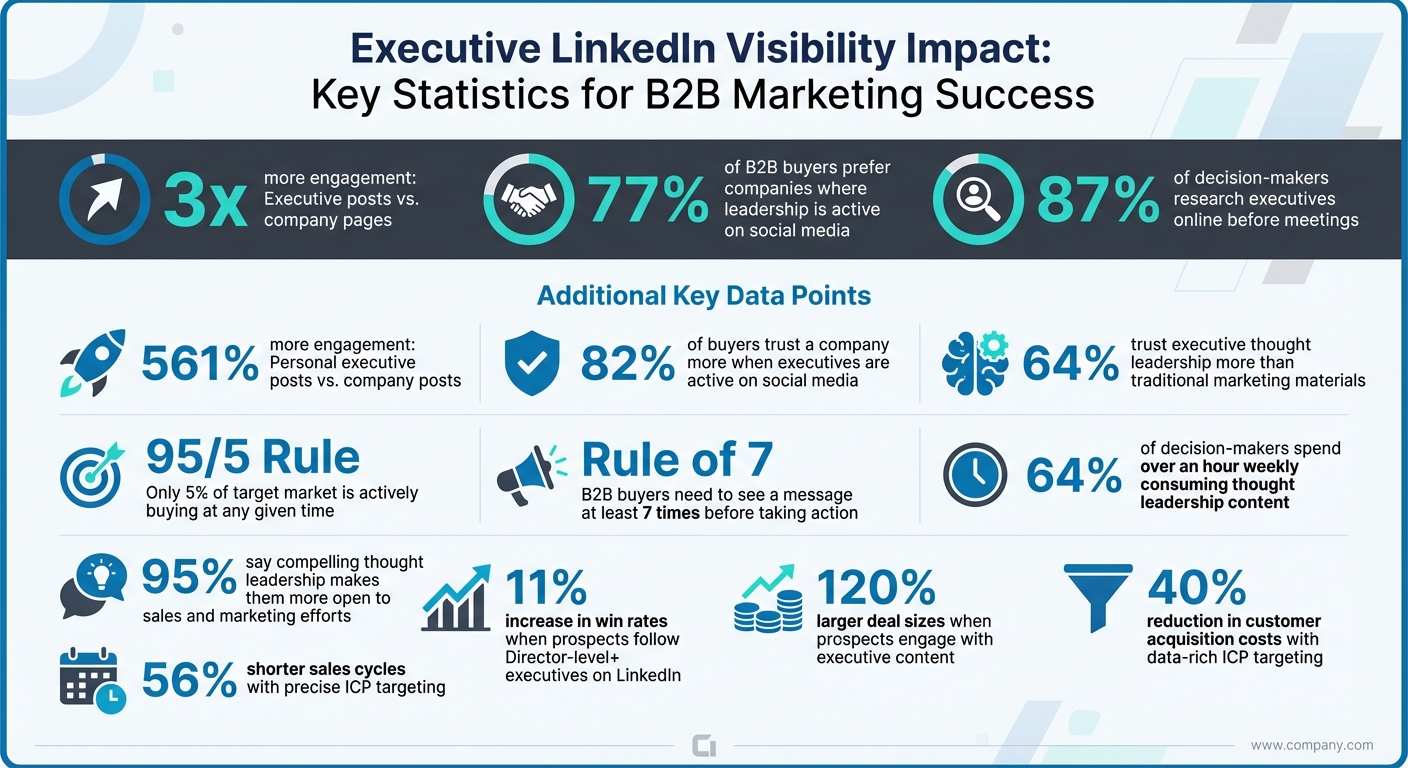
Executive LinkedIn Visibility Impact: Key Statistics for B2B Marketing Success
Executive Social Media Strategy: LinkedIn Secrets with Garret Caudle | S03E02
sbb-itb-9354cf2
Why Random Posting Hurts Campaign Performance
Having a well-thought-out strategy for executive visibility is crucial for supporting your campaigns. Random posting undermines this effort entirely. When executives share content without a clear plan, they create a "random mix" of posts - ranging from announcements to personal musings and generic industry updates. The problem? None of it sticks. Audiences fail to connect these posts to any meaningful brand message, and instead of standing out, the executive becomes just another voice in the crowd. This misalignment not only muddles your campaign’s message but also chips away at credibility.
Here’s where it gets tricky: B2B buyers typically need to see a message at least seven times before they take action. This is the "Rule of 7". Inconsistent posting disrupts this process. Every time an executive veers off-topic or shares unrelated content, it’s like hitting the reset button. Prospects never get the chance to build the trust and recognition needed to make a decision.
The consequences go beyond missed chances. When executive posts lack a clear focus or aren’t tied to campaign goals, they end up being what industry insiders call generic content - so vague that it could easily apply to a competitor. As Ameya Deshmukh from Everworker explains:
"If you can swap your company name with a competitor's and the post still works, it's not thought leadership - it's filler."
Posts That Don’t Support Campaign Goals
When executives post company updates, motivational quotes, or trending topics without tying them to specific campaign goals, they’re effectively teaching their audience to tune them out. Each post becomes a wasted opportunity to reinforce the campaign’s messaging. Over time, followers begin to see the executive’s feed as irrelevant, so when it’s time to promote something important - like a webinar or product launch - no one’s paying attention.
This becomes a major issue in B2B marketing, where the 95/5 Rule applies. Only 5% of your target market is actively looking to buy at any given time. The remaining 95% needs consistent, long-term messaging to stay familiar with your brand. Random posting fails this majority because it doesn’t deliver the steady repetition needed to build recognition. Without repeating core themes, executives miss the chance to influence those who aren’t ready to buy now but could be in the near future - three, six, or even twelve months down the line.
Deshmukh refers to thought leadership as "decision leadership" - helping the market understand how to think, prioritize, and avoid costly mistakes. Random posting, on the other hand, does the opposite. It prioritizes noise over clarity, which is exactly what B2B buyers don’t want. Posts without a clear perspective or point of view fail to separate your brand from competitors, leaving no lasting impression. Worse, they squander opportunities to build trust and erode the executive’s credibility - an issue we’ll explore next.
Lost Credibility as an Industry Expert
Scattershot posting doesn’t just hurt campaigns; it damages an executive’s reputation. When a leader’s LinkedIn feed looks random and unfocused, stakeholders begin to doubt their relevance and, by extension, the quality of the company’s leadership. This is especially problematic because decision-makers often research executives online to assess their expertise and thought process.
The problem deepens when executives stick to "safe" topics. The safer the message, the less memorable it becomes - and the less trust it builds. Generic posts about broad ideas like "the future of work" or "the importance of innovation" might seem productive, but they fail to position the executive as a knowledgeable leader with unique insights. In fact, most B2B decision-makers rate only a small fraction of thought leadership as "very good or excellent", largely because so much of it blends into the noise.
When executives lose credibility through random posting, they also lose control of the narrative. If they’re not consistently sharing strong, clear viewpoints, competitors and other voices will fill that void. Audiences will naturally gravitate toward leaders who provide consistent, valuable insights - and those are the executives who will shape purchasing decisions, win RFPs, and command better pricing power. In a competitive market, inconsistency isn’t just a missed chance - it’s an open invitation for someone else to dominate the conversation.
How Executives Can Support Campaigns Through Coordinated Visibility
Visibility for executives isn't just about showing up - it's about making an impact that aligns with campaign goals. To move from sporadic posts to a focused presence, executives need a clear plan. This starts with collaborating closely with marketing teams to map out quarterly priorities, like product launches or major events. Once these objectives are set, an executive's social activity can become a powerful extension of the overall marketing strategy.
This approach requires leadership in decision-making - helping the market prioritize and avoid common pitfalls. Instead of chasing every trending topic, executives should zero in on a few core themes that reinforce campaign messages. Addressing key challenges builds authority and trust, which can significantly shorten sales cycles.
Setting Campaign Goals and Core Messages
Before jumping into posts, it's essential for executives to work with their marketing teams to develop a content brief. This document should outline the quarter's key messages, tone, and calls to action. Think of it as a filter: every post should either support a campaign goal or be skipped.
Start by identifying three to five content pillars that tie directly to the company's goals. For instance, if the focus is on reducing churn, the content can explore retention strategies, common mistakes that lead to churn, and leadership's role in customer success. This creates a consistent narrative that highlights the campaign's value without turning posts into overt sales pitches.
Timing is also key. Executives should align their posts with major milestones like product launches, webinars, or industry events. This builds anticipation and encourages action. A well-planned strategy on LinkedIn ensures these messages reach the right audience, amplifying the campaign's impact.
Using LinkedIn to Reach Your Target Audience
With a clear message in hand, LinkedIn becomes the go-to platform for executives aiming to connect with decision-makers. In the B2B world, LinkedIn stands out by offering a professional audience and interactive engagement opportunities that build trust before meetings even happen. Personal posts, in particular, can generate up to 561% more engagement than company posts, making it easier to reach key decision-makers even with a smaller following.
LinkedIn also allows for precise audience targeting. Instead of creating generic posts, executives can tailor their content to address specific roles. For example, a post might tackle marketing challenges for CMOs, technical concerns for CTOs, or ROI-focused insights for CFOs. Considering that 87% of business decision-makers research executives online before meetings, a feed filled with thoughtful, campaign-aligned posts can enhance credibility and provide a natural conversation starter for sales teams.
How RevBoss Creates Content for You
Time is often the biggest hurdle for executives when it comes to consistent content creation. RevBoss solves this problem with a "talk, don’t write" approach, turning short interviews or voice notes into polished LinkedIn posts.
Here’s how it works: RevBoss schedules a monthly interview (about an hour) where the executive shares updates, key takeaways from recent decisions, or market observations. These sessions are recorded, transcribed, and transformed into 8–12 posts each month. Every post is aligned with the company’s campaign goals and reviewed by the executive before going live. This ensures the content reflects their voice and maintains strategic focus.
This process eliminates the time burden while keeping posts authentic. Because the content is rooted in real conversations and personal insights, it avoids the generic feel of AI-generated filler that LinkedIn’s algorithm tends to deprioritize. The result? A steady stream of posts that support campaigns, build credibility, and keep the executive visible - without hours of writing.
RevBoss also integrates audience growth and engagement strategies, ensuring posts reach the right people at the right time. This turns executive visibility into a reliable driver for business growth rather than just a vanity metric.
Growing and Engaging Your ICP Audience
To make your content truly effective, it needs to land in front of the right people - those who fit your Ideal Customer Profile (ICP). Building a network that aligns with your ICP is critical because it ensures your efforts directly support your campaign goals.
In 2026, precision targeting relies on combining three key data points: technographics (the tools your prospects use), trigger events (like funding rounds or new hires), and operational maturity (e.g., whether the company is scaling). Say your ICP is a SaaS company using HubSpot with $10M–$50M in annual recurring revenue - your network should mirror that profile. Companies that define and leverage a data-rich ICP can slash customer acquisition costs by 40% and cut sales cycles by up to 56%.
Building Your Network with LinkedIn Workflows
Growing a network filled with ICP-aligned prospects isn’t about sending out random connection requests - it’s about using smart, structured workflows. LinkedIn's Sales Navigator offers tools like "Spotlights" filters to help you pinpoint active prospects. For example, filtering for recent job changes can surface prospects who are 2.5x more likely to make a purchase. Similarly, filtering for profiles that have "Posted on LinkedIn in 30 Days" ensures you're engaging with active users, not dormant accounts.
To warm up leads, start by visiting profiles, leaving thoughtful comments, and sending concise direct messages before requesting connections. This approach boosts your "relevance score" in LinkedIn's algorithm, making your posts more visible in your ICP’s feed. Tools like RevBoss can take this a step further by automating audience growth campaigns, streamlining the process of connecting with the right prospects. This repeatable system lays the groundwork for building trust and long-term relationships.
Building Trust Through Regular Content
Once you’ve established a targeted network, trust comes from showing up consistently. Posting regularly with valuable content positions executives as go-to experts in their field. The stats speak for themselves: 82% of buyers trust a company more when its executives are active on social media, and 64% trust executive thought leadership more than traditional marketing materials.
Stick to a 70/20/10 content strategy: 70% educational content, 20% problem-solving insights, and 10% case studies. This mix ensures you’re visible throughout the buyer’s journey without coming across as overly salesy. Engage with your audience by responding to comments and interacting with 5–10 industry posts daily. This kind of consistent activity keeps you top of mind and reinforces trust.
Converting Visibility into Campaign Results
Once you've established a trusted network, the next challenge is turning that visibility into results you can measure. Building trust and expanding your connections set the stage, but the real win comes from transforming executive engagement into tangible actions like event sign-ups, demo requests, and qualified conversations.
Promoting Events, Webinars, and Trade Shows
An executive's presence can do wonders for boosting attendance and engagement at events. Instead of relying entirely on email campaigns or paid ads, tap into the relationships you've nurtured. Decision-makers often look at leaders' insights before committing to events, so a strong executive profile can significantly influence attendance.
For example, share quick insights from recent panels, customer meetings, or trade shows to spark interest. A short takeaway from an industry roundtable could lead seamlessly into a plug for your upcoming webinar on a related topic. Visual content like carousels summarizing event highlights or photos from speaking engagements can also make your brand and events feel more approachable and relatable.
The secret? Treat event promotion as a relationship-building effort, not just a numbers game. Warm introductions can generate response rates up to 15 times higher than cold outreach. Instead of sending generic invites, use your content to start meaningful conversations. Follow up with personalized messages that reference specific posts or shared interests. To measure the impact, attach UTM parameters to registration links in your posts - this allows you to track exactly how many sign-ups come from your executive visibility.
This method not only drives attendance but also sets the stage for converting connections into sales opportunities.
How RevBoss Converts Connections into Sales Conversations
After building a high-quality network, the next step is activating it for sales. RevBoss specializes in turning your audience into qualified leads through activation campaigns that encourage conversations with prospects who are already familiar with your content.
By consistently sharing content and growing your network with prospects aligned to your ideal customer profile (ICP), RevBoss creates opportunities through targeted outreach campaigns. These campaigns use LinkedIn DMs and email - not as cold pitches, but as personalized messages to people who already recognize your name. RevBoss also supports event-driven campaigns for trade shows, webinars, and speaking engagements, ensuring your visibility leads to meaningful interactions.
Here’s a breakdown of RevBoss’s structured plans:
| RevBoss Plan | Monthly Price | What's Included |
|---|---|---|
| LinkedIn Content + Audience | $1,500 | Weekly strategy calls, 8–12 LinkedIn posts/month, audience growth workflows, platform access |
| Email Newsletter + Audience | $1,500 | Weekly strategy calls, bi-weekly newsletter creation, newsletter growth workflows, platform access |
| Combined Content (LinkedIn + Email) | $2,500 | Everything in LinkedIn and Email plans, integrated content + audience workflow |
| Content + Coaching + Activation | $4,000 | All content services, direct outreach (email + LinkedIn DMs), event support campaigns, sales offer development, marketing asset creation |
| Coaching | $1,500 | Weekly GTM consulting calls, campaign and offer development, content strategy, deal review |
All plans are month-to-month, with discounts available for longer commitments. The Content + Coaching + Activation plan is the most popular choice, as it combines content creation, audience growth, and activation campaigns into one cohesive system. This approach ensures that your warm connections can be converted into sales conversations effectively.
RevBoss integrates everything - content creation, audience growth, and activation - into a streamlined process. By tagging executive content touches in your CRM, you can measure "opportunity influence" and see how leadership content contributed to closing deals.
To capture leads influenced by your content but not directly linked to a click, consider adding a "How did you hear about us?" field to your forms. This helps track "dark social" influence, giving you a more complete view of how executive visibility is driving your pipeline. Combine this with CRM attribution, and you'll have a clear picture of how your efforts are turning visibility into measurable results.
Tracking the Impact of Executive Visibility
The difference between casually posting and having a well-thought-out executive visibility strategy is evident when you look at the numbers.
Metrics That Show Success
Focus on metrics that provide real insight, not just surface-level stats. Instead of obsessing over total likes, keep an eye on leading indicators like profile views from your ideal customer profile (ICP), growth in targeted followers, and meaningful engagement. Look for comments from decision-makers at companies you want to connect with, thoughtful direct messages, and reposts by industry peers. These actions show that your content is hitting the mark with the right audience.
Momentum metrics are another layer to consider. For example, when prospects mention your content during sales calls, it highlights the "dark social" impact that traditional click data often misses. To capture this, add a simple "How did you hear about us?" field to your demo request forms. You can also tag prospects in your CRM who reference your posts, making it easier to track how your visibility is influencing their journey.
Finally, tie your efforts to business outcomes. Metrics like inbound pipeline growth, deal velocity, and win rates show how visibility drives revenue. For instance, Hootsuite CEO Irina Novoselsky found that after just three months of consistent LinkedIn activity in early 2025, 37% of the company’s monthly leads were influenced by her social presence. Her team also discovered that enterprise deals tied to her content had higher average contract values. Data shows that when prospects follow a Director-level executive or higher on LinkedIn, companies see an 11% increase in win rates and deal sizes that are 120% larger.
"If 20%+ of your pipeline mentions your content, you've won."
To dig even deeper, use UTM parameters on links to track exactly how many conversions come from specific posts. These metrics not only validate your strategy but also help refine your campaigns. Together, they set the foundation for a robust tracking system.
Using RevBoss to Measure and Improve Results
RevBoss takes these metrics to the next level by simplifying tracking across every stage of your campaigns. The platform consolidates performance data, audience growth within your ICP, and engagement trends, giving you a clear picture of which posts spark meaningful conversations and which topics resonate with your target accounts.
For clients using the Content + Coaching + Activation plan, RevBoss bridges the gap between content and outreach. For instance, when a prospect engages with your LinkedIn post and later responds to a personalized message, that interaction is tracked and tagged in your CRM. This creates a full view of how executive content supports the buyer's journey.
Weekly strategy calls with RevBoss include performance reviews, so you can analyze what’s working and tweak your approach as needed. The platform helps you establish benchmarks for metrics like branded search volume, inbound conversion rates, and sales cycle lengths before scaling your visibility efforts. This makes it easier to prove the impact of your executive presence over time.
RevBoss also captures the influence of "dark social" by encouraging teams to log mentions of executive content during discovery calls. Paired with self-reported attribution data from forms, you gain a comprehensive understanding of how your visibility drives results - even when no links are clicked.
Conclusion
Every executive post carries weight, and the difference between random posting and a strategic approach is stark. Random efforts rarely yield meaningful outcomes, but intentional, goal-aligned visibility does. Aligning executive content with campaign objectives fosters trust, accelerates sales cycles, and drives revenue. Consider this: 64% of decision-makers spend over an hour each week consuming thought leadership content, and 95% say compelling thought leadership makes them more open to sales and marketing efforts. That’s a serious edge in today’s competitive landscape.
Executives who post with purpose see measurable results. Strategic visibility doesn’t just boost engagement and reach - it actively shapes purchase decisions. When paired with the right tools and workflows, this approach doesn’t just amplify awareness; it activates networks, addresses objections, and builds a layer of trust that simplifies sales conversations. The metrics speak for themselves: clear, consistent leadership content delivers tangible business outcomes.
"Real thought leadership is decision leadership - teaching the market how to think, how to prioritize, and how to avoid costly mistakes."
– Ameya Deshmukh
Platforms like RevBoss make this process straightforward. From capturing your insights and turning them into consistent, impactful content to growing an audience rich with ideal customer profiles (ICPs) and running campaigns that drive meaningful conversations, RevBoss handles the heavy lifting. With features like integrated tracking, weekly strategy calls, and workflows that connect content to pipeline performance, you gain real-time insights into what’s working and can refine your approach as needed. This seamless integration of leadership visibility with targeted campaigns strengthens your overall marketing efforts.
Executive visibility isn’t just a trend - it’s a must-have for B2B success. When done strategically, it transforms leadership teams into revenue-driving assets, building trust, enhancing credibility, and delivering measurable results across the board.
FAQs
How do I pick 3–5 LinkedIn content themes that match our campaigns?
To pick 3–5 LinkedIn content themes that align with your campaigns, zero in on topics that genuinely connect with your audience and reinforce your goals. Opt for themes that highlight leadership, showcase expertise, and offer valuable industry insights. Examples might include analyzing current trends, sharing customer success stories, or diving into market forecasts. Make sure every theme ties back to your main messaging, provides room for regular content creation, and supports your larger campaign objectives. This approach helps build credibility and delivers meaningful results.
What should I post if we don’t have a launch or event this quarter?
If there’s no big launch or event happening this quarter, shift your focus to executive visibility through thought leadership and personal branding. Share meaningful insights about your industry, discuss emerging trends, or reflect on lessons from your experiences. Regular LinkedIn updates or well-crafted ghostwritten articles can keep your voice active and engaging. This strategy not only strengthens your credibility but also aligns with broader marketing goals, positioning you as a reliable and knowledgeable leader - even without the buzz of event-driven content.
How can I prove executive LinkedIn posts influenced pipeline?
When showcasing how executive LinkedIn posts influence the pipeline, focus on how leadership content shapes buyer research and decision-making. Prospects often turn to leadership posts to gauge a company’s vision and priorities, which can speed up deal cycles and enhance perceived value. To measure ROI, tie executive visibility to tangible outcomes like pipeline influence, faster deal closures, and increased average contract value (ACV). Metrics such as mentions, shares, and direct feedback from prospects can help draw a clear line between leadership posts and measurable results.