Why Founders Should Focus On Thought Leadership Content

Want to stand out in B2B? Stop selling - start leading.
Thought leadership content is your secret weapon to build trust, shorten sales cycles, and charge premium prices. Here’s the deal:
- 73% of buyers trust it more than regular marketing.
- 45% of decision-makers will pay more for companies they see as experts.
- It’s not about pushing products - it’s about solving problems, sharing insights, and challenging industry norms.
Founders have the edge here: your personal experiences and lessons resonate more than any corporate pitch ever could. Whether you’re a small startup or competing with big players, this approach levels the playing field.
The result? Better leads, faster decisions, and a reputation that sells itself. Let’s talk about how to make it happen.
Why Your Thought Leadership Isn’t Working (And How To Fix It)
Research Shows the Benefits of Thought Leadership Content
Research confirms that thought leadership can produce real, measurable results. It strengthens B2B relationships, speeds up sales cycles, and gives founders a competitive edge.
Building Trust and Brand Authority
Trust is the cornerstone of any successful business, and thought leadership plays a pivotal role in building it. A LinkedIn study found that 58% of decision-makers believe thought leadership improves their perception of an organization's trustworthiness. Even more striking, 73% of B2B buyers see thought leadership as a more reliable way to judge a company's expertise than traditional marketing approaches.
For smaller or less established companies, this trust boost can be transformative. Sixty percent of buyers say thought leadership lends credibility to businesses that might otherwise go unnoticed in their industry. By sharing original research or offering new perspectives, companies can quickly position themselves as authorities in their field.
This trust isn’t just theoretical - it translates into better leads and faster sales.
Generating Better Leads and Faster Sales
Thought leadership doesn’t just win hearts - it impacts the bottom line. Nearly half (45%) of decision-makers are willing to pay a premium for brands that demonstrate expertise through thought leadership. When content is tailored to specific buyer groups, it can increase deal sizes, shorten sales cycles, and boost visibility - all while driving revenue and lowering costs.
At every stage of the sales funnel, thought leadership works hard: it grabs attention, guides buyers through their evaluation process, and highlights success stories. Instead of wasting time chasing cold leads, you attract decision-makers who already trust your expertise. These are the people who’ve engaged with your content, see your brand as a go-to resource, and are ready to act when it’s time to make a purchase.
Thought Leadership vs. Standard Marketing Methods
Here’s a side-by-side comparison of how thought leadership stacks up against traditional marketing:
| Aspect | Thought Leadership Content | Standard Marketing Methods |
|---|---|---|
| Primary Focus | Shapes industry conversations and builds long-term trust | Focuses on immediate lead generation and conversions |
| Content Approach | Offers insights, research, and challenges assumptions | Highlights products, features, and promotions |
| Trust Building | Seen as more trustworthy by 73% of buyers | Often perceived as self-serving |
| Buyer Perception | Positions your brand as an industry authority | Viewed as a vendor focused on sales |
| Pricing Impact | 45% of buyers are willing to pay premium prices | Often leads to price-based competition |
| Sales Cycle | Speeds up decision-making through trust | Can drag out due to buyer skepticism |
| Relationship Type | Builds loyal, advocacy-driven relationships | Creates transactional interactions |
These differences highlight why founder-led thought leadership is such a powerful strategy. While traditional marketing often chases short-term wins, thought leadership builds a steady stream of prospects who already see your brand as trustworthy and knowledgeable. It transforms your marketing from a loud pitch into a service that creates a community around your expertise.
Key metrics for thought leadership success include longer website visits, higher engagement with gated content, and an increase in sales-qualified leads. Beyond the numbers, you might notice your research being cited in industry newsletters, invitations to speak on webinars or podcasts, and a surge in high-quality inbound opportunities. These are clear signs that your insights are striking a chord with your audience.
What Makes Thought Leadership Content Work
Not every piece of content earns the badge of thought leadership. The secret lies in three key ingredients: originality, credibility, and consistency. When these factors align, they elevate your founder voice into a reliable and respected industry resource.
Content Formats That Get Results
The format you choose can either elevate your thought leadership or leave it flat. Among all options, original research stands out as a heavyweight champion. Think industry reports, proprietary data studies, or survey findings - these formats deliver fresh insights that carry authority and grab attention.
Another format that packs a punch is founder perspectives. These opinion pieces and personal stories allow you to connect with your audience on a deeper level. Sharing lessons from failures or tough pivots often resonates more than polished success stories, offering a level of honesty and relatability that builds trust.
Case studies are another powerful tool. By walking through real challenges, decisions, and outcomes, they showcase your expertise in action. Instead of glossing over the hard parts, dive into the metrics, the reasoning behind choices, and the lessons learned from setbacks. This approach portrays your brand as a seasoned, reliable guide.
For those who thrive in live discussions, podcasts and webinars are ideal. They allow for real-time conversations and give you a platform to demonstrate your expertise naturally. These formats work especially well if you’re quick on your feet and enjoy engaging with industry topics.
The real magic happens when you repurpose your content across formats. For example, a single piece of original research can evolve into an industry report, podcast episodes, webinar topics, and even social media snippets. This not only maximizes your investment but also ensures you reach different audience segments.
While picking the right formats is important, the true game-changer lies in the substance of your insights.
Why Genuine Insights Matter Most
Generic content doesn’t cut it in thought leadership. To truly connect, your insights need to challenge the status quo and provide real value. Today’s B2B buyers are wary of self-promotional fluff; they’re looking for authentic, experience-driven expertise. And they can spot the difference between recycled industry chatter and fresh, actionable insights.
One way to stand out is by offering contrarian perspectives. When you challenge conventional industry narratives with well-reasoned alternatives, you resonate with audiences tired of the same old ideas. This isn’t about being provocative for attention - it’s about sharing approaches grounded in your experience that genuinely work better.
Another way to build trust is through structured, high-value educational content. By consistently sharing knowledge that solves real problems, you create a sense of reciprocity and credibility that traditional marketing often misses. This could mean offering actionable advice, frameworks, or methodologies that your audience can immediately apply.
Your content should tackle pressing industry challenges with tailored, practical guidance. Go beyond surface-level commentary - share the lessons, strategies, and tools that have worked for you in real-world scenarios. Effective thought leadership doesn’t just answer obvious questions; it digs deeper, challenges assumptions, and introduces bold new ways of thinking. This is what separates genuine expertise from run-of-the-mill content marketing.
sbb-itb-9354cf2
How to Build and Maintain Thought Leadership
Building thought leadership takes more than just sharing occasional insights - it’s about creating a strategy that aligns with your business goals and consistently delivers meaningful value. The best founders treat this as a core part of their business, not just a side hustle. It starts with a clear plan, understanding your audience, and staying true to your voice while being consistent.
Matching Content to Your Buyer's Journey
Your thought leadership content should meet potential customers where they are in their decision-making process. Each stage requires a different approach to truly connect.
In the awareness stage, your goal is to grab attention and spark curiosity. Share bold perspectives that challenge the status quo or offer fresh takes on industry trends. Highlight emerging challenges and back them up with research or unique frameworks drawn from your own experiences. Opinion pieces that stand out and break from conventional thinking can position you as someone worth listening to.
When prospects reach the consideration stage, they’re evaluating solutions. This is where educational content shines. Think in-depth guides, case studies, or expert analyses. For example, 58% of decision-makers say thought leadership improves how they perceive an organization’s trustworthiness. Use this stage to build credibility by showing you understand their challenges and can provide real solutions.
Finally, at the decision stage, it’s time to showcase results. Share success stories and, just as importantly, lessons from past failures. Be transparent and back your claims with real metrics and case studies. This builds confidence, especially for B2B buyers who value authenticity over overly polished narratives.
By aligning your content with each step of the buyer’s journey, you can guide prospects from curiosity to trust - and ultimately, to choosing your solution.
Staying Consistent While Being Yourself
Consistency is key to building trust, but it should never come at the cost of your personal voice. The strongest thought leadership comes from founders who use their unique perspective to stand out instead of blending in with generic industry trends.
Start by setting a realistic publishing schedule - whether it’s weekly, bi-weekly, or monthly. This consistency helps your audience know when to expect new insights and reinforces your commitment to providing value.
"Authenticity, trust, and audience are the only durable marketing differentiators in an AI-first market."
Stick to what feels natural for you. Create content that reflects your communication style and areas of expertise. To make it sustainable, batch your content creation. This ensures you maintain both quality and regularity without burning out.
Once you’ve nailed your authentic tone and cadence, it’s time to put a focused plan into action.
Creating Your Thought Leadership Content Plan
A solid content plan begins with clarity on what you bring to the table. What’s your unique perspective? What problems can you solve better than anyone else? Define core themes that highlight your expertise and align with your business goals - whether that’s breaking into a new market, earning trust from a specific audience, or setting your brand apart from competitors.
Map your content initiatives directly to these goals. For instance, if trust is a priority, create content that builds credibility, as this can ultimately drive ROI.
Next, craft a content calendar that outlines your themes, topics, formats, frequency, and distribution channels. Mix it up with formats like whitepapers, case studies, educational guides, or even original research. Conducting surveys or interviews can provide insights that not only strengthen your credibility but also give you material for various content types.
To keep things running smoothly, involve your team. Assign a content lead to collaborate with subject matter experts, and work with skilled writers who can bring your ideas to life. This team-based approach keeps thought leadership from becoming a bottleneck while ensuring your voice remains at the center.
Lastly, leave room for flexibility. While a structured plan is critical, you also need the agility to respond to current events or industry trends. Reactive content that addresses timely topics can make your voice even more relevant. Let your expertise guide the way as you adapt to what’s happening in your space.
Why Founder-Led Content Works Better
Founder-led content isn’t just another marketing buzzword - it’s a game-changer in building trust and driving growth. Unlike generic messaging, it carries the weight of personal expertise, making it more relatable and impactful. For B2B businesses aiming to establish credibility, this approach isn’t just effective - it’s measurable.
Why Founder-Led Content Stands Out
When a founder speaks, people listen. Why? Because their insights are rooted in real experience, not a corporate script. By sharing their knowledge, founders put their personal reputation on the line, which instantly earns trust. This authenticity is something generic messaging simply can’t replicate.
And here’s the kicker: trust isn’t just a warm, fuzzy feeling - it’s a business asset. Nearly half (45%) of decision-makers are willing to pay more for products or services from companies they perceive as thought leaders. That’s a direct link between credibility and revenue.
What really resonates with audiences is the human element. When founders share personal stories, lessons from failures, or the reasoning behind their decisions, it creates a connection that polished, impersonal content can’t achieve. Buyers today crave this kind of transparency - they want to know not just what you do, but why you do it.
Founder-led content also gives your brand a distinct voice. While many companies churn out similar-sounding corporate messaging, a founder’s perspective, shaped by their own journey and expertise, sets you apart.
The sales benefits are undeniable, too. Thought leadership from founders can fast-track the sales process by educating and building trust with prospects before they even speak to your sales team. In fact, 60% of buyers say thought leadership enhances credibility for businesses they didn’t know before. That’s a powerful advantage in a crowded market.
What It Takes to Make It Work
Founder-led content isn’t just about good intentions - it’s about commitment and support.
First, founders need to consistently share their insights. Your voice is the cornerstone of this strategy, and it simply can’t be outsourced. Your authenticity and expertise are what make this approach work.
But even the most dedicated founder can’t do it alone. You need a strong team behind you. This might include skilled writers to craft your ideas into compelling stories, marketers to handle distribution, and even a Thought Leadership Director to keep everything on track.
A solid framework is also essential. This means having clear processes for creating, reviewing, and sharing content. With the right structure in place, companies often see big payoffs, like an increase in high-quality demo requests, better leads, and stronger engagement from their ideal audience.
Founder-Led vs. Brand-Led Content: A Side-by-Side Look
To truly understand the value of founder-led content, let’s compare it to brand-led messaging:
| Aspect | Founder-Led Content | Brand-Led Content |
|---|---|---|
| Trust & Credibility | High - personal expertise builds immediate trust | Moderate - corporate messaging often feels impersonal |
| Audience Connection | Deep - relatable stories foster lasting relationships | Shallow - generic tone can alienate audiences |
| Differentiation | Strong - unique perspectives stand out | Weak - messaging blends in with competitors |
| Lead Quality | Higher - engages pre-qualified, trust-filled prospects | Lower - attracts a broader, less targeted audience |
| Sales Cycle | Shorter - buyers come pre-educated | Longer - requires more nurturing and education |
| Content Formats | Personal stories, research, failure analysis, expert commentary | Press releases, product updates, generic blogs, ads |
"Most B2B marketing is boring, soulless, and self-centered."
The difference is clear. Founder-led content thrives on authenticity and audience focus. While brand-led messaging tends to lean heavily on self-promotion, founder-led content prioritizes delivering real value and insight. This approach not only builds trust but also positions your brand as a trusted authority in the market.
Conclusion: Next Steps for Founders
Thought leadership isn't just a buzzword - it delivers measurable results. For B2B founders, embracing thought leadership content could be the game-changer that sets you apart from competitors, enables premium pricing, and speeds up your sales process. The evidence is clear, and it points to actionable next steps for founders who want to lead their markets.
Why Thought Leadership Deserves Your Focus
When nearly half of decision-makers (45%) are willing to pay more for a company they see as a thought leader, and 73% trust thought leadership content more than traditional marketing, the impact on revenue is impossible to ignore. This isn’t about vague brand awareness - this is real, bottom-line growth.
As we’ve discussed, strong thought leadership doesn’t just build trust - it accelerates your sales funnel. It grabs attention early with fresh perspectives, nurtures leads by showcasing your authority, and shortens the decision-making process because buyers already see you as an expert. The outcome? Bigger deals, faster sales cycles, and better-qualified leads who are informed and ready to do business.
In today’s AI-driven world, your authentic voice as a founder is one of the few competitive advantages that can’t be replicated.
How RevBoss Helps Founders Take the Lead
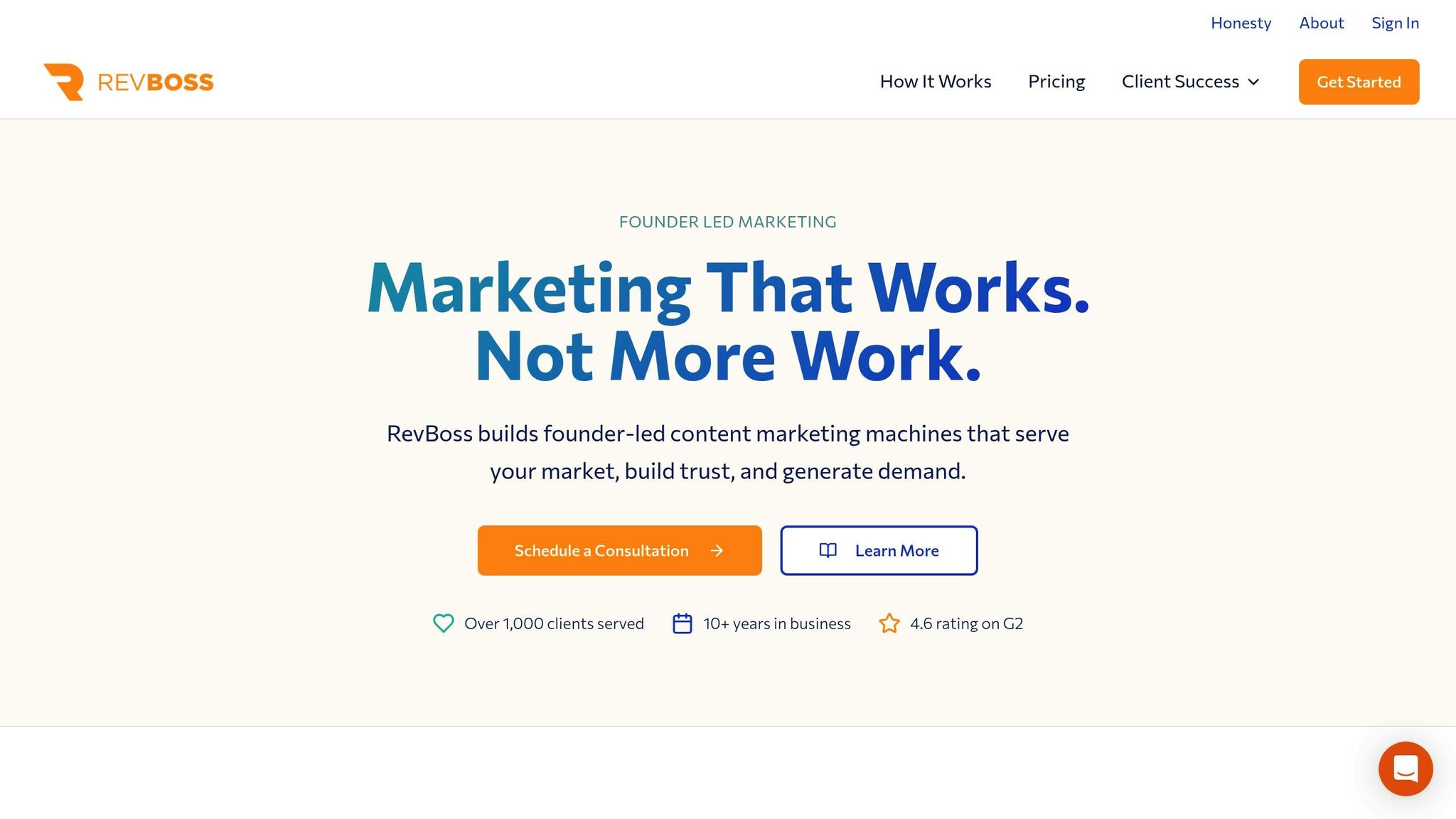
The benefits are clear, but achieving them takes more than good intentions. Turning thought leadership into a growth engine requires consistent execution, strategic content distribution, and a system for converting insights into leads. That’s where RevBoss steps in.
RevBoss specializes in building founder-led content marketing systems that handle the operational heavy lifting while keeping your authentic voice front and center. With over a decade of experience and more than 1,000 clients served, RevBoss knows how to create strategies that deliver results without adding to your workload.
Their approach goes beyond just creating content. RevBoss partners with founders to produce engaging, informative, and entertaining marketing material that resonates with your audience. They execute campaigns designed to spark meaningful conversations and turn those interactions into leads. From LinkedIn audience building to email newsletters, activation campaigns, and lead generation workflows, they manage it all while ensuring your personal touch remains intact.
"We partner with our clients to develop interesting, educating, and entertaining marketing content that serves their audience. And we don't just create and wait. We execute campaigns that generate conversations and convert into pipeline."
It’s affordable and scalable. RevBoss programs start at $1,500 per month, offering everything from targeted LinkedIn strategies to full-scale content and activation packages. With a 4.6 G2 rating, RevBoss has earned a reputation for delivering trusted partnerships and real results.
If you’re ready to move beyond traditional B2B marketing, RevBoss provides the tools and expertise to turn your knowledge into a structured, growth-focused strategy. They understand that authenticity, trust, and audience connection are what truly set businesses apart - and their services are designed to amplify those strengths for founder-led companies.
The question isn’t whether thought leadership works - it’s proven. The real question is: are you ready to let it work for your business?
FAQs
What’s the best way for founders to incorporate thought leadership content into their marketing strategy?
Founders can make a real impact with thought leadership by crafting genuine, value-packed content that showcases their expertise while connecting with their audience. This might involve publishing blogs, creating videos, or posting on social media to tackle pressing industry challenges or emerging trends.
The cornerstone here is trust and sincerity. By ensuring their content aligns with both their personal brand and business objectives, founders can deepen connections with their audience, set their company apart from competitors, and spark genuine interest in what they offer.
How can founders consistently create authentic and impactful thought leadership content?
To craft thought leadership content that genuinely connects and leaves a lasting impression, founders should highlight what sets them apart - their expertise and personality. Start by honing in on topics that not only reflect your business values but also strike a chord with your audience. Share meaningful insights, relatable experiences, and practical advice that showcase your know-how while addressing the real challenges your audience faces.
Staying consistent is crucial. Create a content schedule you can stick to, and focus on quality over quantity. Each piece should serve a purpose and provide something valuable. Engage directly with your audience - invite conversations, encourage questions, and respond to feedback. This kind of interaction builds trust and fosters genuine relationships. When done thoughtfully, your content doesn’t just establish you as a leader in your space - it also bolsters your brand’s credibility and influence.
How does founder-led thought leadership content help close deals faster and attract better leads?
Founder-led thought leadership content is a powerful way to build trust and connect deeply with your audience. By sharing your expertise and offering a unique perspective, you create a brand presence that feels genuine and relatable - qualities that naturally appeal to potential customers.
When you focus on addressing your audience's specific challenges and needs, this content doesn't just engage - it helps filter and qualify leads early on. That means you're more likely to attract people who are ready to take action. Plus, the credibility and trust you establish can ease doubts during the decision-making process, speeding up sales cycles and bringing in leads that are more aligned with your goals.