Do You Actually Need Content To Generate Leads on LinkedIn?

If you’re a founder wondering if LinkedIn can generate leads without posting content, here’s the short answer: Yes, you can skip the content grind and still succeed. Direct outreach, smart networking, and using tools like LinkedIn Sales Navigator can deliver results without relying on viral posts or thought leadership.
Here’s the deal:
- Content isn’t mandatory: While content builds trust over time, it’s not the only way to attract leads.
- Direct outreach works fast: Personalized connection requests and follow-ups target decision-makers directly.
- LinkedIn’s algorithm is tricky: Recent changes make content creation more demanding with less predictable results.
- Sales Navigator is a game-changer: Advanced filters, alerts, and CRM integration streamline lead discovery and management.
- Time is a factor: Founders often lack the bandwidth for consistent, high-quality content creation.
For immediate results, focus on direct outreach. For long-term trust, mix in content when you can. Both methods work, but the choice depends on your strengths and timeline.
How I Do LinkedIn Lead Generation in 2025
Why Content Isn't Required for LinkedIn Leads
The common advice to post regularly on LinkedIn is being challenged by the platform's evolving dynamics. LinkedIn has shifted in ways that make content creation more demanding and less reliable, while alternative strategies - like direct outreach and strategic networking - have proven to be steady and effective. Let’s dive into how LinkedIn’s changes and the time crunch faced by founders make these non-content approaches more appealing.
How LinkedIn's Platform Has Changed
LinkedIn’s algorithm has undergone a major transformation. Back in 2020, you could post daily, sprinkle in a few emojis, and enjoy a surge in organic reach. Fast forward to 2026, and that strategy is obsolete. The platform now uses a metric known as the "Depth Score," which prioritizes actual reading time, meaningful comments, and private shares over superficial engagement like likes or clicks.
Old engagement tricks now backfire. Tactics like asking users to comment ("Agree? Comment below!"), using artificial cliffhangers, or relying on engagement pods are flagged as spam. Even swipe carousel posts, once a favorite, are losing traction unless they offer genuinely valuable information. According to LinkedIn’s Q3 2025 internal data, 60% of high-engagement posts used optimization tactics, yet user satisfaction scores continued to drop.
"LinkedIn reach has dipped. No. You're not going insane. Also no. It is not the end of the platform."
AI-generated posts are also being deprioritized. The algorithm now rewards posts that are rich in insights and depth, making it harder to succeed with low-effort updates. This means you have to put in more effort for less predictable results - a tough sell if you’re already strapped for time. These changes highlight why non-content strategies, like direct outreach and relationship-building, remain reliable without the unpredictability of algorithm shifts.
Time Constraints Founders Face with Content
On top of algorithm challenges, founders are grappling with serious time constraints. Producing high-quality LinkedIn content in 2025 requires specialized expertise that’s tough to delegate. You can’t just hand it off to a junior team member or rely on AI to churn out posts that resonate with decision-makers. This leaves many founders overworked and struggling to generate revenue.
Take Brendan Hufford of Growth Sprints, for example. In April 2025, he ran a 30-day experiment comparing organic reach to paid distribution. His results? Paid strategies generated 33 direct conversions at just $0.72 per click. The catch? Those results came from a strategic paid approach - not from grinding out organic content every day.
"I've seen founders go viral and still get zero leads. You can have a post hit 100k views and not land a single demo if the content attracts the wrong crowd."
The time commitment is no joke. Meeting the new algorithmic standards means conducting original research, sharing actionable frameworks, and providing insights that only you, as the founder, can deliver. For founders juggling product development, team management, and sales, this kind of content creation isn’t just exhausting - it’s not the best use of their time. As a result, many are shifting their focus to direct outreach, which saves time and delivers higher-quality leads.
Using Direct Outreach to Generate Leads
Direct outreach on LinkedIn doesn't require you to churn out content. Instead, it focuses on pinpointing the right audience, crafting personalized messages, and staying consistent with follow-ups. This method gives you full control over who you reach, when you reach them, and how you guide them through your pipeline - all without depending on LinkedIn's algorithm.
Using LinkedIn Sales Navigator for Targeting
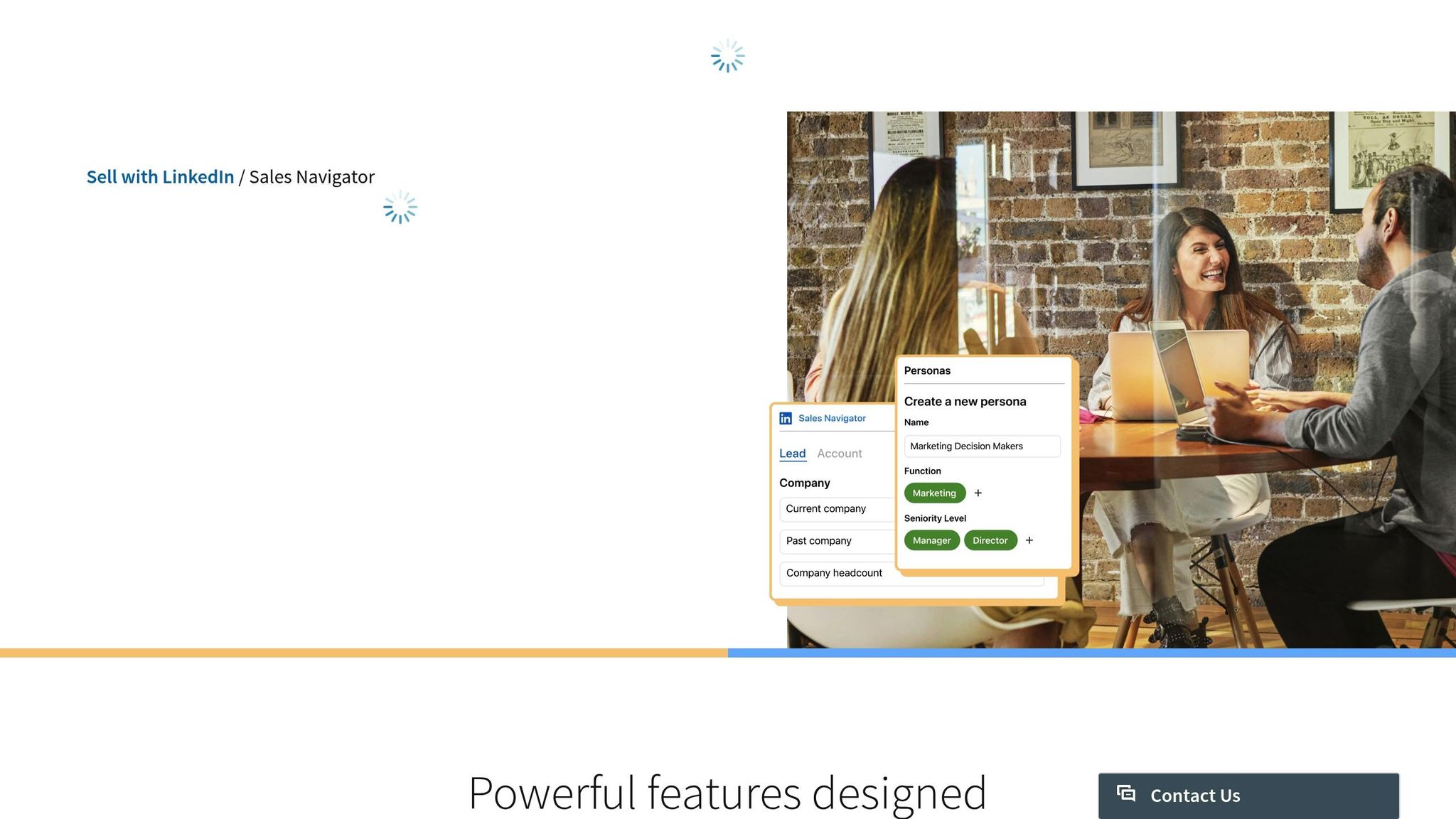
Sales Navigator turns LinkedIn into a powerful tool for finding and connecting with the right prospects. With over 1 billion members on the platform, the challenge isn't locating people - it’s narrowing down the right ones. Sales Navigator offers advanced filters that go beyond the basics, allowing you to refine your search by factors like seniority, company size, growth trends, job function, location, and even the technologies a company uses.
For example, instead of a broad search like "Marketing Manager", you can use Boolean logic to get precise results:
("VP Marketing" OR "Marketing Director") AND "SaaS" NOT "Assistant".
The Spotlights feature is another game-changer. It highlights prospects who recently changed jobs, were mentioned in the news, or posted new content, helping you time your outreach perfectly. Plus, users of Sales Navigator report 17% higher win rates compared to those relying on LinkedIn’s standard tools.
"Sales Navigator transforms LinkedIn from a networking site into a powerful sales intelligence platform."
– Outbound Sales Pro
Another handy feature is TeamLink, which identifies shared connections within your company. This lets you request warm introductions instead of sending cold messages. Considering that 89% of B2B marketers use LinkedIn for lead generation and 62% say it delivers quality leads, having these tools can make a big difference.
You can even automate lead discovery by saving search criteria to get alerts when new prospects matching your ideal customer profile pop up. If you aim to send 30–50 connection requests daily, this system could help you build a network of up to 13,000 leads in a year. By linking Sales Navigator to your CRM (like HubSpot or Salesforce), you can also automate lead enrichment and track InMail responses.
Once you’ve nailed down your targeting, the next step is crafting messages that actually get responses.
Writing Connection Requests That Get Responses
Let’s face it - generic "I'd like to connect" messages are a one-way ticket to being ignored. On the other hand, personalized notes that reference specific details can significantly improve your acceptance rates. For instance, LinkedIn data shows that InMail messages under 400 characters have a 22% higher response rate, so brevity and relevance are key.
Start by referencing something specific about the prospect - a post they wrote, a LinkedIn group you both belong to, or a recent milestone their company hit. This makes your outreach feel more like a natural conversation than a cold pitch. Here’s an example:
"Saw your post on scaling outbound - really resonated with our experience at [Your Company]. Would love to connect and exchange notes."
Once connected, resist the urge to immediately pitch your product. Keep in mind the 95-5 rule: 95% of potential buyers aren’t ready to make a purchase on first contact. Instead, focus on starting a conversation.
"A real note trumps a formulaic template any day. Provide a rapid data point or a narrow request."
– Samuel Thimothy, VP, OneIMS
Your LinkedIn profile also plays a crucial role in this process. When someone receives your connection request, chances are they’ll check it out. Make sure your headline highlights your value proposition instead of just stating your job title. Timing matters too - sending requests on weekday mornings between 9:00 AM and 11:00 AM local time can improve acceptance rates. Another pro tip: engage with your prospect’s content beforehand by leaving thoughtful comments. It’s a great way to warm up the lead.
| Element | Best Practice | Why It Works |
|---|---|---|
| Length | Under 400 characters | Boosts response rates by 22% |
| Subject Line | Mention mutual connection/interest | Builds trust and rapport |
| CTA | Use a low-commitment question | Encourages dialogue without pressure |
| Timing | Weekdays, 9 AM – 11 AM | Reaches people during business hours |
Once you’ve sparked interest, the real work begins - keeping the conversation alive with a solid follow-up plan.
Creating a Follow-Up System
Research shows it takes an average of eight touchpoints to land a sale. The key is to build a follow-up system that adds value at every step, rather than just checking in.
Follow the "Rule of Three": if you don’t get a response, make at least three follow-up attempts. Avoid generic messages like "just checking in." Instead, share something new each time - a relevant case study, an industry update, or a helpful resource. For instance, if your first message referenced a prospect’s post, your follow-up could include an article related to the topic or a question about an industry trend. The goal is to keep the personalization going, showing that each message is thoughtful and tailored.
Switch up your formats to stand out. In addition to text, try sending personalized voice notes or short videos. If a prospect remains unresponsive after several attempts, consider transitioning the conversation to email.
Sales Navigator can also help you time your follow-ups. Set alerts for job changes, company funding announcements, or new content posted by your leads. These moments provide natural opportunities to re-engage. For example, a job change is a perfect chance to congratulate them while asking about their new priorities.
"If your first outreach is ignored... you've basically taken yourself out of the running at the earliest possible time - touchpoint #1."
– Greg Mischio, Founder and CEO, Winbound
Integrating your CRM helps you stay organized by centralizing lead data and setting automated reminders for follow-ups. Pay attention to which follow-up strategies yield the best results and tweak your approach as needed. In the end, consistency is what pays off. LinkedIn rewards those who invest time, build trust, and maintain a steady presence.
How Content Builds Trust Instead of Capturing Leads
Content on LinkedIn isn’t about racking up leads - it’s about building trust. While direct outreach gets you in front of prospects quickly, content works behind the scenes, nurturing interest over time. On average, B2B buyers consume 7–10 pieces of content before making a decision. They’re doing their homework, researching and evaluating long before they’re ready to chat with a sales rep.
Here’s the kicker: 95% of buyers aren’t ready to buy right now. If you’re only chasing immediate leads, you’re leaving a massive chunk of potential customers untapped. By consistently sharing relevant content, you ensure that when they are ready, you’re top of mind. Plus, 75% of buyers say thought leadership helps them decide which vendors to shortlist, and 74% choose the company that added value early in their journey. The bottom line? Content isn’t about sealing the deal today - it’s about laying the groundwork for trust and staying helpful throughout the buyer’s journey.
Using Content to Strengthen Relationships
Trust is the first step, but content also deepens relationships. After you’ve made initial contact through direct outreach, sharing thoughtful content keeps the connection alive. Micro case studies - short and sweet at 200–300 words - are a great way to show off your expertise. They highlight a challenge, your solution, and measurable results, offering bite-sized social proof. For instance, if you’ve connected with a VP of Marketing at a SaaS company, sharing a quick case study about solving a similar problem can showcase your skills in a way that resonates.
Jim Habig, Marketing VP at LinkedIn, sums it up perfectly:
"Providing educational content - such as how-to guides, case studies, whitepapers, and e-books - positions your brand as a 'helpful teammate' that your audience can rely on for support and expertise."
It’s not just about publishing your own content, though. Engaging directly with decision-makers by leaving thoughtful comments on their posts also builds familiarity and trust. To keep your content mix balanced, try the 3-1-2 framework: three educational pieces to demonstrate expertise, one piece of social proof (like a case study), and two engagement posts (like polls or questions). This approach keeps your audience engaged without overwhelming them.
When Content Makes Sense for Your Business
Content shines when the sales process is lengthy or complex. For businesses with long buying cycles, staying visible is key. Decision-makers often revisit profiles, read posts, and share insights with multiple stakeholders - sometimes across 3.1 to 4.6 different groups within an account. When purchases require significant education or consideration, thought leadership becomes even more crucial - 82% of buyers see it as essential for decision-making.
In emerging or niche markets, content helps educate prospects on why your solution matters. Sure, creating quality content takes time and effort, and for busy founders, direct outreach may feel like a faster win. But if you have the bandwidth - or can team up with experts - the long-term trust and credibility you build through content can be transformative. Samantha Meller, Head of Social Media at HubSpot, puts it this way:
"People want to follow people... They don't want to follow a brand. They want to see personality."
If you’re in a crowded market, content that highlights your unique perspective and methodology can help you stand out. In fact, 73% of decision-makers trust thought leadership more than generic marketing materials when assessing a company’s capabilities. It’s not just about being seen - it’s about being remembered for the right reasons.
sbb-itb-9354cf2
Building Relationships Through Engagement
You don't have to churn out posts to make waves on LinkedIn. Sometimes, direct engagement - like commenting, connecting, and interacting - can be just as effective, if not more so. This method works hand-in-hand with direct outreach, helping you gradually build trust without the pressure of producing content. Greg Mischio, Founder and CEO of Winbound, puts it perfectly:
"Salespeople may not be content creators, but they can definitely do one thing: They can make comments".
This strategy is especially handy for founders who are short on time but still want to nurture meaningful connections.
Commenting on Others' Posts to Build Visibility
A well-thought-out comment can do wonders. It not only showcases your expertise to the author's network but also signals LinkedIn to boost your visibility. Think of it as creating ripples that expand your reach - all without publishing a single post.
But here's the thing: generic comments won't cut it. Avoid the usual "Great post!" or "Thanks for sharing!" Instead, aim for 2–3 meaningful sentences. Share your perspective, expand on the author's ideas, or offer something fresh. Regularly engage with industry leaders and potential referral sources, especially on trending topics, polls, or posts about podcasts. For example, the B2B marketing agency RevenueZen attributed 40% of its Annual Recurring Revenue (ARR) to its LinkedIn social selling and engagement strategy as of June 2025.
Thoughtful comments also build what some call "silent trust." This goodwill can lead to future support from content creators who appreciate your input. Plus, when you comment on the same post as other professionals, it creates a natural "warm intro." This makes your connection requests feel less like cold outreach. Roman, CEO & Founder of SalesAR, highlights the value of consistency here:
"The most consistent players win. LinkedIn rewards time, trust, and track record".
Beyond commenting, LinkedIn's built-in tools can help you deepen these connections even further.
Using LinkedIn Features to Connect
LinkedIn offers more than just a comment section to help you build relationships. Take InMail, for instance. When done right - with 3–4 personalized sentences referencing specific details from someone’s profile - it can be effective. However, generic InMails often end up ignored in the "Other" folder. A smarter move? Use Sales Navigator to monitor job changes, company updates, or content engagement. These can act as authentic conversation starters when reaching out. Set alerts for when key prospects or referral sources post, so you can engage early and stay on their radar.
Another game-changer? Mutual connections. Ross Simmonds, CEO of Foundation & Distribution.ai, explains:
"People check on LinkedIn if you have mutual connections. Those shared connections create trust before you ever send a message".
Connecting with mutual contacts within an organization establishes a layer of trust before you even hit "send". In fact, prospects are five times more likely to respond when introduced through a mutual connection compared to cold outreach. Here’s a simple sequence to try: engage by liking a prospect's post, leave a thoughtful comment, and then send a connection request with a brief endorsement. This approach builds familiarity before you send a direct message.
While direct outreach gets the ball rolling, these engagement tactics help you maintain and grow your professional network. Together, they form a solid foundation for a broader lead-generation strategy.
Deciding Between Content and Non-Content Strategies
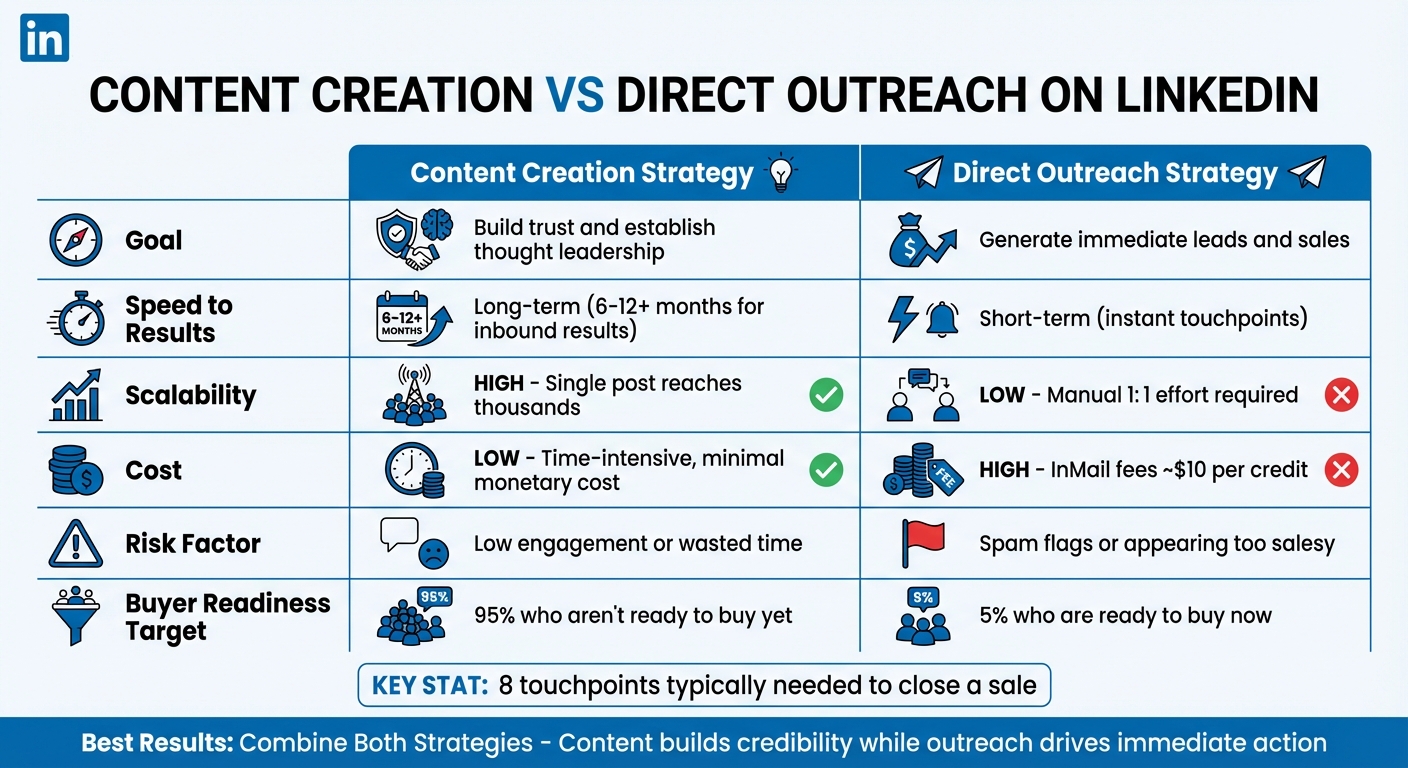
LinkedIn Lead Generation: Content vs Direct Outreach Strategy Comparison
When you're weighing the choice between content creation and direct outreach, it's less about which is "better" and more about which fits your strengths, resources, and timeline. Both approaches can work wonders, but they serve different purposes and demand different investments of time and effort.
What to Consider When Choosing Your Approach
Let's revisit the 95-5 rule: while 95% of B2B buyers aren't ready to purchase at any given moment, direct outreach zeroes in on the active 5%, while content broadens your reach and builds awareness.
Your skillset plays a big role here. If you're someone who thrives in one-on-one conversations and excels at relationship-building, direct outreach might feel like a natural fit. On the other hand, if you enjoy sharing insights and have a knack for writing or creating videos, content creation could be your sweet spot.
Another key factor is your time horizon. Content marketing requires patience - think six months or more to start seeing inbound leads. In contrast, direct outreach can deliver results almost immediately. That said, there's some synergy here: consistently posting content can enhance your credibility, which in turn boosts response rates to your outreach efforts.
The complexity of your sales cycle also matters. For example, the average B2B purchase involves input from 3.1 to 4.6 departments - think IT, Finance, Operations, and others. Content can help you reach this broader buying committee, while direct outreach typically targets one individual at a time. Plus, 75% of buyers say thought leadership influences their decision on which vendors make their short list. That’s a big win for content.
With these considerations in mind, let’s break down the two approaches side by side.
Comparing Content and Non-Content Methods
Here’s a quick comparison of content creation and direct outreach to help you decide:
| Feature | Content Creation Strategy | Direct Outreach Strategy |
|---|---|---|
| Goal | Build trust and establish thought leadership | Generate immediate leads and sales |
| Speed | Long-term (6–12+ months for inbound results) | Short-term (instant touchpoints) |
| Scalability | High (a single post can reach thousands) | Low (manual 1:1 effort required) |
| Cost | Low (time-intensive, but minimal monetary cost) | High (e.g., LinkedIn InMail fees around $10 per credit) |
| Risk | Risk of low engagement or wasted time | Risk of being flagged as spam or coming across as overly salesy |
| Buyer Readiness | Targets the 95% who aren’t ready to buy yet | Focuses on the 5% who are ready to buy now |
The most effective strategies often combine the strengths of both approaches. Content builds trust and credibility, making your direct outreach efforts land more effectively. Remember, it typically takes about eight touchpoints to close a sale, and content can act as several of those touchpoints before you even reach out personally. By blending these methods, you can create a well-rounded strategy that meets buyers where they are - whether they're ready to buy today or just starting to explore.
Conclusion: Combining Strategies for Better Results
You don’t have to rely on content to generate leads on LinkedIn, but pairing direct outreach with a strong content plan can take your results to the next level. Content adds credibility and acts as social proof, making cold outreach feel more like a warm introduction. As Speedwork Social aptly puts it:
"Push marketing secures the initial meeting, while pull marketing establishes your presence".
This approach isn’t static - it evolves as your audience’s readiness changes. Think of it in phases: in the first six months, focus on using content as social proof to back up your outreach efforts. Between six and 12 months, shift toward targeting those who engage with your posts. By the one-year mark, you’ll likely notice inbound inquiries rolling in, while still keeping up with consistent outreach.
Your specific strategy depends on your business stage, resources, and sales cycle. Early-stage startups often need the immediacy of direct outreach to fill their pipelines quickly. On the other hand, more established brands can lean into a steady flow of content to reinforce their authority. The key is staying consistent - content keeps you on the radar for future buyers, while direct outreach connects with those ready to act now.
FAQs
How does LinkedIn’s algorithm influence lead generation strategies?
LinkedIn’s algorithm plays a significant role in deciding what content shows up in users’ feeds, which directly affects how your lead-generation efforts are seen and interacted with. It favors posts that quickly spark engagement - likes, comments, and shares - while pushing down posts that fail to attract attention. Essentially, a well-thought-out, engaging post can break through to a much wider audience, whereas a lackluster one might barely make a ripple.
To boost your visibility, focus on three main strategies:
- Polish your profile and company page: Treat them like high-conversion landing pages that make a strong first impression.
- Craft content that delivers value quickly: Keep it concise and compelling to inspire immediate engagement.
- Leverage paid tools like Sponsored Content or InMail: These can ensure your message reaches the right audience, especially when organic reach falls short.
Timing and consistency are also key. Posting when your audience is most active and maintaining a regular schedule signals relevance to the algorithm, giving your content a better shot at reaching potential leads. By aligning your efforts with these strategies, you can transform LinkedIn into a go-to platform for generating high-quality B2B leads.
How can LinkedIn Sales Navigator help with lead generation?
LinkedIn Sales Navigator is a handy tool designed to help you pinpoint and connect with potential leads on the platform. It comes equipped with advanced search filters to zero in on the right prospects, real-time insights to keep you informed about decision-makers, and personalized lead suggestions tailored to match your audience.
What’s more, it works smoothly with CRMs, streamlining your outreach efforts and making it easier to monitor your progress. With access to LinkedIn’s massive network of over 1 billion members, Sales Navigator cuts down the hassle of finding and engaging with quality leads, saving you both time and energy.
Why is direct outreach often a better option than creating content for busy founders?
Direct outreach can be a game-changer for busy founders, cutting through the noise and skipping the lengthy process of creating and distributing content. Instead of casting a wide net, it focuses on targeted, one-on-one interactions with decision-makers, paving the way for quicker responses and deeper conversations.
Platforms like LinkedIn messaging or InMail make it easy to send tailored messages that grab attention in a sea of generic updates. This method emphasizes quality over quantity, allowing founders to foster genuine connections and generate leads without burning countless hours on content. For those juggling packed schedules, direct outreach offers a simple yet effective way to engage with the right people.