How Transparent Leadership Drives Growth

Transparent leadership is about openness, honesty, and clear communication. It builds trust, boosts employee satisfaction, and strengthens client relationships. Statistics show that 83% of employees feel more satisfied in transparent workplaces, and companies with transparency outperform competitors by up to 4x in market value. For founder-led B2B companies, this approach helps establish credibility, retain talent, and drive innovation by creating an environment where teams feel heard and valued.
Key takeaways:
- Employee engagement: Transparent leaders see 50% lower turnover and 180% more motivated teams.
- Client trust: Openness builds stronger, long-lasting relationships.
- Business impact: Transparent companies achieve higher productivity, better retention, and faster growth.
What Is Transparent Leadership
Transparent Leadership Definition
Transparent leadership revolves around openness, honesty, and clear communication across all aspects of a business. It’s about willingly sharing information, building trust, and keeping everyone - employees, clients, and stakeholders - in the loop.
Unlike the traditional top-down approach, where information is shared on a need-to-know basis, transparent leaders take a proactive stance. They openly discuss decisions, goals, and challenges, explaining the reasoning behind their choices. This makes employees feel valued and more connected to the company’s mission.
"I think the currency of leadership is transparency. You've got to be truthful."
What sets transparent leadership apart is its proactive nature. While honest leadership means answering truthfully when asked, transparent leadership goes further by sharing information without being prompted. This openness invites feedback and criticism, which can lead to better, more thoughtful decisions.
Transparent leaders don’t pretend to have all the answers. They’re open about their expertise as well as their uncertainties. By doing so, they create a workplace culture where team members feel safe sharing ideas and offering feedback, fostering collaboration and boosting engagement.
"Leadership isn't about having all the answers. It's about knowing what you don't know and creating an environment where others can step up and help figure it out."
The benefits of this approach are clear. A LeadershipIQ survey revealed that 63% of employees in transparent organizations would strongly recommend their workplace, compared to just 6% in organizations with closed communication. Similarly, Deloitte’s 2024 Global Human Capital Trends report found that 86% of HR and business leaders see a direct link between leadership transparency and employee trust. Research also shows that people are over five times more likely to trust leaders who demonstrate vulnerability.
Next, let’s dive into why this approach is particularly impactful for founder-led B2B businesses.
Why Transparency Matters for Founder-Led B2B Businesses
In founder-led B2B companies, transparency isn’t just a leadership style - it’s a key part of building a strong, authentic brand. When founders lead with openness, they create deeper connections with both clients and employees by sharing the real story behind their entrepreneurial journey.
In the world of B2B, where trust and relationships are crucial, transparent leadership signals credibility. By being honest about challenges and successes, founders show they’re not hiding behind corporate jargon - they’re real people navigating real business issues. This kind of authenticity builds trust, which is especially important in B2B relationships where decisions often hinge on personal connections.
Being transparent as a founder also means embracing vulnerability. For example, it could involve sharing lessons from a failed decision, hosting open Q&A sessions during company-wide meetings, or offering industry-specific insights based on personal experiences. Founders who tell compelling stories about their journey - including the highs, lows, and pivotal moments - stand out. Unlike generic corporate messaging, these narratives resonate with decision-makers in B2B settings, who value genuine relationships over purely transactional ones.
With these principles in mind, the next section will outline actionable practices for embracing transparent leadership.
Leadership Transparency: 3 Keys Every Leader Must Know
Key Practices for Transparent Leadership
Putting these practices into action strengthens the transparency that builds trust, boosts engagement, and drives growth for founder-led businesses.
Open Communication and Feedback Channels
Creating multiple avenues for honest dialogue is essential. The numbers highlight the need: only 14% of workers feel fully aligned with business goals, and more than 70% of employees feel left out of important updates. This disconnect has a direct impact on engagement - 92% of highly engaged employees feel heard at work, compared to just 30% of disengaged employees.
Coordinated Family Care provides a great example of how effective communication systems can work. By implementing regular meetings and feedback sessions, they improved evaluations, benefits, and career development opportunities.
It’s important to offer diverse communication options. Some employees thrive in group discussions, while others prefer one-on-one conversations or anonymous feedback. Community Medical Service, for instance, uses an anonymous question portal for town hall meetings. This approach has led to meaningful policy changes and adjustments to strategic priorities based on employee input.
Confidential feedback tools can uncover issues that might not come up in open discussions. MaxCash, for example, uses SurveyMonkey to gather monthly anonymous feedback. This has helped them refine their loan application process, leading to a 24% increase in completed applications and a 33% jump in customer satisfaction.
"Consistent communication is one of the best ways to encourage a more open form of communication. Relationships and trust are at the core of open communication."
The key to effective feedback loops is follow-through. When leaders act on employee input quickly, it shows that their voices matter. Tools like post-meeting surveys, engagement check-ins, and regular touchpoints help maintain this momentum.
These varied communication channels set the stage for open discussions about both achievements and challenges.
Sharing Successes and Challenges
Transparent leaders don’t just focus on wins - they openly discuss setbacks too, building credibility by sharing the full story. When founders talk about challenges, they model vulnerability, which can spark creative problem-solving across the team.
Being open about struggles doesn’t weaken leadership - it strengthens trust. When leaders admit they don’t have all the answers, it encourages team members to step up with ideas and solutions. This transforms challenges into opportunities for collaboration.
Providing context is crucial. Instead of just announcing a missed goal, explain the contributing factors, lessons learned, and the plan for moving forward. This approach turns setbacks into valuable learning moments.
"Feedback is a gift when given with the right intention and based on facts, not feelings."
Discussing challenges openly also prevents misinformation. Without clear communication, employees may fill in the blanks with assumptions that can be worse than reality. Proactive updates show confidence in the team’s ability to handle tough situations.
When celebrating successes, focus on team contributions rather than individual efforts. Recognizing how different roles played a part in achieving a goal not only boosts morale but also reinforces the importance of collaboration.
Involving Teams in Decision-Making
Once communication and transparency are in place, involving teams in decision-making further builds trust and taps into collective expertise. This works best when there’s a clear framework outlining who has authority and when input is encouraged. Founders should clarify which decisions are open for discussion and which require executive calls.
Start small. Begin by involving teams in less critical decisions, then gradually expand their role as confidence and experience grow. Document these processes in Standard Operating Procedures (SOPs) to ensure consistency.
Clarity is key. Team members need to know when they’re offering suggestions and when they have decision-making power. This avoids confusion and keeps discussions productive.
"Getting to the 'right answer' without anybody supporting it or having to execute it is just a recipe for failure."
Structured opportunities for input, such as strategy sessions, retrospectives, and planning meetings, work better than spontaneous requests. These forums give employees time to prepare thoughtful contributions.
Celebrate decisions made with team input to reinforce the value of collaboration. Highlighting how different perspectives contributed to a successful outcome motivates continued participation.
The goal isn’t to achieve consensus on every decision but to harness collective input while maintaining clear leadership. Teams that feel heard are more engaged and effective, even when their ideas aren’t always implemented.
How Transparent Leadership Drives Business Growth
Transparent leadership plays a pivotal role in driving measurable business growth. When founders prioritize openness, they set off a chain reaction that improves internal operations, strengthens external relationships, and supports long-term success.
Building Trust with Clients and Teams
Openness from leadership fosters trust, which leads to tangible results: a 260% increase in motivation, 41% reduction in absenteeism, and 50% lower turnover rates. For founder-led B2B businesses, this means reduced hiring costs and stronger connections with clients.
However, there's a trust gap that can't be ignored. Nearly 60% of employees feel their leaders fall short when it comes to transparency. The 2024 Edelman Trust Barometer highlights this divide, revealing that only 19% of associates trust their CEO to speak truthfully about the organization, compared to 52% of executives. This disconnect can hinder growth opportunities.
General Motors offers a powerful example of transparency in action. When Mary Barra stepped in as CEO in 2014, the company faced a major crisis surrounding ignition switch defects. Instead of sidestepping the issue, Barra spearheaded a cultural transformation centered on transparency and open communication. She introduced regular town halls, encouraged employee feedback, and made leadership changes to confront the problem directly.
When founders openly share their processes, challenges, and decision-making logic, they build client confidence. This approach differentiates their businesses from competitors using generic corporate messaging. Studies show that clear communication can boost productivity by 72% among business leaders and increase job satisfaction by 56% for knowledge workers.
The trust created externally through transparency also strengthens internal morale, creating a more cohesive and motivated team.
Boosting Team Morale and Engagement
Internally, transparency is a driving force behind higher morale and employee engagement. Engaged employees are the backbone of any growing business, and transparency is what keeps that backbone strong. The difference between open and closed organizations is stark: 63% of employees in transparent workplaces would strongly recommend their employer, compared to just 6% in organizations with poor communication.
Workplaces built on trust see 74% less stress, 106% more energy, and 50% higher productivity. When employees have a clear understanding of the company’s goals and challenges, they make informed decisions and contribute more effectively. Transparency breaks down information silos, empowering employees to act as decision-makers rather than simply following orders.
"Employees today are asking more of their employers. Gone are the days of blind loyalty or rigid corporate structures. People want to know what's in it for them, and they're no longer afraid to move on if they don't see a path forward."
– Sharon O'Donnell, Founder, OHR Consulting
But transparency must go beyond surface-level communication. Only 6% of employees report that their suggestions lead to meaningful changes. This highlights the need for genuine transparency that includes accountability and action. When founders openly discuss company challenges and align employees with the organization’s mission, routine tasks transform into meaningful contributions toward shared goals.
Driving New Ideas and Problem-Solving
In founder-led B2B settings, transparency not only builds trust but also fuels creativity and problem-solving. Open communication fosters an environment where ideas can flourish. Companies that prioritize transparency report a 25% increase in team creativity, while those with high transparency see a 70% improvement in innovation outcomes.
When leaders share challenges, they tap into collective intelligence. This collaborative approach allows diverse perspectives to surface, leading to innovative solutions that might be overlooked in traditional top-down structures.
"Understanding the whole picture helps facilitate solving problems. Transparency allows teams to come together easier and promotes authentic relationships. The effects of transparency can be profound."
– Sari Goldberg McKeown, Educator
Transparency also enables teams to identify issues early and address them quickly, preserving client relationships and operational efficiency. When employees have a clear view of client needs and market trends, they can proactively develop solutions, positioning the business as a strategic partner rather than just a service provider. Companies with transparent practices report a 25% increase in employee satisfaction, creating a cycle where engagement drives innovation, which in turn fuels growth.
sbb-itb-9354cf2
Using Transparency in Founder-Led B2B Marketing
Transparency isn’t just an internal value - it’s a powerful tool for connecting with external audiences, especially in B2B marketing. When founders embrace openness, they can create more meaningful relationships and stand out in a crowded market.
Using Transparent Content to Build Credibility
In B2B marketing, transparency goes beyond polished case studies or thought leadership articles. It’s about sharing real experiences and insights that position founders as trusted advisors rather than just salespeople.
Behind-the-scenes content can make a big impact. Sharing decisions, challenges, and even failures helps prospects see the human side of a business. It’s not just about showing expertise - it’s about being relatable. When founders share how they’ve tackled tough problems, it builds confidence in their ability to solve similar challenges for others.
Financial transparency can also be a game-changer. Founders who share metrics like revenue milestones or growth stats demonstrate stability and momentum. This approach works especially well when targeting other founders or executives who value data-driven insights.
Client success stories with context go further than traditional testimonials. Instead of just focusing on the end result, founders can share the full journey: the challenges faced, obstacles during implementation, and the collaborative efforts that led to success. This approach not only sets realistic expectations but also highlights problem-solving skills.
Of course, it’s essential to maintain professional boundaries. Sharing valuable insights is key, but oversharing personal details or confidential information can backfire.
Leveraging RevBoss for Transparency-Driven Marketing
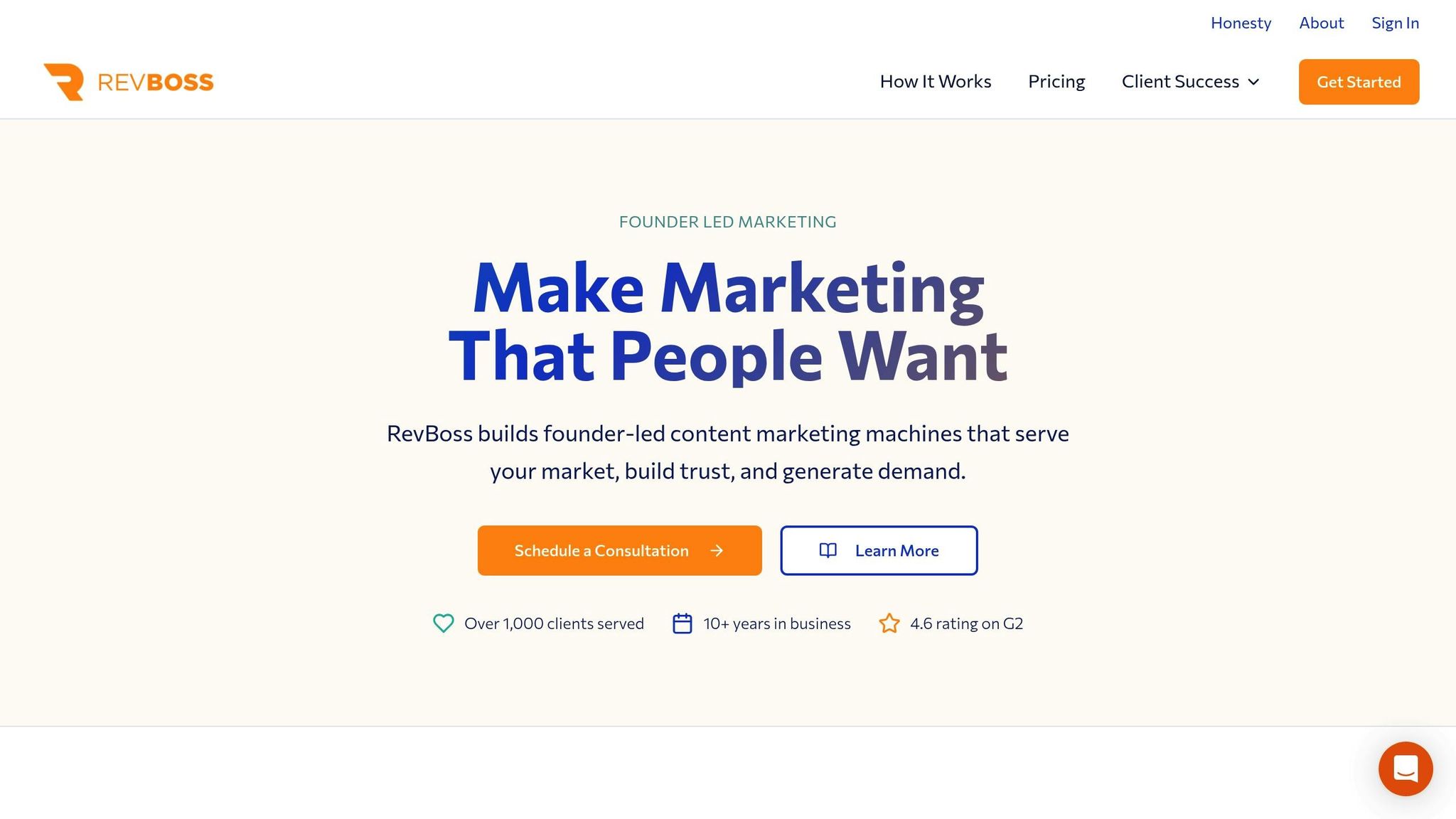
RevBoss helps founders craft marketing strategies that focus on authenticity and trust, setting them apart from traditional promotional tactics. Their approach emphasizes the founder's personal brand and voice, making transparency a natural part of the process.
RevBoss works closely with founders to create content that educates and engages while showcasing real-world insights and experiences. Their custom content strategy and production process ensures a balance between openness and professionalism, helping founders build credibility without risking sensitive business details.
Through audience development and activation campaigns, RevBoss targets prospects who value authentic leadership. By focusing on personal branding instead of corporate messaging, they help founders connect with the right audience, driving higher engagement and better-qualified leads.
Founders collaborate with RevBoss twice a month to align on content and strategy. This hands-on approach ensures that the marketing stays true to the founder's voice and values. Pricing starts at $3,000 per month and includes content strategy, production, audience development, and access to the RevBoss platform.
This method not only builds trust but also ensures measurable results - something we’ll explore further in the next section.
Setting Up Performance Dashboards and Feedback Forums
To maintain transparency at scale, it’s crucial to have systems that promote accountability and encourage dialogue. Performance dashboards and feedback forums provide the framework needed to keep everyone - both inside and outside the company - in the loop.
Internal dashboards should display key metrics like qualified leads, conversion rates, and customer lifetime value. When teams can see how their efforts contribute to the bigger picture, they’re more motivated to drive growth and success.
Client updates through newsletters or advisory sessions help align strategy with industry trends. Sharing these updates keeps clients informed and reinforces the founder’s role as a trusted advisor.
Feedback forums are another valuable tool. Internally, these could be monthly all-hands meetings where employees can ask questions about business performance or strategy. Externally, founders might host quarterly advisory sessions or create online communities where clients and prospects can engage directly.
Social media transparency amplifies the founder’s voice. Whether it’s sharing updates about challenges, celebrating team wins, or discussing industry trends, social platforms provide an opportunity to connect authentically. Consistency between internal practices and public communication is key.
These tools not only build trust but also open up opportunities for genuine two-way communication. Founders should be ready to respond to feedback, address concerns, and adapt strategies based on input from their teams and clients. It’s this ongoing dialogue that transforms transparency into a true competitive advantage.
Measuring the Impact of Transparent Leadership
Adopting transparent leadership is just the starting point. To see if it’s truly making a difference, you need to track the right metrics. These numbers help you understand what’s working and where there’s room to improve.
Tracking Employee Engagement and Retention
Employee engagement is a strong indicator of how effective transparent leadership is. When leaders are open and involve their teams in decision-making, the results often show up in measurable ways.
Start with employee satisfaction surveys. These surveys, conducted quarterly, can measure how well leadership communicates, the level of trust employees feel, and how informed they are about company decisions. A key metric to include is the employee Net Promoter Score (eNPS), which gauges how likely employees are to recommend your company as a great place to work.
Retention rates are another telling metric. Studies show that 75% of employees in transparent companies choose to stay, compared to just 45% in less transparent workplaces. By keeping tabs on monthly and annual retention rates, you can directly link improvements to your transparency efforts.
The financial stakes are high. Disengaged employees cost the U.S. economy between $483 billion and $605 billion annually in lost productivity. On the flip side, companies with engaged teams see 23% higher profitability, and engaged workers are 18% more likely to outperform in productivity.
"When employees are happy, they are your very best ambassadors."
Another useful metric is absenteeism rates. When employees feel connected to leadership and understand their role in the company’s goals, they tend to show up more consistently. Additionally, feedback from performance reviews can provide qualitative insights into how transparency is influencing motivation, job satisfaction, and workplace culture.
Measuring Client Trust and Loyalty
Transparency isn’t just an internal practice - it plays a big role in how clients perceive your business. Open communication and clear sharing of information build trust, which is key to customer loyalty.
Metrics like customer satisfaction scores (CSAT) and Net Promoter Score (NPS) can reveal how clients feel about your transparency. Surveys should ask about communication quality, the clarity of shared information, and overall trust in your leadership. Also, track the percentage of customers who feel well-informed about your company’s practices.
Trust matters more than ever. Research shows that 81% of consumers need to trust a brand before making a purchase. Companies with strong transparency practices enjoy a 23% boost in customer loyalty, and 94% of consumers are more likely to stay loyal to brands that commit to being open. Customer retention rates further underscore the benefits, with transparent companies outperforming competitors by up to 36% in retention.
Transparency also drives repeat business, expansion revenue, and referrals. The Customer Effort Score (CES) is another helpful metric - it measures how easy it is for clients to interact with your company. Lower effort often means higher satisfaction and loyalty. To deepen your understanding, use multiple feedback channels like social media interactions or direct client meetings to see how transparency shapes client relationships.
Evaluating Business Growth Metrics
Ultimately, the success of transparent leadership is reflected in business performance. The numbers don’t lie - tracking core metrics will show whether openness is helping your company grow.
Start with revenue growth. Look at monthly and quarterly trends, particularly after launching transparency initiatives, to see if there’s a connection between openness and increased sales. This is especially relevant in B2B settings, where trust plays a critical role.
Transparency also impacts lead generation and conversion rates. Watch how honest, open communication affects lead quality, cost per lead, and conversion rates, as well as the time it takes to close deals.
Employee productivity metrics are another key area to monitor. Research shows that workplace trust can lead to a 260% boost in motivation, 41% lower absenteeism, and 50% less turnover. Metrics like output per employee, project completion rates, and quality indicators can help you see how transparency is driving team performance.
Trust also reduces acquisition costs and increases customer lifetime value (CLV) by turning clients into brand advocates.
Finally, keep an eye on broader metrics like market share, competitive positioning, and innovation rates. Transparent cultures often spark more employee-driven ideas and process improvements. Set baseline metrics before rolling out transparency initiatives, and use dashboards that combine employee engagement, client satisfaction, and business growth data. This comprehensive approach ensures that transparency remains a powerful tool for sustainable success.
Conclusion: The Power of Transparency for Founders
Transparent leadership isn't just a nice-to-have - it’s a game-changer for sustainable business growth. Research shows that open and clear communication can increase employee productivity nearly fivefold. Beyond that, it builds trust, strengthens collaboration, and helps shape a resilient workplace culture.
For founder-led B2B businesses, transparency takes on an even greater importance. Building a personal brand grounded in honesty means being unflinchingly open - sharing both wins and setbacks while actively seeking feedback. This openness not only boosts team morale but also fosters strong, enduring relationships with clients and partners. It’s this commitment to transparency that sets the stage for actionable leadership.
Putting these ideas into practice starts with prioritizing clear communication and accountability. Create open channels where employees feel heard, empower them to make meaningful decisions, and nurture a culture of responsibility. These steps ensure your organization is ready to excel in an increasingly competitive environment. As Jiyeon Kim, Managing Partner of Signium Korea, puts it:
"At the core of every high-performing business are people: people who want to be seen, heard, and valued. Leaders who understand this don't just lead better teams; they build happier, more stable organizations by earning people's trust. By doing so, they create the conditions where innovation thrives, where culture becomes a competitive edge – not just a buzzword – and where people choose to stay, grow, and contribute their best."
With 70% of U.S. workers admitting they’d consider leaving their job if they had a poor manager, transparent leadership isn’t optional - it’s essential. From fostering authentic connections to driving measurable growth, transparency becomes the cornerstone of success. By embracing it, founders can cultivate trust, spark innovation, and build businesses where people genuinely want to thrive.
FAQs
How does transparent leadership enhance employee engagement and help reduce turnover?
Transparent leadership is all about building trust, promoting open communication, and fostering a sense of belonging within your team. When employees feel like they’re kept in the loop about company goals, decisions, and challenges, they’re more likely to stay motivated and genuinely committed to their work.
Leaders who prioritize transparency strengthen relationships with their teams, minimize confusion, and ensure everyone is on the same page when it comes to the company’s mission. This not only keeps employees engaged but also helps create a supportive workplace culture that reduces turnover and emphasizes mutual respect.
How can founder-led B2B companies practice transparent leadership to foster growth?
Transparent leadership plays a crucial role in building trust and fostering long-term growth. For founders looking to embrace this approach, here are some practical steps:
- Communicate openly and regularly: Keep everyone informed by sharing updates about both wins and setbacks. This openness helps create a sense of inclusion.
- Define roles and expectations clearly: Make sure every team member knows their responsibilities and how their efforts align with the company's goals.
- Encourage accountability: Lead by example and create an environment where everyone takes ownership of their work.
- Discuss goals and obstacles honestly: Be upfront about the company's vision and the challenges it faces, encouraging a shared commitment to overcoming them.
- Show empathy: Take the time to understand and support both your team and your clients, showing that their well-being matters.
By focusing on transparency, founders can build stronger relationships, inspire loyalty, and establish a foundation of trust that drives lasting success.
How does transparent leadership help build stronger client relationships and support business growth?
Transparent leadership builds trust and promotes open, honest communication. When leaders share their goals, challenges, and decisions openly, clients feel appreciated and more connected, which strengthens the relationship.
By emphasizing integrity and clarity, transparent leaders lay the groundwork for meaningful connections that resonate with both clients and teams. This approach improves collaboration and helps businesses grow over time by fostering loyalty and credibility.