7 Ways To Get More Webinar Attendees

Want more people to actually attend your webinar? Here’s the deal: people sign up, but getting them to show up is a whole other challenge. Blame inbox overload, Zoom fatigue, or just plain forgetfulness. But don’t worry - I’ve got you covered. Here are 7 practical ways to boost your attendance rates:
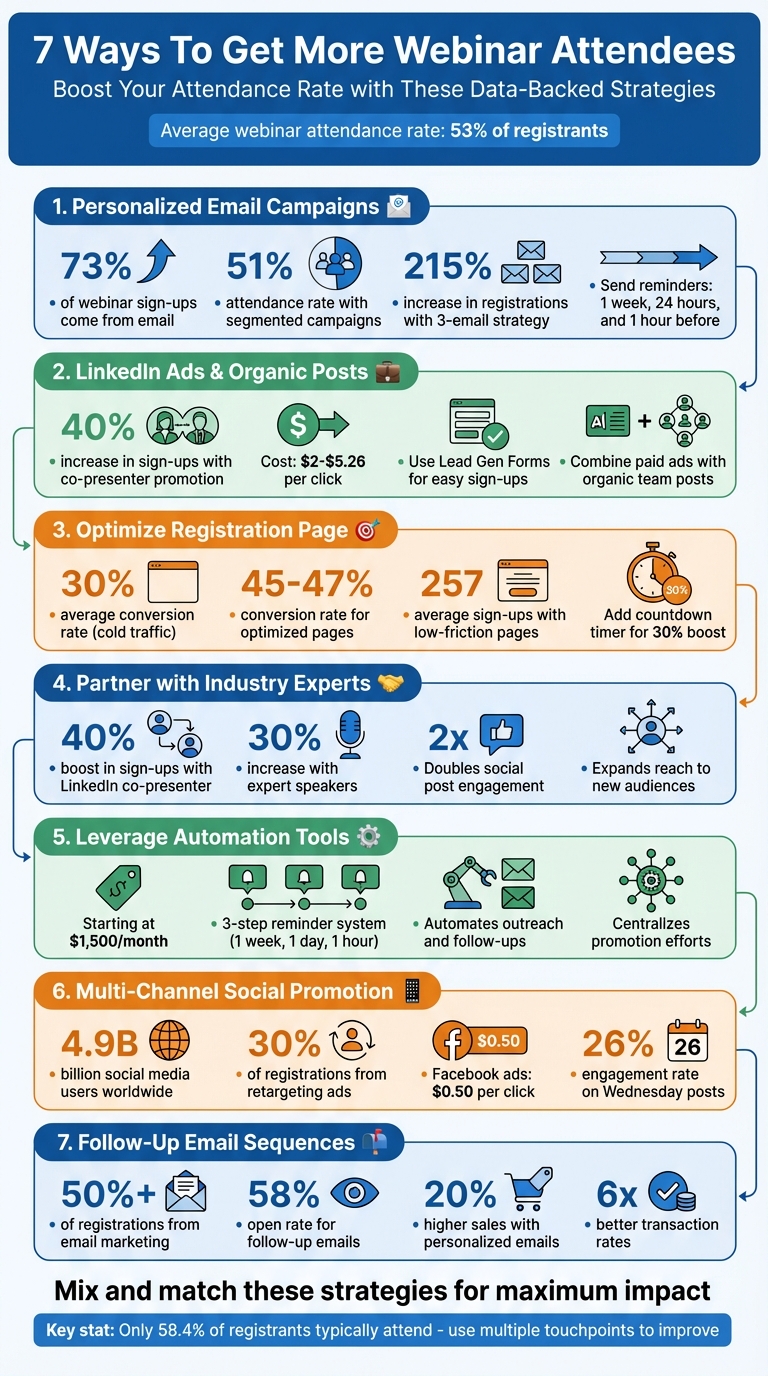
- Personalized Email Campaigns: Email drives 73% of webinar sign-ups. Send timely, targeted emails with strong subject lines and clear CTAs. Reminder emails work wonders - especially 24 hours and 1 hour before the event.
- LinkedIn Ads & Organic Posts: Use LinkedIn’s targeting tools and Lead Gen Forms. Combine paid ads with team posts for maximum reach.
- Optimize Your Registration Page: Keep it simple. Ask for just a name and email, use speaker bios, and add a countdown timer to create urgency.
- Partner with Experts: Collaborating with industry pros boosts credibility and taps into their audience. A co-presenter can increase sign-ups by 40%.
- Leverage Tools Like RevBoss: Automate outreach, reminders, and follow-ups to save time and increase attendance.
- Promote on Social Media: Use multiple platforms like Instagram, TikTok, and LinkedIn. Retarget visitors who didn’t sign up the first time.
- Follow-Up Emails: Post-event, send recordings and resources to keep the conversation going. Timely follow-ups help convert no-shows into engaged leads.
The secret? Mix and match these strategies to create multiple touchpoints. Start with email and LinkedIn, then expand. Small tweaks - like adding a calendar link or using countdown timers - can make a big difference. Let’s fill that (virtual) room!
7 Proven Strategies to Increase Webinar Attendance Rates
5 Ways to Skyrocket Webinar Attendance
sbb-itb-9354cf2
1. Send Personalized Email Campaigns
Email marketing reigns supreme when it comes to driving webinar registrations - 73% of sign-ups come directly from email campaigns. Personalized email invites consistently outperform other promotional efforts, making your email list your most valuable tool.
Why Emails Work So Well for Webinar Registrations
The secret to success lies in targeted and timely emails. For instance, WildApricot's 3-email strategy in August 2025 saw a 215% increase in registrations. Similarly, Goldcast's segmented email campaigns averaged 257 registrations per webinar, with an impressive 51% attendance rate. WildApricot also found that 42% of registrations happened 2–11 days before the event, while 58% came in during the final 24 hours. These numbers highlight that a well-timed email strategy doesn’t just boost sign-ups - it simplifies the process for small teams.
Affordable and Effective for Businesses
Email marketing offers an affordable way to engage an audience that already trusts your brand. Interestingly, plain text emails often outperform flashy HTML designs because they feel more personal and approachable.
"HTML can look great... but text emails offer a personal, human touch that recipients cannot forget."
Simple to Set Up, Even for Small Teams
You don’t need a large team or advanced technical skills to create a winning email sequence. Platforms like MailerLite, starting at just $25/month, offer pre-built automation templates specifically designed for events. Once you’ve set up your sequence, the platform takes care of the rest.
Here’s a proven email cadence to follow:
- Announcement email: Send this 2–3 weeks before the webinar.
- Reminder email: Follow up one week before the event.
- Last-chance email: Send this on the day of the webinar.
Crafting compelling subject lines is critical - include the event time and phrases like "Free Webinar" to create urgency.
"We've learned not to spend any time rewriting the copy and we literally keep the contents of the email identical. The hardest part about reminding someone about an online event is just getting them to read the subject line."
To reduce no-shows, include an "Add to Calendar" button in your confirmation and reminder emails. On the day of the event, send one last email to those who opened previous invites but haven’t registered yet. These small steps can make a big difference in attendance.
2. Use LinkedIn Ads and Organic Posts
To pack your virtual event, LinkedIn offers a powerful mix of paid and organic outreach opportunities.
Effectiveness in Driving Webinar Registrations
LinkedIn is a go-to platform for B2B marketers, and it’s easy to see why. More than half of content marketers rank webinars as one of their most effective tools. With LinkedIn’s advanced targeting options - filtering by company size, location, industry, job function, and seniority - you can zero in on the decision-makers who matter most.
One standout feature is LinkedIn's Lead Gen Forms, which simplify sign-ups by auto-filling user data. Pairing paid ads with organic posts from your speakers and team can amplify your reach. For example, Melissa Kwan, CEO of eWebinar, once gained 1 million impressions on an organic LinkedIn post by sharing her personal experiences.
"LinkedIn: This platform is the best place to reach a warm B2B audience."
Cost-Efficiency for Businesses
While LinkedIn ads range from $2.00 to $5.26 per click, their ability to deliver high-quality B2B leads makes the investment worthwhile. Meanwhile, organic posts cost nothing and can expand your reach far beyond your email list. Setting up a LinkedIn Event is quick and includes automated reminders, making it a smooth addition to your promotional strategy.
Ease of Implementation for Founder-Led Teams
For smaller teams, LinkedIn offers a straightforward path to success. Start by creating a LinkedIn Event page to capture early sign-ups. Then, on launch day, encourage your speakers and employees to share the event with their networks for maximum exposure. Boost engagement by posting teaser videos or behind-the-scenes content. You can even retarget visitors who didn’t sign up using LinkedIn’s Insight Tag.
This strategy doesn’t just drive sign-ups - it lays the groundwork for ongoing connections.
Potential for Long-Term Engagement with the Target Audience
LinkedIn isn’t just about one-time events. It’s a platform to build lasting relationships. Share related blog posts, participate in LinkedIn Groups, and publish updates leading up to your webinar to establish your authority. After the event, repurpose key insights into videos and posts to drive on-demand views. Consistent LinkedIn activity keeps your brand top-of-mind and encourages repeat participation.
"Webinars allow you to open direct, interactive channels between your brand and your customers. Not only does this help you establish trust and authority in your industry or niche, but it will help you engage with your customer base directly."
3. Improve Your Registration Page
Your registration page is where curiosity turns into commitment. On average, webinar landing pages convert about 30% of cold traffic, but the best ones manage to push that rate up to 45% to 47% by nailing the basics.
Effectiveness in Driving Webinar Registrations
Keep it simple. Asking for just a name and email can prevent you from losing 5% to 10% of potential registrations. Between 2021 and 2023, Goldcast studied over 100 of its digital events and found that low-friction, branded registration pages brought in an average of 257 sign-ups with a 51% attendance rate - well above the industry norm.
What works? Start with a headline that clearly highlights the value of attending. Use bullet points to make the benefits easy to digest. Include speaker photos and bios to establish credibility, and add a countdown timer to create urgency - this alone can boost conversions by up to 30%.
"Messaging is your magnet. Done right, it pulls strangers in, sells the value before they ever hit the form, and shoves them across the finish line with a single, can't-miss CTA."
Once you've got the basics down, fine-tune your page elements to squeeze out even more conversions.
Cost-Efficiency for Businesses
With drag-and-drop builders, even small teams can whip up professional registration pages in no time. Take Vancouver Island University, for example. In 2020, they used Unbounce to launch their "Worth It" campaign, attracting over 3,100 registrations with a 9% conversion rate from 35,000 visitors. And they did it all with a team of just six people.
Ease of Implementation for Founder-Led Teams
Most webinar platforms and landing page builders offer templates that are mobile-friendly and easy to customize. Test different headlines and CTA colors to see what resonates best with your audience.
"What helped us with conversion rates was that Unbounce is such a mobile-friendly platform... This enabled us to better optimize the page and convert more leads."
Potential for Long-Term Engagement with the Target Audience
Your registration page doesn’t have to stop working after the webinar. Turn the sign-up button into a "Watch On-Demand" CTA and use the thank-you page to offer follow-up resources like ebooks or checklists. This keeps the conversation going and transforms a one-time event into an ongoing lead generation tool.
4. Work with Industry Experts
Bringing an industry expert on board can do wonders for your webinar’s credibility and attendance. A recognized name alone can drive registrations. For instance, collaborating with a co-presenter on LinkedIn has been shown to boost sign-ups by 40%, while featuring seasoned professionals as speakers can increase registrations by 30%. This isn’t just a one-time win - it sets the stage for ongoing audience engagement.
Effectiveness in Driving Webinar Registrations
The real magic lies in tapping into the expert’s audience. Take Neil Patel, for example. He teamed up with Jason Cohen, CEO of WPEngine, for a webinar on website design and user experience. Cohen’s deep knowledge and established following in the hosting and UX space brought in a focused, technical audience that Patel wouldn’t have reached on his own. Similarly, Matthew Goulart, founder of Ignite Digital, saw his social post engagement double and registrations jump by 30% after promoting his expert speakers on social media.
"Partnering with an influencer, thought leader, or expert collaborator is a fantastic way to boost your webinar's credibility and significantly expand its reach."
This strategy isn’t just effective - it’s also surprisingly affordable.
Cost-Efficiency for Businesses
You don’t need a massive budget to secure a top-notch speaker. By managing logistics, hosting, and promotion, you can offer value in exchange for their time, often through a lead-sharing agreement. This way, they gain access to your audience, and you get a high-profile speaker without shelling out for a speaking fee. Tom Haberman, CEO of Studio4Motion, leveraged this approach using LinkedIn Events. By having his co-presenter promote the event on their own feed, he saw a 40% increase in sign-ups.
Ease of Implementation for Founder-Led Teams
Making the process easy for your expert is key. When reaching out, mention specific work they’ve done and explain why their expertise aligns with your audience. Once they’re on board, provide them with a “ready-to-post” promo kit, complete with images, copy, and links. To maximize impact, coordinate a "social posting day" where you and your speakers simultaneously promote the event, creating a buzz that amplifies awareness.
"This cross-promotion can expand reach significantly. One of our latest clients saw a 40% increase in sign-ups by having a co-presenter share the event on their LinkedIn feed."
Potential for Long-Term Engagement with the Target Audience
A successful partnership with an expert doesn’t have to end with a single webinar. Build on the relationship by planning follow-up opportunities like a webinar series or future events. Sharing leads creates mutual value, and ongoing collaborations make co-marketing easier down the road. Position the webinar as a platform for the expert to grow their own audience through your network, creating a win-win dynamic that encourages repeat partnerships.
5. Use RevBoss Event Marketing Support
RevBoss Event Marketing Support brings your team together and simplifies multichannel outreach by automating tasks that would otherwise require multiple tools and a lot of manual effort.
Boosting Webinar Registrations
RevBoss takes your webinar registrations to the next level by aligning your team and equipping sales reps with tools to connect with prospects. These tools include curated email templates, LinkedIn post ideas, and strategies for engaging within your industry. Sales reps also get access to event calendars, pre-written outreach snippets, and promotional materials to share across their networks. This well-coordinated strategy ensures your webinar gets maximum exposure.
A Budget-Friendly Option for Businesses
For companies targeting niche audiences, paid social ads can quickly eat up your budget. RevBoss offers a more affordable solution, with plans starting at $1,500 per month that include event marketing support as part of a broader package. By automating repetitive tasks - like triggering polls, managing chat, and sending reminders - the platform uses a proven 3-step reminder system (one week, one day, and one hour before the event) to consistently increase attendance.
Simple Setup for Founder-Led Teams
If you're part of a founder-led team, you know how stretched resources can be. RevBoss simplifies the entire process by centralizing promotion, reminders, and follow-ups into one platform - no training required. This all-in-one approach allows founders to focus on what really matters: creating and delivering great content.
6. Promote Across Multiple Social Channels
Effectiveness in Driving Webinar Registrations
Being active on multiple platforms helps your audience notice and trust your event as they come across it in different spaces. With over 4.9 billion social media users worldwide, the potential reach is massive.
LinkedIn is the go-to platform for B2B webinars, while Instagram and TikTok shine when it comes to personality-driven content or behind-the-scenes glimpses. Providing your speakers with ready-to-use social media kits can significantly expand your reach by tapping into their networks.
Cost-Efficiency for Businesses
Organic social media promotion is free, which is perfect for founder-led teams working with tight budgets. If you decide to invest in paid ads, Facebook offers one of the most budget-friendly options, with an average cost of $0.50 per click, compared to LinkedIn’s higher range of $2 to $3 per click. That said, LinkedIn often delivers better-quality B2B leads, making the higher cost worth it for some.
Retargeting ads are especially effective. Mushfiq Sarker, CEO of LaGrande Marketing, explains:
"Retargeting gave us the highest conversion rate for the budget spent... it targets people who are warm leads, capitalizes on existing interest and pushes them to take action".
These ads can contribute to about 30% of total webinar registrations, re-engaging visitors who checked out your landing page but didn’t sign up. Platforms like Instagram and TikTok can complement LinkedIn by using visual and personality-driven content to reach audiences at little to no cost.
Ease of Implementation for Founder-Led Teams
Keep your webinar in the spotlight by pinning announcements to the top of your social profiles. Use platform-specific tools like Instagram’s "remind me" button or LinkedIn’s Event feature to let users sign up for notifications directly on the platform.
Your employees can be your biggest advocates. Research shows that employees are three times more credible than the CEO when sharing content. Organize a "social posting day", where everyone on your team shares the webinar announcement simultaneously to increase visibility. Timing matters too - posts made midweek, particularly on Wednesdays, see a 26% engagement rate, while weekend posts struggle with only 1% to 2% engagement. As the event nears, ramp up your posting frequency, especially the day before and the day of the webinar. These strategies ensure maximum exposure, setting the stage for deeper engagement through follow-up efforts.
Potential for Long-Term Engagement with the Target Audience
Your webinar doesn’t have to be a one-and-done event. Repurpose the content into short clips or infographics to keep the conversation going on social media. Bite-sized videos under two minutes or visuals highlighting speaker credentials and key takeaways tend to perform particularly well. Using a consistent hashtag for your webinar series also helps build a sense of community and makes your event easier to find across platforms. These efforts extend the value of your webinar and keep your audience engaged long after the live session ends. From here, the focus shifts to how well-timed email campaigns can turn registrants into active participants.
7. Follow Up with Email Sequences
Effectiveness in Driving Webinar Registrations
Follow-up email sequences are a game-changer when it comes to boosting webinar attendance. Did you know that over half of all webinar registrations come directly from email marketing? That’s right - emails drive more than 50% of those sign-ups. And with follow-up emails achieving a solid 58% open rate, it’s clear they’re worth the effort. Still, webinars often face a tough challenge: high no-show rates. On average, only about 53% of registrants actually attend.
To combat this, timing is everything. Sending reminders 24 hours, 1 hour, and even 15 minutes before the webinar keeps it top of mind for your audience. And don’t forget the folks who prefer to catch the replay - around 25% of registrants fall into this category. Sending a follow-up email with the recording link within 24 hours ensures you’re catering to this on-demand crowd. These small but timely actions can bridge the gap between a sign-up and actual attendance.
Cost-Efficiency for Businesses
Follow-up emails don’t just boost attendance - they’re also incredibly budget-friendly. While other marketing strategies can drain your wallet, email marketing delivers impressive results without breaking the bank. Even with thousands of subscribers, monthly costs typically stay in the low double digits. As freelance writer Marijana Kay puts it:
"Email marketing costs can be $0. And even with thousands of subscribers, you can keep your monthly email expenses in the two-figure range - while having the potential to make four figures each month".
When compared to pricey social ads, email marketing is a no-brainer for founder-led teams. Plus, personalized emails pack a punch - they generate 20% higher sales and boast transaction rates six times better than generic campaigns. With modern email platforms, you can schedule entire sequences in advance, letting them run on autopilot while you focus on delivering a stellar webinar.
Ease of Implementation for Founder-Led Teams
Setting up automated email sequences has never been easier. Most email platforms now integrate seamlessly with webinar tools, eliminating the hassle of manual data transfers. A well-planned sequence should include a confirmation email right after someone signs up (don’t forget to add an "Add to Calendar" link to reduce no-shows), strategically timed reminder emails, and a follow-up after the webinar.
You can also segment your emails for a more personalized touch. For example, send attendees a thank-you email packed with helpful resources, while no-shows get the replay link and an invite to your next event. Adding a plain-text, conversational tone to your emails can make them feel more personal. And for a last-minute nudge, try a forwarded-style email to create urgency. By automating these tasks, you free up time and set the stage for meaningful follow-ups.
Potential for Long-Term Engagement with the Target Audience
Follow-up sequences aren’t just about one webinar - they’re about building a lasting connection with your audience. After sharing the webinar replay, follow up a few days later with a feedback survey. This not only shows you value their input but also helps you refine future events. As Brillixa Herdhiana, Senior Growth Manager at Livestorm, puts it:
"A strong email follow-up helps you continue the conversation and drive more engagement by sharing additional resources".
Keep the momentum going by linking to blog posts, case studies, or details about your next webinar. You can even repurpose key insights from the webinar into a content series, extending its value over time. With consistent and thoughtful follow-ups, a single event can evolve into an ongoing dialogue that nurtures your audience and builds long-term trust.
Conclusion
Getting more people to attend your webinar isn’t about relying on a single strategy - it’s about combining several targeted efforts. While email campaigns might account for 57% of your registrations, adding LinkedIn posts, retargeting ads, and expert collaborations creates multiple touchpoints. These touchpoints ensure your event stays on your audience’s radar across various platforms.
It’s worth noting that only 58.4% of registrants typically attend webinars, and B2B registration rates often hover between 20% and 40%. This is why a multichannel approach is key. Pairing organic content with paid ads targeting the same keywords can help you dominate search results, driving more registrations. Retargeting ads can further boost your numbers, capturing about 30% more sign-ups from leads who showed interest but didn’t initially register.
"Successful webinar marketing requires leveraging multiple channels, including email, social media, paid ads, and partnerships, to maximize reach and attendance."
This quote underscores the importance of the multichannel strategies discussed throughout this article. To make these efforts more effective, test and refine your approach. For instance, A/B test your email subject lines, try different webinar times (Tuesday through Thursday between 10:00 AM and 2:00 PM tends to work best for professional audiences), and track which platforms bring in the most attendees.
Improving webinar attendance isn’t a one-and-done task - it’s an ongoing process. What works for one audience might fall flat for another, and preferences shift over time. Use your platform’s analytics to find where people drop off, and send post-webinar surveys within 24 hours to gather feedback. Also, don’t underestimate the power of reminders: sending them one week, one day, and one hour before the event can boost attendance by over 30%.
Start by implementing two or three of these strategies, and expand as you see results. The time and energy you invest in promotion will directly impact how many people show up for your event.
"Promoting a webinar requires consistent effort during your promotion period."
FAQs
What are the best ways to reduce no-show rates for webinars?
Reducing no-show rates for webinars takes a mix of smart planning and effective communication. Start by scheduling reminder emails at strategic intervals - one a week out, another the day before, and a final nudge an hour before the event. These reminders keep your webinar top of mind and help attendees avoid double-booking.
Make your invitations stand out with a personalized touch. Highlight what attendees will gain, like exclusive insights or actionable tips, and craft subject lines that grab attention and spark curiosity. Don’t stop there - spread the word across multiple platforms, from email to social media, to ensure your audience stays engaged and committed.
With timely reminders, attention-grabbing invites, and a multi-channel approach, you can boost attendance and keep no-shows to a minimum.
What are the best ways to promote a webinar and attract more attendees?
When it comes to getting the word out about your webinar, a mix of email marketing, social media, and dedicated landing pages can work wonders. Email gives you a direct line to your audience, letting you craft personalized messages with catchy subject lines that grab attention. Plus, follow-up reminders can nudge those on the fence to hit that "Register" button.
Social media platforms - think LinkedIn, Facebook, and Instagram - offer a goldmine of opportunities to connect with potential attendees. Posts, stories, and even targeted ads can create buzz and keep your event front and center.
And don’t forget the power of a dedicated landing page. This is your webinar’s home base, where people can easily sign up. It’s also super shareable, making it perfect for promotion across all your channels. Want to go the extra mile? Partner with industry influencers or collaborators to tap into new audiences and extend your reach. By blending these approaches, you’ll boost visibility and pack the (virtual) room!
How can I use industry experts to boost webinar attendance?
To draw a larger crowd to your webinar, think about bringing in industry experts as guest speakers or co-hosts. Their knowledge and reputation can help you reach a wider audience and establish trust with potential attendees. Having a recognizable name in your field on board not only boosts the event's credibility but also makes it far more enticing.
Make sure to actively promote their participation through email campaigns and social media. Showcase their credentials and emphasize what attendees will gain by tuning in to hear their perspectives. Featuring industry experts is a tried-and-true way to add value to your webinar and encourage more people to sign up and engage.