The Lightweight “Intent Surfacing” Playbook: Signals to Watch and How to Respond

Want to stop wasting time on leads that go nowhere? Here’s the deal: 67% of the B2B buying journey is happening online, and only 5% of your target market is actively buying at any given time. If you’re not tracking intent signals - like visits to your pricing page or content downloads - you’re missing out on the hottest prospects.
What’s in this for you?
- Learn how to spot high-intent behaviors (hint: it’s all in the data).
- Discover tools (like RevBoss) to track these signals without breaking the bank.
- Get actionable steps to turn interest into revenue - fast.
Key takeaway: Intent signals are your shortcut to finding ready-to-buy customers. Act quickly and focus on the right leads to boost conversions by up to 900%. Let’s break it down.
How to Use Intent Signals to Find Ready-to-Buy Leads | Shira Simmonds x Smartlead
sbb-itb-9354cf2
Intent Signals to Track in B2B Marketing
Intent signals can help separate serious prospects from casual browsers. Not every site visit or interaction means someone is ready to buy. For instance, a quick bounce off your homepage is a far cry from someone spending 15 minutes on an implementation guide or repeatedly checking your pricing page. The challenge lies in filtering out the noise and focusing on behaviors that indicate genuine interest.
Website Engagement Signals
Your website is a goldmine for spotting intent. Key actions like frequent visits to pricing pages, demo requests, or comparisons of product features signal that a prospect is actively considering your solution. A spike in visits from a specific company - especially multiple visits within 48 hours - suggests they’re deep in evaluation mode. Metrics like high dwell time, scrolling through long pages, or viewing multiple pages also point to serious research.
Consider this: 78% of B2B buyers finalize product specifications before reaching out to a seller, and 84% end up purchasing from the first seller they engage with. What’s more, between 57% and 70% of the buying journey is completed anonymously online before a prospect ever contacts sales. Tools like reverse IP lookup can help identify which companies are visiting your site, even if they don’t fill out a form.
"Website visitor signals are very time-sensitive. Prospects are actively seeking information now, so be sure to follow up as quickly as possible."
– Alexa Grabell, Co-Founder & CEO at Pocus
Not all pages are created equal when it comes to identifying intent. Pages like "About Us", career sections, or login portals are often irrelevant for this purpose and can lead to false positives. Instead, focus on what’s often called the "money pages" - pricing, competitor comparisons, FAQs, and technical documentation. Visits to these pages by decision-makers should trigger personalized outreach, while visits by lower-level team members might be better suited for automated nurturing.
Beyond website activity, content engagement offers a deeper look into where prospects are in their decision-making process.
Content Interaction Signals
The type of content a prospect engages with can reveal their position in the buying journey. Downloads of bottom-of-funnel resources - such as technical documentation, ROI calculators, or implementation guides - carry far more weight than casual reads of top-of-funnel blog posts. If someone interacts with three to five pieces of content or more, it’s a clear sign they’re in serious evaluation mode. For instance, downloading multiple case studies in one week or repeatedly visiting your pricing page shows strong momentum.
Webinar participation is another telling sign. Prospects who stay for the entire session and actively engage - by asking questions or responding to polls - are showing clear intent. Similarly, time spent on interactive product tours or feature comparison tools indicates they’re narrowing down their options. It’s worth noting that 87% of B2B buyers prefer to self-serve their journey, and nearly half (47%) review several pieces of content before reaching out to sales.
To streamline this process, assign weighted scores to different actions (e.g., 30 points for pricing page visits, 10 points for blog views). This can help prioritize follow-ups. For instance, if an account shows a surge in interest around a specific topic, like SOC 2 compliance, you might trigger a targeted nurture campaign with a relevant case study.
On top of this, tracking social media activity can provide real-time insights into buyer intent.
Social Media Activity Signals
Social media is another rich source of intent data, offering immediate insights into prospect behavior. High-intent signals include actions like liking or commenting on your product announcements, sharing thought leadership pieces, or following your brand. When multiple employees from the same company engage with your content in a short span, it’s a strong account-level signal worth investigating.
For example, LinkedIn profile visits to your company page or your founder’s profile can indicate that an account is ready for outreach. Monitoring interactions with competitor posts can also help identify prospects actively exploring their options. Even job title changes - like a promotion from RevOps Manager to VP of RevOps - can signal new priorities or budget shifts, making them ideal triggers for engagement. In fact, responding within the first five minutes of spotting an intent signal can boost conversion rates by eight times.
When reaching out, reference specific social interactions to make your message personal - mention a post they liked or a comment they made. Generic greetings won’t cut it. Also, keep an eye on leadership changes, such as a newly hired CMO or VP of Sales at a target account. These roles often reassess their tech stacks within the first 90 days, creating opportunities for your solution. Finally, ensure social signals are integrated into your CRM so they can be analyzed alongside website visits and email engagement for a complete picture of intent.
Simple Tools and Methods for Tracking Intent
You don’t need a massive enterprise tech stack to start tracking intent signals. Here’s the reality: 98% of website visitors leave without filling out a form. Without the right tools, most of these potential leads slip through the cracks. The good news? There are lightweight tools that can help you identify and act on these visitors’ interest without requiring a big budget or a steep learning curve.
Once you’ve identified key intent signals, start with a simple, hands-on approach. For example, export a daily CSV of visitors using a free tool, organize them in Google Sheets by behavior, and manually upload promising leads into your CRM. This process not only helps you identify which signals matter most but also gives you a better understanding of how to prioritize them. Once you’ve nailed down what works, you can move on to more advanced tracking and automation. These simple tools allow you to quickly act on high-intent prospects, keeping your focus on what really matters.
Using RevBoss for Signal Tracking
While manual tracking is a great way to build early insights, tools like RevBoss can take your efforts to the next level by automating signal monitoring across multiple channels. RevBoss tracks intent signals from LinkedIn engagement (likes, comments, shares), email interactions (opens, clicks, replies), and web activity (pages visited and frequency). This multi-signal approach is crucial because the average B2B deal involves 7.4 decision-makers. To close deals, you need a complete view of account-level interest.
RevBoss doesn’t just track signals - it acts on them. For instance, if a prospect visits your pricing page three times in five days, the system can trigger follow-up tasks automatically. It also filters signals based on your ideal customer profile, so you’re only focusing on leads that fit your target industry, company size, or location. This saves time and ensures your efforts aren’t wasted on leads that don’t align with your goals.
Free Analytics Tools for Beginners
If you’re just starting out, Google Analytics is a no-cost way to track website behavior. Use it to see which pages get the most attention, how long visitors stay, and which traffic sources bring in the most engaged users. Focus on tracking your "money pages" - like pricing, competitor comparisons, or product demos - rather than general blog traffic. To keep your data clean, exclude internal office IPs and bot traffic.
For social media signals, LinkedIn’s native analytics is another free option. It shows who’s engaging with your posts and profile, offering just enough detail to spot trends. For example, if several people from the same company interact with your content in a short period, it could signal interest. Some agencies report that personalized outreach based on LinkedIn engagement converts at an impressive 60%. This proves you don’t need expensive tools to make the most of social signals.
How to Respond to Intent Signals: A Step-by-Step Guide
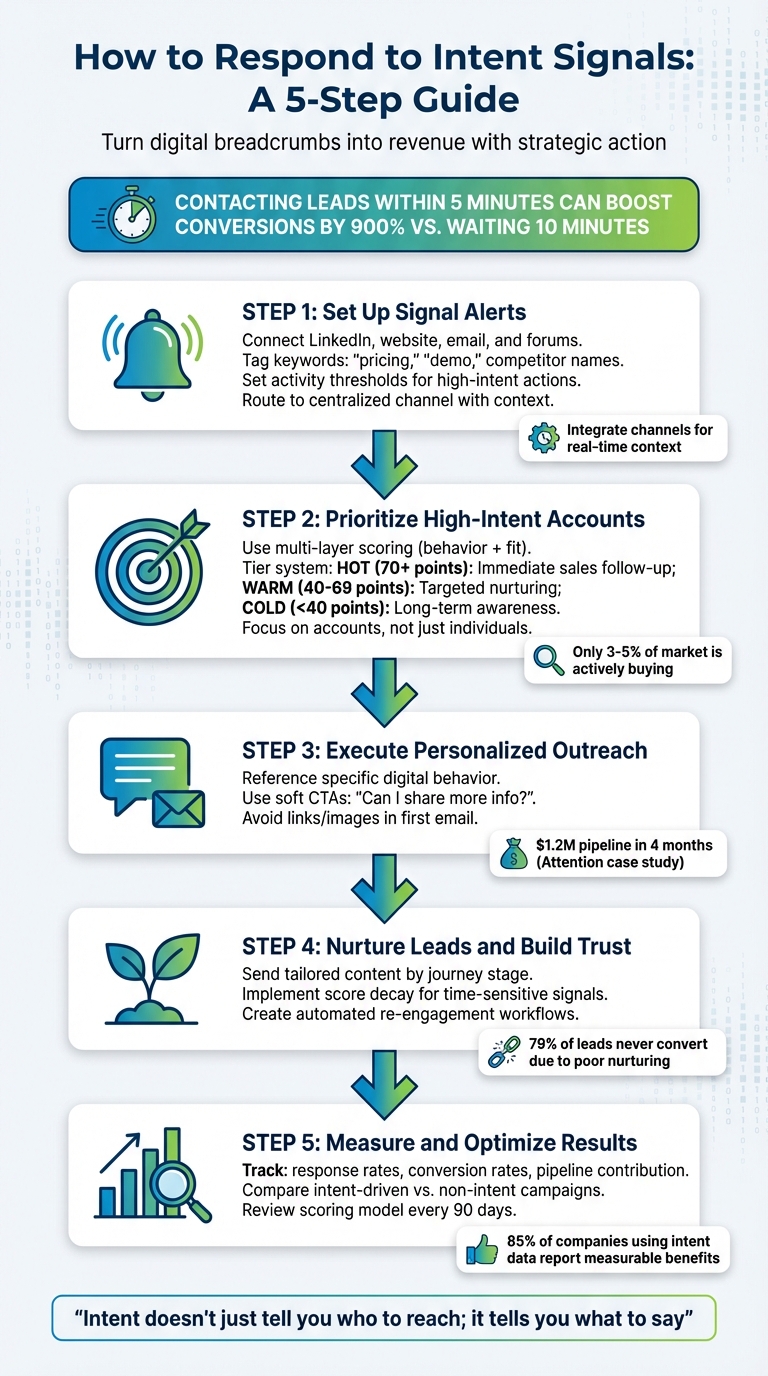
5-Step Process to Respond to B2B Intent Signals
Spotting intent signals is only part of the equation. The real magic happens when you act on them quickly and with purpose. Did you know that contacting leads within five minutes can boost conversions by 900% compared to waiting just ten minutes? Timing is everything, but rushing in without a plan can lead to chaos. Let’s break down how to turn these digital breadcrumbs into revenue.
Step 1: Set Up Signal Alerts
Start by connecting the platforms where your prospects are most active - LinkedIn, your website, email, and community forums. Use real-time alerts to notify you immediately when high-intent actions occur. To avoid getting overwhelmed, set activity thresholds so only the most meaningful signals come through.
Tag keywords that suggest buying intent, like “pricing,” “demo,” or competitor names. These should trigger alerts automatically. Route these notifications to a centralized channel, complete with context about what the prospect is doing.
| Signal Type | Recommended Alert Trigger | Actionable Response |
|---|---|---|
| Website Activity | 3+ visits to pricing/demo pages in 5 days | Immediate personalized outreach/SDR task |
| Keyword Search | Mention of "pricing" or "proof of concept" online | Notify a sales rep or founder |
| Content Download | Download of bottom-funnel assets like case studies | Add to high-priority ABM workflow |
| Review Site Activity | Browsing competitor profiles on G2 or TrustRadius | Deploy competitive messaging |
Once your alerts are live, it’s time to focus on the most promising accounts.
Step 2: Prioritize High-Intent Accounts
Not all signals are created equal. A demo request from an ideal customer profile (ICP) carries far more weight than a casual blog visit from someone outside your target audience. Use multi-layer scoring that factors in both behavior (like activity level) and fit (like industry or company size). Deduct points for signals that suggest a poor fit, such as visits to your careers page.
Organize leads into tiers:
- Hot (70+ points): Immediate follow-up by sales
- Warm (40–69 points): Targeted nurturing
- Cold (under 40 points): Long-term awareness campaigns
For B2B sales, focus on accounts rather than individuals. If multiple stakeholders from the same company are showing interest, it’s likely a buying committee is forming. Keep in mind, only 3% to 5% of your market is actively shopping at any given time. Your scoring system helps you zero in on that small but crucial slice.
Step 3: Execute Personalized Outreach
Generic outreach is a thing of the past. With 61% of B2B buyers preferring to avoid direct interaction with sales reps, your approach needs to be timely, relevant, and subtle. Use the prospect’s digital behavior as your guide. For example, you might say, “I noticed you’ve been exploring our pricing page this week. Can we chat about how we can help?”
Attention, a sales intelligence company, used this strategy to generate $1.2M in pipeline in just four months. They tracked signals like a 20% increase in SDR hires and job changes among champions, leveraging tools like Apollo, Cargo, and Instantly to automate their outreach.
Keep your messages simple and approachable. Use soft calls-to-action like, “Can I share more info?” or “Would you like a quick 15-minute demo?” Avoid including links or images in your first email to ensure it lands in the inbox. On LinkedIn, reference a recent action by the prospect to make your message immediately relevant.
Step 4: Nurture Leads and Build Trust
Not every high-intent signal means the prospect is ready to buy right away. Poor nurturing is why 79% of leads never convert. After your initial contact, keep the dialogue going with tailored content that aligns with where they are in their buying journey. For instance, if they downloaded a case study, follow up with a webinar or a one-pager on implementation timelines. If they attended a demo, send a personalized video recap that highlights the features they were interested in.
To keep your data actionable, implement score decay. A visit to your pricing page yesterday is far more relevant than one from six months ago. Create automated workflows to re-engage leads when their activity picks up again. For example, if a “warm” lead goes quiet for 30 days but then revisits your site, send a quick “just checking in” email referencing their earlier interest. This keeps you on their radar without being pushy.
Step 5: Measure and Optimize Results
The final step is to track your efforts and refine your approach. Use tools like RevBoss to monitor key metrics like response rates, conversion rates, and pipeline contributions from intent-based outreach. Compare these numbers to non-intent-driven campaigns to see how much lift you’re getting. According to data, 85% of companies using intent data report measurable benefits, including better outbound response rates.
Review your scoring model every 90 days and tweak it based on what’s actually driving conversions. For example, Bynder, a digital asset management company, used intent data from 6sense to pinpoint in-market accounts. By tailoring their messaging to specific buyer behaviors, they saw a 2.5x increase in pipeline and achieved full ROI in just four months.
"Intent doesn't just tell you who to reach; it tells you what to say".
The takeaway? Acting on intent signals isn’t just faster - it’s more effective.
Passive vs. Active Intent Signals
Distinguishing between passive and active intent signals is crucial for refining your sales and marketing efforts. By understanding these differences, you can avoid chasing lukewarm leads and focus your energy on prospects who are closer to making a purchase.
Passive intent signals come from casual behaviors - think of them as prospects dipping their toes into the water. They’re browsing, researching, and exploring options without a clear commitment. On the other hand, active intent signals are more like someone walking into a store and asking for a price. These prospects are beyond the curiosity phase and are actively considering your solution.
What Are Passive Intent Signals?
Passive signals often come from indirect sources like G2, search engines, or industry forums. Examples include anonymous visits to your blog, keyword searches related to your product category, or job postings suggesting a company is gearing up to tackle a relevant challenge. These signals indicate early interest but don’t necessarily mean the prospect is ready to engage. Most of these individuals are still in the research phase, gathering information before making any decisions.
What Are Active Intent Signals?
Active signals, on the other hand, are more deliberate. These come from direct actions on your owned platforms, such as requesting a demo, signing up for a free trial, repeatedly visiting your pricing page, or downloading gated resources like case studies. Actions like filling out a contact form or attending a webinar are clear signs that a prospect is further along in their buying journey. These individuals - sometimes called "Beeliners" - are laser-focused on making a decision and require immediate attention.
"Intent signals aren't just data points; they're insights into what your prospects are thinking and where they are in their decision-making process."
Tailoring Your Response to Intent Signals
The key is to align your response to the type of signal. For passive signals, nurture the prospect with educational materials, retargeting ads, and soft social engagement to build trust over time. For active signals, act fast - use tools like ROI calculators, competitive battlecards, or demo scheduling links to engage them directly.
A great example of this approach is SAP Concur. They used Demandbase to segment accounts based on journey stage and first-party behavioral data. By personalizing web experiences for different stages, they accelerated their funnel velocity by four times.
Comparison Table: Passive vs. Active Intent Signals
Here’s a quick breakdown to help you differentiate between these two types of signals:
| Feature | Passive (Covert) Signals | Active (Overt) Signals |
|---|---|---|
| Examples | G2 competitor searches; anonymous blog reads; job postings; tech stack changes | Demo requests; contact form fills; trial sign-ups; webinar attendance; email clicks |
| Identification | Typically anonymous, requiring third-party identification | Self-identified actions (e.g., providing contact information) |
| Buyer Stage | Early to mid-stage (Awareness/Consideration) | Late-stage (Decision/Purchase) |
| Response Strategy | Use educational content, retargeting ads, and soft social engagement | Direct outreach with tools like ROI calculators and competitive battlecards |
| Conversion Potential | Lower immediate conversion; requires nurturing | Higher conversion readiness; ideal for sales outreach |
Conclusion
This guide has outlined practical ways to track and act on intent signals, from monitoring website visits to analyzing content interactions. The numbers tell a compelling story: 96% of B2B marketers meet their campaign goals when they use intent data to shape their strategies, and 76% of businesses already rely on these signals to guide sales and marketing decisions. However, a staggering 87% of companies gather intent signals but fail to fully leverage them to close deals. The key difference between success and missed opportunities lies in filtering signals based on your ideal customer profile (ICP) and treating them as clues rather than guarantees. Here’s how to put these principles into action.
Getting Started with Intent Surfacing
Start with the basics - your first-party signals. These include visits to your pricing page, demo requests, or even views of competitor comparison pages. Focus on two or three high-intent signals that align closely with your ICP, set up real-time alerts, and respond promptly. Use firmographic filters like industry, company size, or revenue to zero in on genuine opportunities.
Once you’re comfortable, consider adding lightweight tracking tools and automating alerts - but not your outreach. The goal is to surface intent and respond in a way that feels genuine, not robotic. A simple "two-touch" rule can work wonders: send one helpful resource, and if there’s no response, follow up with a clarifying question. This method not only protects your brand’s reputation but also fosters trust over time.
As you move forward, keep in mind:
"In 2026, the sales team that wins isn't the one sending the most outreach, it's the one spotting intent first."
Intent surfacing helps you pinpoint leads and tailor outreach across multiple channels. Don’t wait to get started - the 5% of your market actively buying today won’t pause while you perfect your system. Begin now, track your progress, and refine your approach as you go.
FAQs
Which intent signals should I track first?
To get a clear picture of buyer interest and readiness, start by monitoring key signals. Look for actions like visits to high-intent pages on your website, downloads of specific content, or engagement with materials that align with your offerings. These behaviors often point to a lead's potential to convert, helping you prioritize them and fine-tune your outreach approach for better results.
How do I score intent without overcomplicating it?
To streamline intent scoring, zero in on signals that clearly demonstrate genuine buyer interest. These could include visits to pricing pages, downloading key content, or LinkedIn interactions from decision-makers. Focus on actions that indicate active research or purchase intent rather than just tracking overall activity levels. A straightforward framework that highlights these meaningful behaviors helps sales and marketing teams concentrate on high-quality leads without overcomplicating the process.
How fast should I follow up on high-intent activity?
When someone shows strong interest - like requesting a demo or checking out your pricing page - timing is everything. If you follow up within minutes, your chances of converting that lead skyrocket. Research shows that engaging a lead in under 3 minutes dramatically boosts success rates. Wait a few hours, though, and the odds drop fast. These high-intent actions signal that the lead is actively considering their options, so a quick response keeps their attention on you and stops them from drifting to a competitor. Bottom line? Act fast to close the deal.