LinkedIn Content That Builds Trust: 25 Post Prompts for Founders and Execs

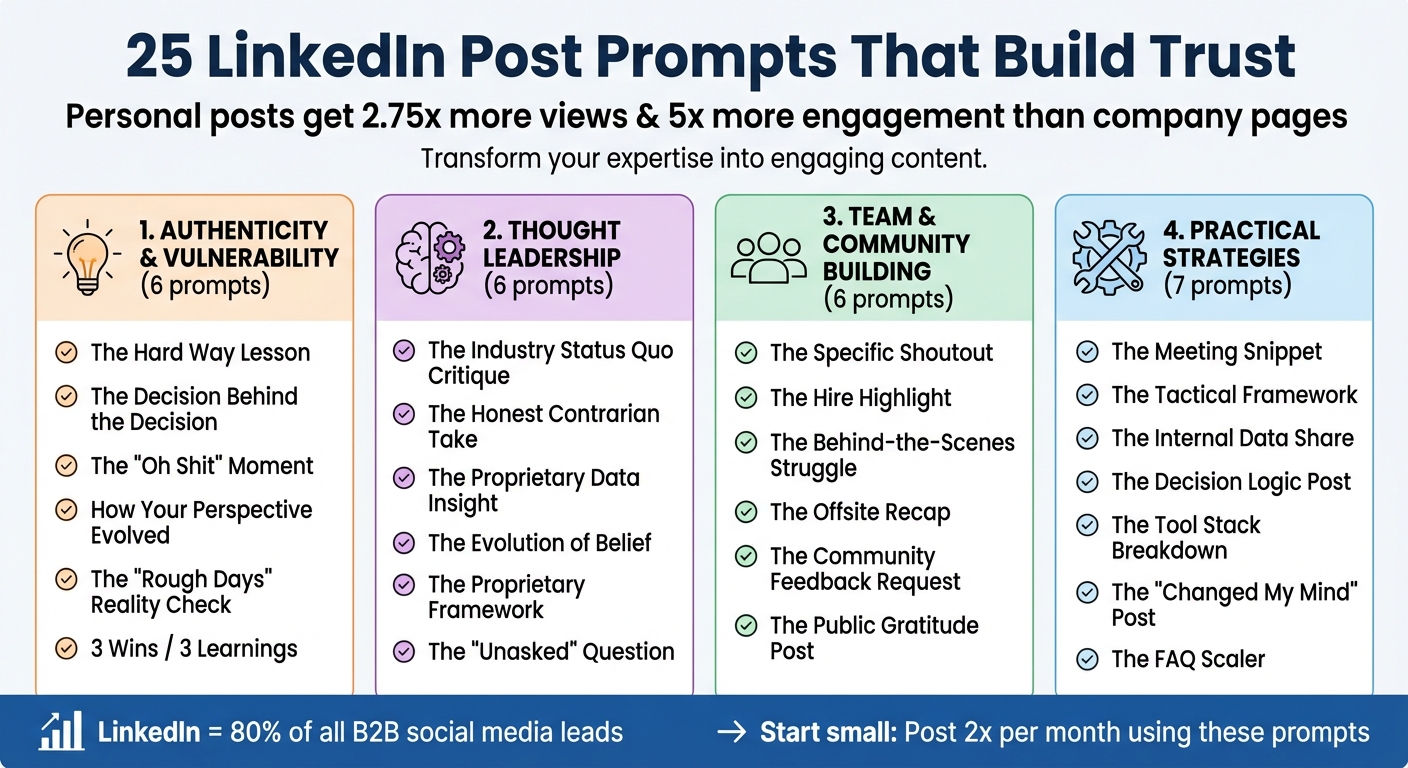
Your LinkedIn profile isn’t just a digital resume - it’s a trust-building machine. Personal posts on LinkedIn get 2.75x more views and 5x more engagement than company pages. But spamming generic content won’t cut it. Founders and execs need clear, meaningful posts that show their thought process, not just their wins.
Here’s the deal: sharing personal insights, lessons, and behind-the-scenes decisions can speed up sales cycles, attract talent, and build industry authority. But many leaders struggle to turn their daily work into engaging content. That’s where these 25 LinkedIn post prompts come in.
- Be real: Share lessons from mistakes, tough decisions, or evolving perspectives.
- Show leadership: Critique industry norms, share data insights, or explain your decision-making frameworks.
- Highlight your team: Celebrate wins, showcase culture, and share behind-the-scenes struggles.
- Keep it practical: Turn meeting notes, FAQs, or internal tools into bite-sized posts.
Start small - post twice a month using these prompts. Over time, your LinkedIn presence will not only build trust but also open doors to new opportunities.
25 LinkedIn Post Prompts for Founders and Executives
LinkedIn CEO Content Strategy: From Zero to Hero in 60 Days
sbb-itb-9354cf2
1. Authenticity and Vulnerability
Being authentic on LinkedIn doesn’t mean spilling every detail of your personal life. It’s about taking people behind the scenes of your decision-making process. As Alice Xerri wisely puts it: "People want your brain, not your diary." Posts that resonate most are the ones that reveal how you think and make decisions, not just the shiny end results. Here are six prompts to help you share professional vulnerability in a way that builds trust and engagement.
-
"The Hard Way" Lesson
Talk about a mistake you made and the cost of that error. For example, in 2023, Carolyn Kopprasch, Chief of Staff at Buffer, shared a post about hiring without a dedicated recruiter. She broke down the "significant costs" of this decision, like overburdened hiring managers and slower review times. Her transparency struck a chord and sparked meaningful conversations. -
The Decision Behind the Decision
Don’t just announce a big change - walk people through the debate that led to it. Share the metrics, customer feedback, or other factors that influenced your choice. This kind of openness shows how you approach challenges and make difficult calls. -
The "Oh Shit" Moment
Share your biggest crisis or mistake during your journey, but focus on what you learned and how it changed your approach. This isn’t about airing dirty laundry; it’s about offering a thoughtful lesson others can take away. -
How Your Perspective Evolved
Reflect on how your views on a specific industry issue have shifted over time. For instance, in July 2024, Buffer Founder and CEO Joel Gascoigne shared a "Career Origin Story" to reintroduce himself to his network. He used personal stories from the company’s early days to rebuild trust and foster connection. -
The "Rough Days" Reality Check
Talk about the tough moments - user churn, technical issues, or team setbacks. Sharing the less glamorous side of building a company makes your story more relatable and credible than a highlight reel of constant wins. -
3 Wins / 3 Learnings
Create a monthly update that balances your successes with lessons learned from setbacks. This format keeps your audience engaged while showing accountability and growth, without veering into humblebrag territory.
These prompts help you strike the perfect balance between professional vulnerability and thoughtful storytelling, making your LinkedIn presence both authentic and impactful.
2. Thought Leadership
When it comes to thought leadership, clarity beats quantity every time. Alice Xerri puts it perfectly:
"A CEO posting twice a month with clarity will outperform a CEO posting daily with fluff."
To stand out as a trusted authority, focus on tackling industry challenges instead of just rehashing your accomplishments. Below are six ways to position yourself as a reliable voice in your field:
-
The Industry Status Quo Critique
Point out flaws in your industry and explain why they need to change. Joe Zappa, Founder of Sharppen Media, sums this up well:
Take a bold stance against outdated practices that others blindly accept."Thought leadership is about sharing your view on where your industry is broken, what needs to change, and (sometimes) what your company is doing to fix it."
-
The Honest Contrarian Take
Go against the grain with a belief that challenges common industry wisdom. Share your reasoning, backed by real-world experience, to show why your perspective holds weight. Contrarian insights work best when they come from genuine lessons, not just for the sake of being provocative. -
The Proprietary Data Insight
Use your company's internal data to highlight hidden trends. For instance, in 2024, Buffer's Senior Data Scientist Julian Winternheimer shared a GIF showcasing social media profile growth, revealing TikTok as the third most popular platform. This post sparked engagement with 43 likes and 7 comments and offered valuable market insight. Your own data could tell equally compelling stories. -
The Evolution of Belief
Share an industry view you once held and explain why you’ve changed your mind. Walk readers through the experience or evidence that shifted your thinking. This approach shows intellectual flexibility and underscores your commitment to growth and learning. -
The Proprietary Framework
Break down a complex problem into a simple, actionable framework. For example, a three-step process can resonate because it’s easy to remember and apply. Keep it clear and practical - your audience will appreciate the immediate value. -
The "Unasked" Question
Turn private conversations into public insights by addressing recurring questions from clients or investors. As Alice Xerri notes:
Keep a running file of these "thought fragments" to capture ideas as they happen."90% of a founder's strongest posts often start as simple 30-second voice notes or meeting snippets."
3. Team and Community Building
Once you've established yourself as a thought leader, it's time to let your team's story take center stage. Sharing content about your team adds a personal touch to your brand and builds trust with potential hires, partners, and investors. By moving beyond generic corporate announcements and showcasing the real people and decisions shaping your company, you create meaningful connections. As Alice Xerri puts it:
"Skip the 'We're thrilled to announce…' tone. Just say what went well, why it mattered and what it taught you."
Here are six practical ways to highlight your leadership and strengthen community ties:
-
The Specific Shoutout
Celebrate a team member's contribution with real, tangible examples. For instance, share how their effort - like revamping your UI in just 48 hours before a big launch - led to measurable success. -
The Hire Highlight
Instead of simply announcing a new hire, explain what makes them a great match for your company. Highlight the qualities that stood out during their interviews, signaling your organization's core values. -
The Behind-the-Scenes Struggle
Talk about a challenge your team faced and how you tackled it together. Focus on the lessons learned and how the experience improved your internal processes. -
The Offsite Recap
Share insights from a team offsite along with a photo. Frame your update around "3 wins and 3 learnings" to show progress, and include visuals to give a glimpse into your company's culture. -
The Community Feedback Request
Use LinkedIn polls to ask your network for advice on a current team challenge. This approach invites genuine interaction and fresh perspectives. -
The Public Gratitude Post
Take a moment to thank mentors, colleagues, or team members who have made a difference. A thoughtful post like this highlights your appreciation for your team and shows strong leadership.
4. Practical Strategies
Turning your day-to-day work into engaging LinkedIn content is easier than it seems. The key is to tap into your existing expertise and experiences. As Raj Khera, Co-Founder of MakeMEDIA, puts it:
"The expertise and insights already exist in your head... The problem isn't missing knowledge. It's that asking 'What do you want to post about?' requires too much cognitive effort."
So, how do you bridge that gap between doing the work and writing about it? These ideas can help you transform everyday moments into posts that build credibility and trust:
-
The Meeting Snippet
Ever hear something in a meeting or client call that just clicks? Capture that moment. If it resonated with people in real time, it’ll likely resonate online too. Use a quick voice note right after to keep the phrasing authentic. -
The Tactical Framework
Share a decision-making tool or process you rely on. Break it down: how does it work, and why does it matter? This kind of insight can be a game-changer for others. -
The Internal Data Share
Numbers tell stories. Share metrics from your business - conversion rates, retention stats, or growth trends. Transparency like this not only informs but also builds trust. -
The Decision Logic Post
When you make a big decision - whether it’s pricing, a product shift, or team changes - walk through your thought process. Highlight the tradeoffs and debates behind it, not just the end result. -
The Tool Stack Breakdown
People love hearing about the tools others use. Share your team’s go-to stack and explain why you chose each one. For example, Simon Heaton, Buffer's Director of Growth Marketing, shared his team's tools - like Notion, Jira, and Ghost - in July 2024, sparking 66 likes and 28 comments with his practical insights. -
The "Changed My Mind" Post
Reflect on a time you rethought a professional belief. For instance, "I used to prioritize speed over alignment, but after [specific event], I’ve shifted my approach." It’s a great way to show growth and humility. -
The FAQ Scaler
If the same question keeps popping up - whether from clients, investors, or your team - turn it into a post. This not only answers the question for more people but also establishes you as a reliable source of insight.
These strategies are all about taking what you already do and framing it in a way that connects with others. With a little effort, your daily work can become a powerful tool for building your online presence.
Conclusion
Post with intention to build trust. As Alice Xerri, Founder & Content Lead at AX Content, wisely says:
"Clarity builds trust faster than volume ever will."
These 25 prompts are designed to help you share your expertise in a way that truly connects with your audience.
LinkedIn accounts for 80% of all B2B social media leads. By consistently sharing genuine insights, you’re not just posting - you’re opening doors to partnerships and establishing yourself as a trusted voice in your field.
The results speak for themselves. For instance, Will Fuentes of Maestro Group generates qualified enterprise leads weekly by sharing meaningful, non-promotional content that combines client success stories with personal experiences.
Start small. Pick one or two prompts that feel natural and aim to post twice a month. Capture inspiration as it strikes - record voice notes after meetings, write down client questions, or reflect on recent challenges and decisions. Over time, this process becomes second nature, and your network will inspire new ideas through their comments and feedback.
Your expertise is already there. These prompts are simply a tool to transform it into LinkedIn posts that build trust, increase visibility, and position you as a respected authority in your industry. Let your content do the heavy lifting for your business.
FAQs
How do I pick the right prompt to start?
Choose a prompt that matches your objectives, the time you have, and the message you want to share. Start with straightforward, impactful topics - like summarizing key takeaways from a meeting, reflecting on a recent experience, or tackling a common question in your field. Stick to ideas that align with your knowledge and priorities to keep your post genuine and aligned with what matters most to you right now.
How personal should I get on LinkedIn?
Getting personal on LinkedIn can be a great way to connect, but it’s important to do it with intention. Share real stories and experiences that genuinely reflect who you are - whether they’re from your professional journey or personal life. Focus on moments that matter and highlight your values or lessons learned. The trick is finding the sweet spot: being open and relatable without crossing into oversharing. When done right, this approach not only highlights your expertise and personality but also helps build trust and meaningful connections.
How do I turn daily work into posts fast?
To turn your daily work into engaging LinkedIn posts, focus on sharing genuine takeaways from your everyday activities. Think about posting a memorable quote from a meeting, reflecting on a recent challenge or win, or jotting down a lesson you’ve picked up along the way. Simple prompts can help - answer a work-related question, weigh in on an industry trend, or share a quick thought. By capturing real-time experiences, you can keep your content consistent without adding extra work to your day.