Ultimate Guide To LinkedIn Networking For Founders

LinkedIn isn’t just a platform for resumes - it’s your secret weapon for building connections that matter. If you’re a founder, here’s the bottom line: a well-optimized profile, targeted networking, and consistent engagement can turn casual connections into clients, partners, or investors. This guide breaks down how to:
- Optimize your profile: Make your headline and About section clear, specific, and results-driven.
- Build the right network: Focus on quality over quantity - connect with people who align with your goals.
- Engage meaningfully: Personalize outreach, interact with posts, and respond to engagement signals.
- Leverage tools like Sales Navigator: Target the right people faster and track engagement for smarter follow-ups.
- Share content that resonates: Post regularly, mix formats, and focus on education and storytelling.
Founders who master these strategies have seen results like 60 warm calls a week or $400,000 in sales in just 7 days. LinkedIn isn’t about spamming connections; it’s about building trust with the right people. Let’s dive into how you can make it work for your business.
How To Start Your Founder LinkedIn Journey In 2025
Setting Up Your LinkedIn Profile for Results
Think of your LinkedIn profile as your storefront - it’s where clients, investors, and partners form their first impression of you. It should clearly communicate who you are, the problems you solve, and why it all matters. With 60% of users accessing LinkedIn on mobile, your profile needs to be visually appealing and easy to scan. A polished profile is the foundation for effective networking and outreach that delivers results.
Core Elements of an Effective Founder Profile
Your headline is prime real estate - it’s the first thing people notice in search results or connection requests. Avoid the generic "CEO at Company X." Instead, use this space to highlight your role, expertise, and the value you bring.
Take Eric Partaker, for example. His headline, "The CEO Coach", instantly communicates his niche. Similarly, Jasmin Alic's headline, "Growing the best brands & businesses on LinkedIn", is direct and clear about his expertise.
The formula for a powerful founder headline? Combine your role, the value you offer, and your target audience. For instance: "Founder & CEO | Helping SaaS startups scale through strategic growth marketing | Speaker & Advisor." LinkedIn data shows that profiles with keyword-rich headlines get up to 30% more views.
Your About section should read like a compelling story written in the first person. Highlight your key achievements, the problems you solve, and back it up with specific numbers. For example, instead of saying, "I help startups grow", try, "I've helped 50+ startups build high-performing teams and secure over $10M in funding."
Keep it concise - 3-5 short paragraphs - and close with a clear call to action. Something as simple as "Let’s connect if you’re building a tech startup" can encourage meaningful outreach.
The Featured section is your visual portfolio. Use it to showcase your expertise with articles, case studies, webinar recordings, or product launches. For instance, a case study that shows how you helped a client boost revenue by 40% offers instant proof of your capabilities.
In the Experience section, focus on measurable achievements rather than job descriptions. Highlight outcomes like "increased engagement by 45%" to attract the right connections.
Using Creator Mode and Service Pages
LinkedIn offers tools that can amplify your presence beyond the basics.
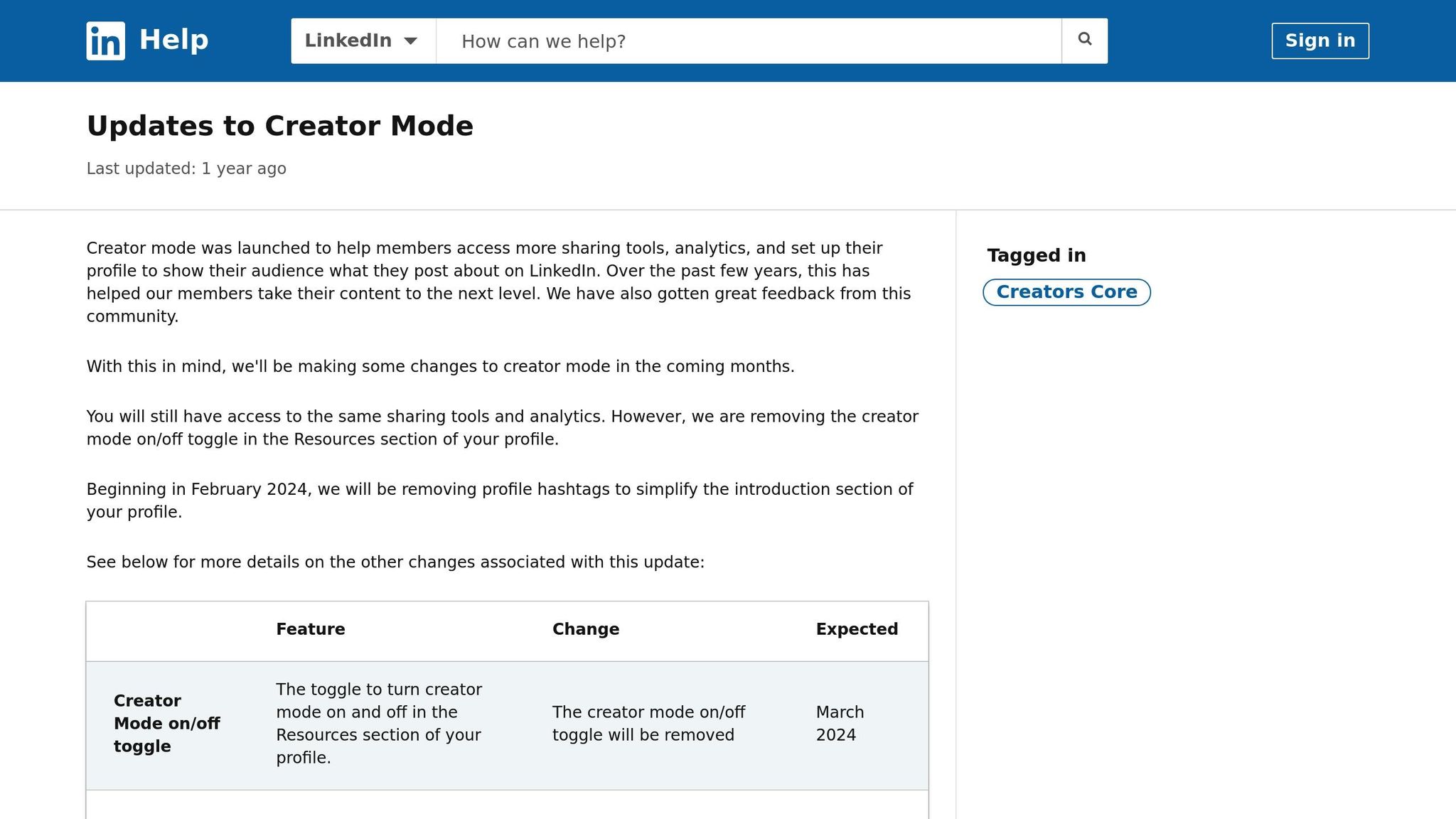
Creator Mode is a must for founders aiming to grow their reach. When activated, it replaces the "Connect" button with "Follow", highlights your content, and displays your follower count. This signals to visitors that you’re actively sharing valuable insights in your field.
Enabling Creator Mode can increase profile visits and reach by 20-30%. It also lets you choose up to five topics you regularly post about, helping LinkedIn’s algorithm show your content to the right audience. Select topics that align with your expertise and resonate with your ideal clients.
Service Pages function like mini landing pages for your offerings. You can outline your services, showcase results, and include testimonials - all without requiring prospects to leave LinkedIn. These pages are especially effective for service-based businesses and consultants, offering a professional way to present your expertise alongside social proof.
Maintaining Consistent Profile Branding
Consistency throughout your profile builds trust and strengthens your personal brand. That means using the same tone, messaging, and visual style across all sections. Your headline, About section, experience descriptions, and featured content should all work together to tell a cohesive story about who you are and what you offer.
Visual elements matter too. Use a professional profile photo that matches your messaging - business casual often works best. For example, TIAA CEO Thasunda Brown Duckett uses a sleek geometric header design that highlights her company, making her profile stand out. Netta Jenkins effectively promotes her book, The Inclusive Organization, in her banner, emphasizing her expertise and thought leadership.
Your messaging should stay consistent. If your headline positions you as a "growth-focused SaaS advisor", ensure that the rest of your profile - your About section, experience, and featured content - supports that positioning. Mixed messages can confuse visitors and dilute your brand.
Keeping your profile up to date also signals to LinkedIn’s algorithm that you’re active. Add new achievements, refresh your About section, and update your featured content regularly to reflect your current focus and goals. Profiles that are complete, frequently updated, and include relevant skills and recommendations tend to rank higher in LinkedIn searches.
Building Your Target Network on LinkedIn
When it comes to LinkedIn, it's not about how many connections you have but how relevant they are. A smaller, carefully curated network of the right people often delivers far better results than a massive list of random contacts. This approach builds on the trust-based relationships we've already discussed and sets the stage for meaningful outreach and authority-building later on.
Start by defining your ideal customer profile (ICP) and target personas. Once you know who you're looking for, LinkedIn's advanced search tools can help you zero in on the right professionals. This kind of focused effort can lead to a 40% boost in inbound partnership opportunities within just three months.
Smart Connection Strategies for Founders
To make the most of your networking efforts, get specific about the types of people you want to connect with. Maybe it's SaaS founders, marketing leaders at mid-sized companies, or fintech investors. The more precise you are about industry, role, company size, and location, the better your results will be.
LinkedIn's advanced search filters are your best friend here. They allow you to narrow down your pool of potential connections, so every request you send has a clear purpose. And don't just send a generic "let's connect" message - personalize it. Reference something specific, like a shared interest or a recent post they made. For example:
"Hi Sarah, I noticed we're both in the SaaS Founders group and saw your recent post about scaling customer success teams. I'd love to connect and exchange insights on this topic."
This kind of personalization reinforces the trust-first approach we've talked about. Successful founders often batch their connection requests, focusing on 10–15 highly relevant people at a time. Timing is also key - connecting with someone right after they've engaged with your content or attended the same event as you can lead to natural, easy conversations.
Using Sales Navigator for Better Targeting
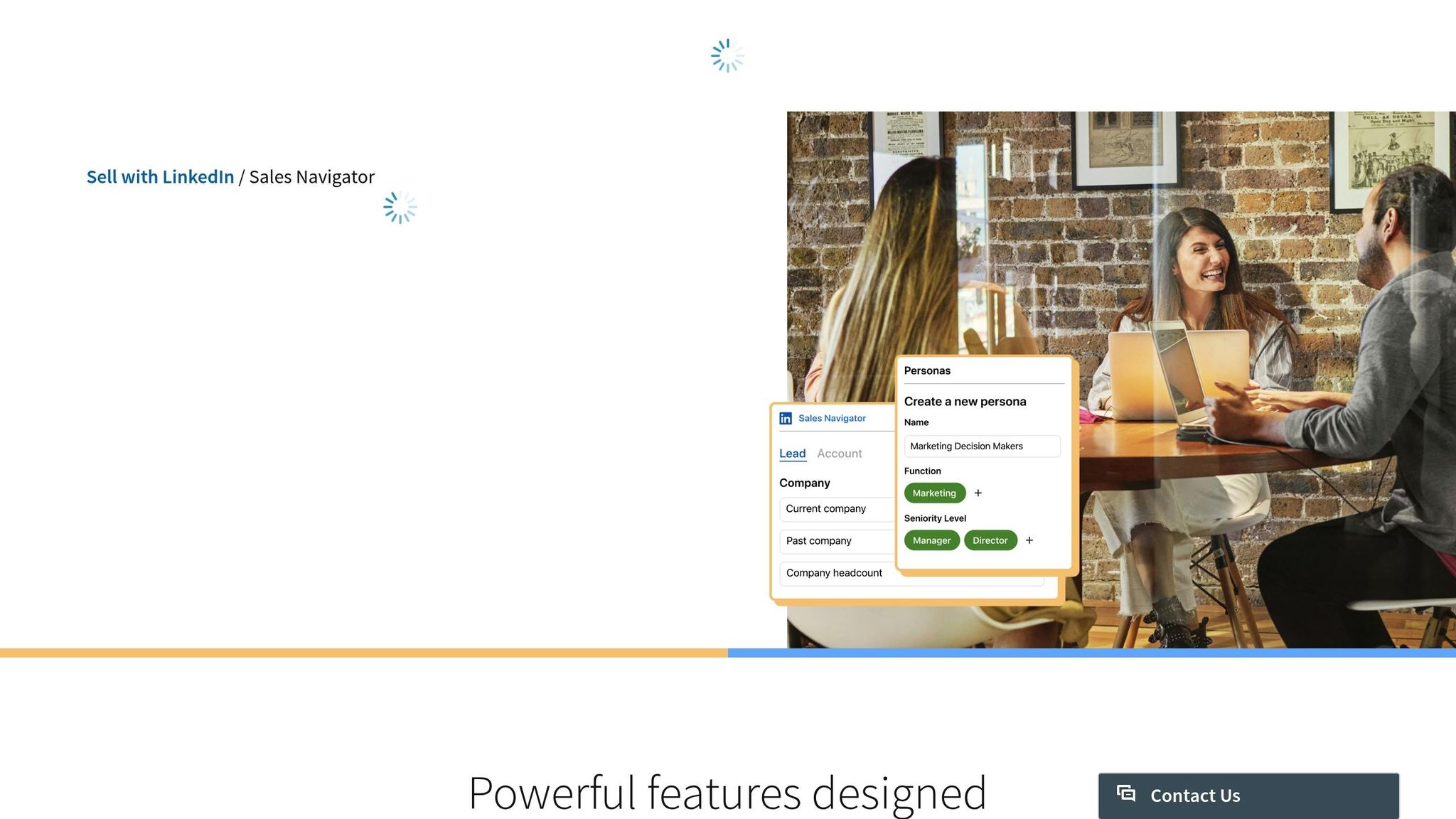
If you're serious about LinkedIn networking, Sales Navigator is a game-changer. It offers advanced search features that let you create highly targeted lead lists based on detailed criteria. You can filter by company size, job title, seniority, location, or even specific tools the company uses. For example, if you're looking for marketing directors at Series A startups that use Salesforce, Sales Navigator can generate that list in minutes.
Another standout feature is account mapping, which helps you identify key decision-makers within a company. Sales Navigator also tracks engagement signals like profile views, post interactions, and content shares. This makes it easier to prioritize outreach to people who've already shown interest in your content. Plus, its lead-saving tools allow you to organize your prospects into lists, whether they're potential clients, strategic partners, investors, or industry influencers, so you never lose track of an opportunity.
Organizing Your Network for Better Engagement
An organized network is the secret to meaningful, targeted interactions. Use LinkedIn's tagging system or an external CRM to categorize your connections into groups like clients, prospects, investors, partners, or peers. This way, you can tailor your messaging and follow-ups to meet the specific needs of each group.
For example, create separate lists for different stages of your sales funnel. Warm leads - those who’ve already shown interest - might appreciate case studies or product updates, while cold prospects might respond better to educational content that addresses their challenges.
Take a page from Max's team, who uses a systematic approach: they only reach out directly after three or more interactions, like a comment, a like, or a profile view. This method ensures they're engaging with people who are already interested, moving them from casual LinkedIn interactions to meaningful conversations. Tools like Clay, Trigify, or SmartLead can automate this process, capturing every engagement signal so you don’t miss a beat.
Adding detailed notes to your connections’ profiles - such as where you met them, their challenges, or recent conversations - can also be incredibly helpful for future outreach. For your most engaged contacts, consider taking the relationship beyond LinkedIn. Many founders create private Discord groups or host exclusive webinars to deepen connections.
Finally, track your progress by monitoring metrics like connection acceptance rates, message response rates, and meeting conversions. This data will help you refine your approach and focus on what works best.
With a segmented and well-organized network, you're set to launch targeted outreach campaigns that genuinely make an impact.
Managing Founder-Led Outreach Campaigns
Turn your organized network into meaningful conversations and real opportunities. By building on your segmented network, you can tailor each outreach effort to spark genuine engagement. This strategy naturally leads to crafting highly personalized messages that resonate.
The key is blending signal-based targeting with personalized outreach. Pay attention to engagement signals - like likes, comments, and profile views - and only reach out after someone shows interest through multiple interactions. This focused method can yield up to 60 warm founder calls weekly.
Writing Personalized Outreach Messages
Great outreach messages rest on three pillars: specificity, value-first positioning, and signal-based targeting. Once a contact has engaged three or more times, send a short, value-driven message that references specific details from their activity. This approach turns cold outreach into warm, engaging conversations by making your messages feel personal rather than mass-produced.
Batching your outreach into small, focused groups helps maintain quality while scaling your efforts. Always include a clear reason for connecting - whether it’s referencing a recent post, a shared interest, or a mutual connection.
Using Warm Introductions and Mutual Connections
Warm introductions are a game-changer, significantly boosting response rates compared to cold outreach. They carry built-in credibility and trust. Before reaching out to a new contact, identify mutual connections who can introduce you or vouch for you. When asking for an introduction, be upfront about why you want to connect and what value you aim to create together.
Instead of sending a generic request, explain to your mutual connection the shared challenge or interest behind your outreach. Once introduced, mention the mutual connection in your first message and express gratitude for the introduction. This simple step turns a cold approach into a warm conversation, making engagement more likely.
And here’s a pro tip: match your contact's communication style. Whether they prefer brief, direct messages or more detailed conversations, aligning with their style can make all the difference.
Event and Content-Based Outreach Methods
Using recent events as conversation starters is another powerful way to deepen engagement. If someone publishes a post, launches a product, or speaks at an event, it’s the perfect moment to reach out with a thoughtful comment or message reflecting on their work.
Reference specific details from their content - what stood out to you, how it connects to your own challenges, or any questions it sparked. For example, if a founder writes about a shared challenge, you could discuss your different approaches or share related insights. Similarly, if you both attended the same conference or webinar, mentioning that shared experience can instantly establish a connection.
Engage consistently in 5–7 trusted spaces where your target audience gathers. This could be online communities, forums, or industry events. By participating thoughtfully - offering insights instead of promoting yourself - you build trust and visibility long before sending a direct message. Over time, this steady engagement ensures your network already trusts you when you finally reach out or launch a new initiative.
One founder, for instance, generated $400,000 in revenue in just 7 days during a product launch after months of consistent posting, commenting, and direct messaging to build trust with their network.
As with your profile and network organization, continuous engagement and follow-up are crucial. After your initial outreach, track engagement and work to convert active contacts into private conversations. Avoid pitching too soon; instead, focus on nurturing relationships with helpful interactions and regular engagement.
To help track engagement signals like likes, comments, profile views, and replies, tools such as Clay, Trigify, and SmartLead can be invaluable. While automation can assist with tracking these signals, the outreach messages themselves should always stay personal - steer clear of canned sequences. Personal touches make all the difference.
sbb-itb-9354cf2
Building Authority Through Content and Engagement
Once you've established a targeted network and nailed your outreach, it's time to let your content do the talking. Think of your content as the personality of your brand - it’s what turns casual connections into loyal followers. While outreach lays the groundwork, consistent content and smart engagement elevate you into a go-to voice in your field. The goal? To be the person your network actively seeks out for insights and expertise. Let’s dive into how to make that happen.
The shift from old-school B2B marketing to founder-led content is reshaping how business relationships are built on LinkedIn. As RevBoss puts it, most B2B marketing comes off as "boring, soulless, and self-centered." On the flip side, content that’s "interesting, educating, and entertaining" stands out, builds trust, and forges real connections. This approach not only strengthens relationships with your ideal customer profile but also sets your brand apart and delivers measurable business results.
Creating Founder-Led Content That Gets Results
It all starts with authenticity. Your content should reflect your "why" - the driving force behind your business. Sharing your journey as a founder, the lessons you’ve learned from setbacks, and your unique perspective can attract the right audience.
Founder-led content thrives on a mix of education, storytelling, and actionable insights. Successful founders use personal stories and audience interaction to create content that resonates. This combination lays the groundwork for deeper, more meaningful engagement.
Variety is the spice of content. Mix up your posts with short updates, in-depth articles, and newsletters to keep your audience hooked. Posts that feature specific results - like case studies or real-world examples - showcase your expertise far better than vague statements ever could. To stay consistent, align your content calendar with your business goals and aim for 2–5 posts per week that revolve around key themes.
Engaging with Your Network for Better Visibility
Engagement isn’t just about getting likes - it’s about building relationships. Thoughtful comments that add value, ask meaningful questions, or share relevant experiences show your expertise and invite reciprocal interaction.
Focus your efforts on 5–7 key spaces where your audience already hangs out. Whether it’s industry-specific LinkedIn groups, the comment sections of influential posts, or trending discussions, your active participation can build trust and expand your reach.
Resharing others’ content is another smart move, but don’t just hit "share" and call it a day. Add your own perspective - why the post resonated with you or how it ties into your own experiences. This approach mirrors real-world networking, where meaningful conversations foster trust and collaboration.
Spending just 15–20 minutes a day engaging with posts can make a big difference. Instead of generic comments like "Great post!" or "Congrats", aim to teach something, share a quick insight, or ask a thought-provoking question that sparks a deeper conversation.
Tracking and Improving Your Engagement Results
LinkedIn’s Social Selling Index (SSI) is a handy tool for measuring how well you’re doing. It scores your profile strength, network quality, and engagement, giving you a clear picture of where you can improve.
Take advantage of LinkedIn’s analytics to see what’s working. Metrics like post reach, likes, comments, shares, and follower growth reveal patterns in what resonates with your audience. For more advanced tracking, tools like Clay, Trigify, and SmartLead can help you monitor profile views, repeat interactions, and other engagement signals. These insights can identify warm leads and refine your follow-up strategies.
Pay attention to your most engaged followers and use analytics to adjust your content strategy. For example, Alex Lieberman scaled Morning Brew to over 5 million subscribers by constantly analyzing what worked and leaning into high-trust communities.
Set clear, measurable goals for building your LinkedIn presence. Whether it’s hitting a specific SSI score, maintaining steady engagement rates, or converting a percentage of followers into business leads, these benchmarks will help you stay focused. Regularly reviewing your performance ensures your content and engagement efforts align with your overall business objectives, so you can focus on what drives the best results.
Using RevBoss for LinkedIn Growth
Managing a thriving LinkedIn presence can feel like a juggling act, especially for founders already stretched thin by the demands of running a business. This is where services like RevBoss step in, offering a structured way to grow your LinkedIn network without sacrificing your time or sanity. RevBoss simplifies the process, allowing you to focus on what you do best - leading your business - while they handle the heavy lifting of LinkedIn strategy.
RevBoss takes a unique approach by building what they call "founder-led content marketing machines." The idea is simple but powerful: everything revolves around your personal brand and voice. They’re all about ditching the bland, overly corporate messaging that plagues much of B2B marketing. Instead, they focus on creating content that’s engaging, informative, and, dare we say, entertaining.
How RevBoss Supports Founder-Led Marketing
At the heart of RevBoss’s strategy is the belief in authenticity over automation. Forget cookie-cutter sales pitches - they work with you to craft a content strategy that genuinely reflects your personality and expertise. The result? A LinkedIn presence that feels like you, not a marketing team trying to mimic your vibe.
The process starts with uncovering your unique story - your challenges, lessons learned, and the expertise that sets you apart in your industry. From there, RevBoss helps craft content that positions you as a thought leader, all while staying true to your voice. It’s about building connections and trust, not just pushing products or services.
RevBoss also helps you identify and engage with high-value prospects who can genuinely benefit from what you bring to the table. This is a game-changer for founders who see the potential of LinkedIn networking but lack the time or know-how to execute consistently. With over a decade of experience and more than 1,000 clients served, RevBoss has honed its approach to cater specifically to founder-led B2B companies.
RevBoss Features for LinkedIn Success
RevBoss offers several service packages tailored to different growth stages and needs:
- LinkedIn Content + Audience: Starting at $1,500 per month, this includes weekly strategy calls, 8–12 LinkedIn posts per month, and workflows designed to grow your audience.
- Combined Content: At $2,500 per month, this package integrates LinkedIn content with email newsletters for a more unified strategy.
- Content + Coaching + Activation: Priced at $4,000 per month, this all-in-one option includes everything from direct outreach programs to event support campaigns and sales offer development.
Each package gives you access to RevBoss’s proprietary platform and workflow systems, plus weekly strategy sessions to ensure your campaigns stay aligned with your goals. If you prefer to stay hands-on, there’s also a Coaching package for $1,500 per month, where RevBoss provides strategic guidance while you handle the execution.
Getting Better Results with RevBoss Campaigns
RevBoss doesn’t just create content and call it a day - they’re all about tracking what works. By monitoring engagement signals, they identify warm prospects and help you follow up with personalized outreach that feels natural, not pushy. This approach often leads to shorter sales cycles and better conversion rates compared to traditional cold outreach.
One of the standout features is their content creation process. Instead of spending hours crafting LinkedIn posts, you hop on weekly strategy calls to share your insights and ideas. RevBoss turns those into polished posts that sound like you, hitting all the right notes without the time drain.
As your business grows and priorities shift, RevBoss adjusts your content strategy to keep up. This flexibility is especially handy for fast-moving startups. Plus, all their programs operate on a month-to-month basis, with discounts for longer commitments. This lets you test the waters and see results before diving in deeper.
Conclusion: Getting the Most from LinkedIn Networking
Building a strong LinkedIn network as a founder revolves around four key elements: profile optimization, targeted networking, personalized outreach, and consistent engagement. These components work together to create a system that doesn’t just boost visibility but also fosters meaningful, long-lasting relationships.
Your LinkedIn profile is essentially your professional storefront. The stats don’t lie - profiles with professional headshots attract 21 times more views and 9 times more connection requests than those without. Beyond appearances, strategic tweaks can make a huge difference. For instance, one agency owner reported a 47% boost in profile views simply by reorganizing their skills to match what their ideal clients were searching for. This kind of optimization doesn’t just help within LinkedIn; it can also improve your profile’s ranking in Google searches.
With over 1 billion professionals on LinkedIn as of 2025, success isn’t about amassing the largest contact list - it’s about connecting with the right people. Identifying your ideal customer profile and sending personalized, thoughtful connection requests can lay the foundation for meaningful relationships.
Crafting personalized messages that reference mutual connections, shared interests, or recent activities can open doors and build trust. This approach often leads to shorter sales cycles and better conversion rates compared to traditional cold outreach.
Consistency ties it all together. Regularly posting, commenting, and messaging ensures you stay visible and relevant within your network. Over time, this transforms cold contacts into a warm audience - people ready to support your launches, send referrals, or even become customers.
If managing all of this feels overwhelming, tools and services can help. For example, RevBoss offers a structured system to help founders create content strategies that resonate, build trust, and generate demand. With over a decade of experience and more than 1,000 clients served, RevBoss focuses on helping founders turn their networks into real business opportunities.
At its core, LinkedIn networking isn’t just about collecting connections - it’s about building relationships. Whether you handle your strategy yourself or work with a service like RevBoss, the fundamentals remain unchanged: be authentic, offer value, and stay consistent. In a world increasingly dominated by AI, these human qualities - trust and genuine connection - are what set you apart and keep your network thriving.
FAQs
What’s the best way for founders to personalize LinkedIn outreach and build genuine connections?
To step up your LinkedIn outreach game, personalization is key. Take a moment to mention something specific from the person’s profile - maybe a recent post they shared, a mutual interest, or a notable accomplishment. This small effort signals that you’ve done your homework and genuinely care, which makes you far more memorable.
On top of that, let your personality as a founder shine through in your messages. Keep your tone authentic and aligned with your brand’s voice. When your communication feels genuine and relatable, it builds trust and creates connections that go beyond just business - because nobody wants to feel like just another checkbox in someone’s outreach strategy.
What should I include in my LinkedIn profile to stand out to clients and investors?
To grab the attention of potential clients and investors on LinkedIn, your profile needs to stand out and convey your value clearly. Start with a professional headshot - a polished photo can make a strong first impression. Pair this with a headline that not only states your role but also emphasizes what sets you apart.
Use the About section to tell your story. This is your chance to share your mission, highlight key accomplishments, and explain how you provide value to your audience. Think of it as the narrative that connects your expertise to the needs of those viewing your profile.
When detailing your experience, go beyond listing job titles. Focus on specific achievements and measurable outcomes - numbers and results speak volumes. Include relevant skills and don’t hesitate to ask for endorsements and recommendations from peers or clients. These add an extra layer of trust and credibility to your profile.
Lastly, make sure your profile is search-friendly by incorporating industry-specific keywords. This helps boost your visibility in LinkedIn searches, making it easier for the right people to find you.
How can I use LinkedIn tools like Sales Navigator and Creator Mode to improve my networking as a founder?
LinkedIn offers two standout features - Sales Navigator and Creator Mode - that can be game-changers for founders aiming to grow their networks and find new leads.
Sales Navigator is like having a supercharged search engine for potential clients and partners. With advanced filters, lead suggestions, and detailed insights, it helps you zero in on decision-makers within your target audience. Instead of wasting time on broad outreach, you can focus on connecting with the right people and building relationships that actually matter.
Creator Mode shifts the spotlight to you, helping amplify your personal brand. Turning it on unlocks tools like LinkedIn Live and newsletters, letting you share your expertise through posts, articles, and videos. It's a great way to showcase your knowledge, build credibility, and grab attention in a crowded space.
Using these tools together? That’s where the magic happens. You can craft a networking strategy that’s not just engaging but also laser-focused on building trust and achieving your goals.