Make Friends First, Then Worry About Generating Leads

Stop chasing sales. Start building relationships.
Here’s the deal: rushing into lead generation burns bridges and wastes resources. Instead, focus on building trust - it’s cheaper, smarter, and more effective. Why?
- 96% of visitors aren’t ready to buy on their first visit.
- Campaigns blending trust and sales perform 6x better than sales-only strategies.
- Trust drives decisions: you win 74% of deals when you’re the first trusted vendor.
The secret? Shift from treating prospects as numbers to seeing them as people. Build connections, share your story, and engage meaningfully. It’s not about quick wins - it’s about long-term growth.
Want leads that stick? Start with trust.
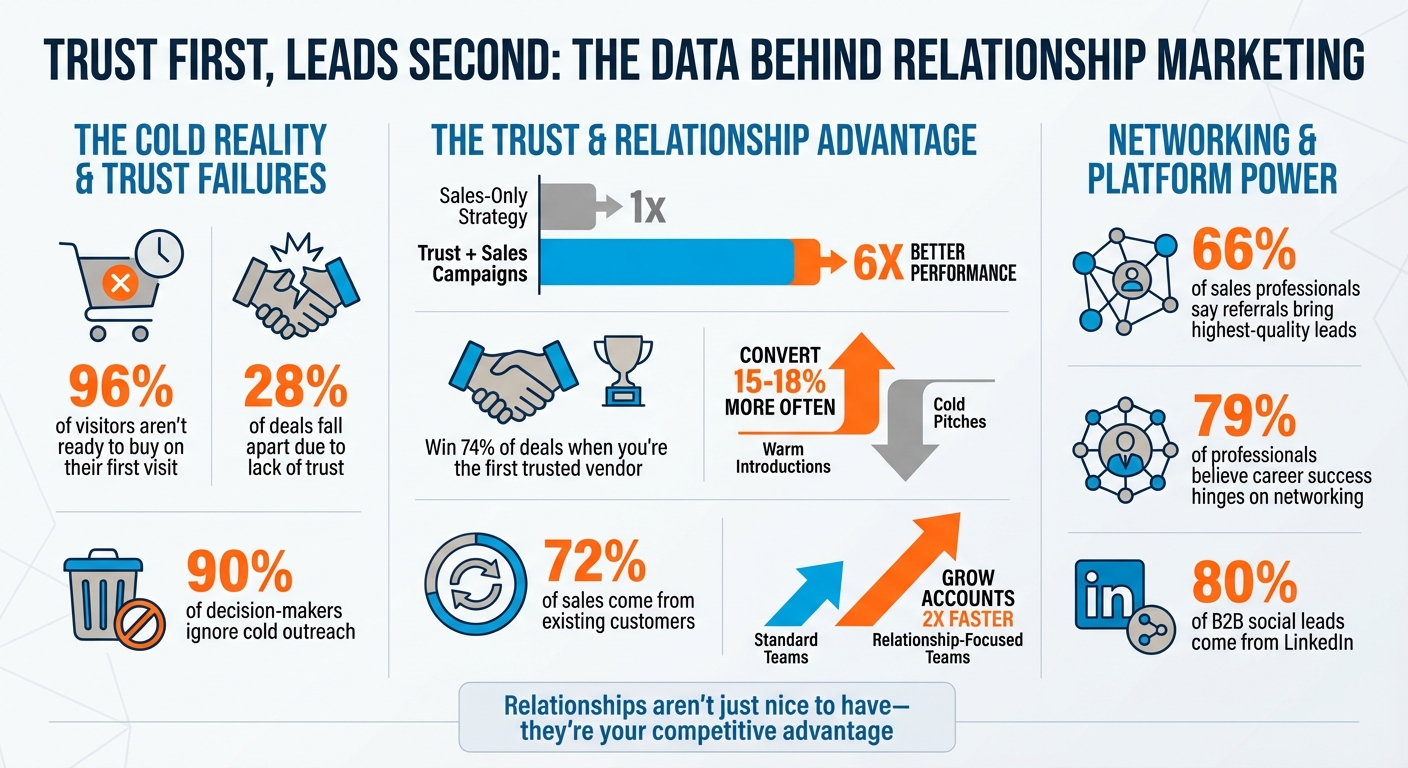
Trust-Based Marketing Statistics: Why Relationships Drive B2B Sales Success
Beyond the Sale: Mastering Relationship Building in B2B - The Daily Dose | EP672
Step 1: Grow Your Network Before You Start Selling
Tap into your existing network before diving into the hunt for new leads. Familiar connections - like former colleagues, college friends, or past clients - are not only easier to approach but are also more likely to trust you when the time comes to ask for their help. Building on these relationships creates a solid foundation for long-term business growth.
Find Your Existing Connections on LinkedIn
LinkedIn makes it easy to reconnect with people you already know. You can import your email and phone contacts to locate friends, family, and former coworkers who are already on the platform. Once you've reconnected with your first-degree connections, take it a step further by using the "Advanced People Search" feature to filter for second-degree connections. These are individuals who are linked to your current contacts, making it easier to request a warm introduction. In fact, 66% of sales professionals say referrals bring in their highest-quality leads.
Another way to expand your network is by joining alumni groups or searching for old coworkers. A shared alma mater or workplace is a perfect icebreaker. Keep in mind, though, that LinkedIn limits connection requests to 300 characters. Avoid the generic "I'd like to add you to my professional network" message. Instead, craft something personal - mention where you met or highlight a shared interest. Karen Wickre, former Editorial Director at Twitter, sums it up perfectly:
"Nurture it before you need it".
Make it a habit to practice "loose touch" networking. Spend just 10 minutes a day sending casual greetings or sharing useful tidbits to keep relationships alive long before you need a favor. You can also strengthen these connections by participating in live events or online communities.
Join Events and Communities to Meet New People
Networking is crucial - 79% of professionals believe their career success hinges on it. While online connections are helpful, nothing beats the impact of face-to-face interactions at trade shows, conferences, or local meetups. Once you've made an in-person connection, maintain and grow the relationship through LinkedIn or other digital platforms.
Don’t limit yourself to LinkedIn. Explore industry-specific Slack channels, Facebook groups for niche roles, or local professional organizations. Before joining any group, define your purpose. Are you there for insights, to build brand awareness, or to advance your career? Each goal requires a different approach. When you engage in these communities, focus on providing value first. Chris Fralic, Board Partner at First Round, puts it like this:
"The best way to be highly influential is to be human to everyone you meet".
Contribute meaningfully - share relevant articles, celebrate others' achievements, and ask thoughtful questions about their challenges. Move beyond small talk by discussing deeper topics, like how they’re navigating competitive pressures or adopting new technologies. By participating in diverse settings, you build authentic, trust-based connections.
Track Your Relationships with CRM Tools
Once you’ve expanded your network, keep it organized with CRM tools like LinkedIn Sales Navigator. Given that LinkedIn drives 80% of B2B social leads, it’s an ideal starting point. Sales Navigator offers advanced filters, such as company growth trends, technology usage, and recent job changes. One B2B founder described it as:
"Sales Navigator has been a game changer for lead generation".
Use these filters to zero in on key connections and integrate the data with CRM platforms for streamlined follow-ups. While Sales Navigator doesn’t provide direct access to business emails, many professionals pair it with sales engagement tools or scraping software to enrich contact data. Tools like Kondo can even sync your LinkedIn activity and messages directly with your CRM, giving you a centralized view of all your professional interactions. This system ensures you stay on top of your relationships, knowing exactly who to reach out to, what matters to them, and when to follow up.
Step 2: Tell Stories That Build Trust and Start Conversations
Once you've got your network established, the next step is to give people a reason to care about what you're doing. Storytelling - real, genuine storytelling - creates emotional connections that cold pitches simply can't. In fact, 90% of decision-makers admit they ignore cold outreach, but they'll engage with people they trust. This is where sharing your story can turn casual connections into meaningful conversations.
Write Founder Stories That Resonate
People aren't just interested in your successes - they want to know what drives you. Sharing your motivations gives others a glimpse into your character, which is far more compelling than a list of achievements. Instead of announcing, "We just raised $2M", try sharing the journey behind it: the sleepless nights, the rejection emails, and the moments you almost quit. As Osato Evbuomwan, Senior Marketing Manager at Unilever, wisely puts it:
"Authenticity is the secret sauce for meaningful relationships. Do not compromise yours".
Be real. Share the highs and lows, the lessons learned, and even the struggles you’re still working through. Maybe you’re terrible at time management or you’ve launched a product that flopped. These moments of vulnerability make you relatable and, more importantly, trustworthy. Remember, decisions are often driven by emotion first and logic second. So, focus on connecting emotionally by addressing your audience’s challenges through your own experiences. Skip the sales pitch - share practical advice, client stories, or your unique take on industry hurdles instead.
Sharing Content That Works on LinkedIn
LinkedIn is the starting point for many B2B conversations, but it’s not where deals are instantly closed. To stand out, start your posts with a short, attention-grabbing hook, then dive into your story. Use short paragraphs and line breaks to make your content easier to read. If you’re including a link, place it in the first comment to increase your post’s reach.
Consistency matters more than perfection. Posting 2 to 3 times a week on topics that your target audience cares about will help you build a strong reputation. Make sure your profile answers three key questions: Who are you? What do you do? Why should I care? Instead of just listing your job title, craft a headline that highlights the value you bring, like "I help SaaS founders attract more customers."
Take inspiration from campaigns like Close CEO Steli Efti's "The Inside Sales Summit" in Fall 2017. This event featured 55 video interviews with sales experts, leading to 7,827 new signups in just one week and converting 53 of those into trial users. It’s a great example of how consistent, value-driven content can create real results.
Keep your tone personal and conversational. Read your posts out loud, and tweak them until they sound natural. Show up as a person, not a salesperson. Messages that feel genuine and spark actual conversations get responses. On the flip side, overly generic messages are a turn-off. As Christopher Tompkins, CEO of The Go! Agency, puts it:
"If your message is so generic that it could go to 100 people without changing a word, it's not personal. It's lazy".
The goal is simple: connect, engage, and build trust - one story at a time.
sbb-itb-9354cf2
Step 3: Stay Active to Strengthen Your Connections
Making connections is just the beginning; the real magic happens when you keep those relationships alive. Think of LinkedIn as a networking event, not a sales pitch marathon. It’s all about building trust and nurturing relationships over time. As Christopher Tompkins, CEO of The Go! Agency, wisely says:
"LinkedIn isn't where deals close. It's where conversations begin. That means treating LinkedIn like a networking event, not a marketplace".
Engage Daily Through Comments and Messages
Consistency is your secret weapon here. Dedicate just 10 minutes a day to interacting with your network. Comment on posts, respond to messages, and spark conversations. But don’t stop at hitting the "like" button - leave thoughtful comments that add to the discussion. This keeps you on people’s radar while showing genuine interest.
When reaching out via direct messages, keep it personal and concise. Reference something specific from their profile or a recent post to show you’ve done your homework. Before messaging, engage with their content to create a sense of familiarity. Skip the cookie-cutter templates and avoid bombarding them with follow-ups. A targeted two-month campaign by The Go! Agency for a B2B manufacturing firm in the energy sector saw a 75% response rate on personalized outreach. The same campaign also generated over 200,000 impressions and boosted their followers by 33%.
This kind of consistent, thoughtful interaction builds trust and lays the groundwork for deeper connections.
Focus on Helping, Not Selling
Once you’re regularly engaging, shift your mindset from selling to genuinely helping. Make your interactions about serving others, not pushing your agenda. Share useful articles, connect people who could benefit from knowing each other, or offer constructive feedback on their projects. When you lead with generosity, people naturally gravitate toward you.
And it’s not just good karma - it’s smart strategy. Teams that focus on relationship-building grow their accounts twice as fast as those that focus on transactions. It’s the Law of Reciprocity: help someone out, and they’ll feel inclined to return the favor. That could mean referrals, meetings, or even new business opportunities.
Follow the 80/20 rule: share 80% educational or helpful content and keep self-promotion to just 20%. Ask meaningful questions about their challenges, provide resources to solve real problems, and celebrate their successes. As Melonie Dodaro, Global Social Media Lead at DNV Energy Systems, puts it:
"You're supposed to connect with them, not collect them".
Step 4: Use RevBoss to Scale Your Network and Generate Leads
By now, you've built meaningful connections, shared compelling stories, and stayed active in your network. With that solid foundation in place, it's time to take things up a notch - scaling your efforts while keeping that personal touch intact. This is where RevBoss steps in.
How RevBoss Helps You Expand Your LinkedIn Presence
RevBoss takes the heavy lifting out of growing your audience and creating content, allowing you to focus on building genuine relationships. Starting at $1,500 per month, the platform manages strategy, schedules content, and handles engagement workflows. It's tailored for founder-led B2B businesses, where your unique personality and expertise are the driving forces behind growth.
RevBoss enhances your relationship-building strategy by amplifying what already works. As the company explains:
"We partner with our clients to develop interesting, educating, and entertaining marketing content that serves their audience".
What makes RevBoss stand out is its ability to scale without losing your authentic voice. It ensures your messaging remains consistent while reaching a broader audience. This approach sets the stage for a smooth transition from building connections to generating leads.
Keep Tabs on Relationships and Know When to Shift Gears
RevBoss isn't just about growing your audience; its true strength lies in helping you identify when it's time to take the next step. The platform's activation campaigns pinpoint when someone moves from being a passive follower to an engaged prospect. You'll see who's commenting regularly, asking insightful questions, and showing a clear alignment with your expertise.
When those relationships are ready to evolve into business opportunities, RevBoss’s premium service, priced at $4,000 per month, steps in. This includes direct outreach, event support campaigns, and audience targeting workflows. But don't think of this as cold pitching - it's about continuing meaningful conversations with people who already trust you and are eager to engage further.
Conclusion: Build Relationships First, Leads Will Come
Let’s wrap this up with some powerful takeaways about putting relationships at the heart of your strategy. Teams that focus on building genuine connections see their accounts grow twice as fast as those that rely on transactional tactics. And here’s a wake-up call: 90% of decision-makers ignore cold outreach. That stat alone should make you rethink the old-school sales approach.
Putting connection ahead of conversion doesn’t just feel better - it actually works better. Trust is the secret sauce here. 28% of deals fall apart because trust wasn’t established, while warm introductions convert 15-18% more often than cold pitches. And once you’ve built that trust, it pays off big time: 72% of your sales will come from existing customers. These are people who already know you, like you, and trust you. That’s where the magic happens.
Key Lessons for Founder-Led Marketing
The steps we’ve covered - networking, storytelling, and engagement - are all about creating authentic connections that lead to revenue. Share your founder story. Show off your personality and expertise. Why? Because people make decisions with their emotions first and then justify them logically. Your real, unpolished voice will always beat out stiff corporate jargon. Keith Ferrazzi nails it with this quote:
"People do business with people they know and like. And people like people who focus on their success".
This is where RevBoss comes in. It helps you scale those authentic, trust-filled engagements when the time is right for conversion. The result? Leads flow naturally from the relationships you’ve built.
Here’s the thing: shifting from relationship-building to lead generation isn’t some abrupt change. It’s a smooth progression. When trust is already in place, talking about working together feels natural - not like a forced sales pitch. That’s why founder-led marketing creates long-term wins.
FAQs
How can I build trust with potential leads effectively?
Building trust with potential leads starts with prioritizing real connections over rushing into a sales pitch. Be genuine in your approach - engage in conversations that matter, share helpful advice, and take a sincere interest in their challenges. When you provide value without expecting anything in return, you naturally earn trust and goodwill.
Make it personal. Spend time understanding each prospect’s specific situation by asking thoughtful questions and genuinely listening to their responses. Tailor your outreach to align with their needs, and use tools like a CRM to keep track of key details. This way, your follow-ups feel intentional and relevant, not generic.
Lastly, show consistency and reliability. If you promise to send a resource, schedule a meeting, or follow up, make sure you deliver. Being transparent and dependable can turn an initial connection into a lasting, trusted relationship.
How can I actively engage with my professional network every day?
Engaging with your network doesn’t have to be a big production - it’s the little things that count. Start by staying active on LinkedIn. Drop a thoughtful comment on someone’s post, share your perspective on a trending topic, or send a quick “Congrats!” when someone celebrates a win. These small gestures add up, showing you’re paying attention and building trust over time.
Take it a step further by reaching out directly. Each day, pick one or two people to message. Keep it personal - reference a post they shared, a recent achievement, or something you genuinely appreciate about them. A message that feels tailored and sincere can go a long way in strengthening your connection.
Finally, don’t overlook the power of groups and forums. Whether it’s chiming in with advice, sharing a useful resource, or connecting two people who should know each other, these contributions not only help others but also position you as someone worth knowing. It’s a win-win.
How does storytelling help build stronger business relationships?
Storytelling is one of the most effective ways to build trust because it reveals the human side of your business. When you share a relatable story - whether it’s about overcoming a challenge, a moment of clarity, or a customer’s success - you tap into emotions that make your message stick. It turns a basic introduction into something more personal, creating a connection rooted in empathy and mutual understanding.
In the world of networking, stories have a way of standing out. Instead of leaning on a generic elevator pitch, sharing real-life experiences invites others to engage with you on a deeper level. A well-told story doesn’t just set you apart; it sparks curiosity and makes it easier to form meaningful, lasting connections. At its core, storytelling builds the trust that’s essential for cultivating authentic business relationships and opening doors to long-term success.