Scaling Beyond Founder-Led Outreach: Guide

Stop being the bottleneck. Founder-led outreach works wonders early on, but it’s a time suck and unsustainable as your business grows. The more you scale, the harder it gets to manage every email, call, and follow-up yourself. Sound familiar? Here’s the fix:
- Define your Ideal Customer Profile (ICP): Know exactly who you’re targeting - industry, company size, revenue, pain points, and more.
- Create a messaging framework: Consistent, clear, and tailored messaging keeps your team aligned and effective.
- Document your process: Write down every step - lead sourcing, follow-ups, objection handling - so your team can replicate what works.
- Hire and train your team: Bring in sales pros, teach them your system, and let them run with it.
- Use automation tools: CRMs like HubSpot or Salesforce save time and ensure nothing slips through the cracks.
- Balance automation with personal touches: Automate the basics but step in personally for high-value interactions.
- Track and refine: Use metrics like response rates and pipeline growth to tweak and improve your system.
Scaling outreach isn’t just about growth - it’s about freeing up your time to focus on the big picture while your team drives results. Stop doing everything yourself. Build systems, delegate, and watch your business thrive.
E.73 - The Founder’s Guide to Scaling Sales - From Hustle to Repeatability w/Jess Schultz
Problems with Founder-Led Outreach
Founder-led outreach offers a personal touch and deep product knowledge, but as your business grows, these strengths can quickly turn into obstacles.
Time and Resource Limits
When you're personally managing every call, email, and follow-up, the clock becomes your enemy. There’s only so much time in a day, and this hands-on approach often results in delayed responses, missed deals, and lost opportunities - especially with larger clients who expect faster engagement. The financial hit here is no joke. Your time isn’t just valuable - it’s one of your most expensive resources, and dedicating it solely to outreach may pull you away from the bigger picture: driving long-term growth.
Scaling Difficulties
In the early days, your personal network might feel like an endless goldmine for leads. But eventually, that well runs dry. Once you’ve tapped out your connections, growth stalls unless you expand beyond your immediate circle. Here’s the kicker: founder-led outreach often relies on gut instinct and personal rapport, which leaves new sales hires floundering. Without clear, documented processes, replicating your success becomes an uphill battle, slowing down your ability to scale effectively.
Over-Reliance on the Founder’s Personal Brand
Leaning too heavily on your personal brand comes with risks. If you’re unavailable for any reason, outreach efforts can grind to a halt. Customers who see their relationship as being with you rather than your company may hesitate to work with anyone else, complicating account management and retention as your business grows. Plus, critical customer insights often stay locked in your head instead of being shared in a systematic way. Without a structured process to track leads, conversations, and pipeline progress, your outreach becomes inconsistent. This lack of data-driven strategy not only makes it harder to refine your approach but also limits your ability to build the repeatable sales engine that investors love to see.
Recognizing these challenges is the first step toward creating a scalable, efficient outreach strategy.
Setting Up Your Scalable Outreach Foundation
Lay the groundwork for outreach that turns your founder instincts into repeatable, scalable processes.
Define Your Ideal Customer Profile (ICP)
Your ICP is your compass, guiding your team toward the prospects most likely to convert. Without it, you risk chasing leads that go nowhere, wasting time and resources.
A well-rounded B2B ICP digs deeper than surface-level demographics. It includes firmographic details like industry, company size (usually measured by employee count), and revenue ranges. For example, a SaaS company might focus on mid-sized tech firms with 50–500 employees and annual revenues between $10M and $100M. Technographic data is also key, as it reveals the tools and systems your prospects already use, helping you spot integration opportunities. Don’t overlook location - it can affect time zones, compliance needs, and market readiness. Behavioral signals, like pain points, buying triggers, and decision-making habits, round out the profile.
Early customer feedback is a goldmine for refining your ICP. Use CRM data and customer interviews to uncover patterns in past wins. If, for instance, healthcare clients engage at a higher rate than others, that’s a clue to adjust your ICP and focus your team’s energy where it counts.
Once your ICP is nailed down, tailor your messaging to speak directly to these high-priority prospects.
Build a Messaging Framework
Consistency is king when it comes to communication. A solid messaging framework ensures your team delivers a unified value proposition every time. Focus on four key areas: the prospect’s challenges, your unique value, evidence to back your claims, and clear calls-to-action.
Develop a messaging matrix that aligns with your customer personas and their buying journey stages. Let’s say your prospect struggles with inefficient sales processes - your framework should highlight workflow solutions, promise smoother operations, back it up with success metrics, and encourage them to book a demo. Include specific language, examples, and responses to common objections to keep your team prepared.
Your messaging should always prioritize the prospect. Educate them, help them understand their challenges, and build trust. This approach sets your brand apart and fosters authenticity.
Store your messaging framework in a central, shared system so everyone on your team has easy access. Include templates for emails, LinkedIn messages, and phone scripts to maintain consistency across all outreach channels.
Document Processes for Your Team
With your ICP defined and messaging dialed in, it’s time to document your outreach processes for consistency and scalability.
Documenting your workflow is non-negotiable if you want sustainable growth. Founders who map out their sales processes early - before hiring a sales team - are much better equipped to scale. If your process only exists in your head, your team can’t replicate or improve it.
Break your outreach workflow into clear steps: lead sourcing, initial contact, follow-ups, objection handling, and handoffs. For each step, create concise onboarding guides with templates, scripts, and detailed instructions. For lead sourcing, outline where to find prospects, the criteria to qualify them, and how to prioritize outreach. For follow-ups, specify timing, messaging variations, and when to move prospects between sequences.
Centralize all this documentation in one easily accessible system. This becomes your team’s single source of truth for messaging and workflow guidelines.
Assign someone to keep the documentation up to date, and schedule regular reviews to ensure it evolves with your market and best practices. As your team learns what works, let your processes grow with them.
When your initial network of leads dries up, scaling requires reaching a broader audience. Documented, repeatable processes are the backbone of that growth. The time you spend building these systems now will pay off when your team can operate smoothly and deliver consistent results.
How to Delegate Outreach Tasks to Your Team
Shifting from handling everything yourself to entrusting your team with outreach takes careful planning. It’s not an overnight change, but with the right hiring and training, your team can uphold the quality and personal touch that made your founder-led efforts stand out. This process builds on creating a scalable outreach system that keeps your messaging consistent and aligned with your vision.
Hire and Train Team Members
Bring on roles that address your current bottlenecks. Whether you need SDRs to focus on prospecting, AEs to close deals, or Marketing Ops to streamline automation, hire specifically to fill gaps in your process.
Choose candidates who align with your voice and company values. Test their fit by having them rewrite messages or participate in role-play exercises to ensure they can capture your tone and style.
Immerse new hires in your founder-led approach. Let them shadow your calls, review recordings, and study successful outreach examples. Build onboarding modules that cover the essentials: product knowledge, your ideal customer profile (ICP), messaging frameworks, and the tools they’ll be using. Go beyond manuals - include live practice sessions to provide real-time feedback.
Stewart Butterfield’s early work at Slack is a great example. In Slack’s formative years, Butterfield personally handled sales, gathering feedback from users that shaped both the product and sales strategy. As Slack grew, they documented these processes and brought in sales professionals who could replicate Butterfield’s approach while staying true to the company’s vision and brand.
Train your team with real-world scenarios. Use examples like common objections and proven email sequences to prepare them for the challenges they’ll face. Role-playing exercises are invaluable for practicing tough conversations before they happen with actual prospects. Include assessments to ensure they understand your ICP, can clearly communicate your value proposition, and know when to escalate issues.
Keep training ongoing. Regular sessions help address new objections, market updates, and evolving messaging. Markets shift, and your team’s skills need to keep pace with those changes.
Set Up Feedback Systems
Once your team is up and running, structured feedback systems are key to refining their approach and maintaining high standards.
Schedule weekly or bi-weekly one-on-ones to review performance and provide actionable feedback. These sessions should go beyond surface-level updates. Dive into specific outreach attempts, discuss what’s working, and tackle any challenges head-on. For example, instead of vague advice like “be more confident,” point out specific moments where they could have asked a better question or handled an objection differently.
Review call recordings, email sequences, and LinkedIn messages with the same level of detail. Use these reviews to ensure their approach aligns with your messaging framework.
Host weekly team meetings to share wins, challenges, and insights. If one SDR discovers a new way to handle objections effectively, the whole team should benefit from that knowledge. These meetings also help you identify trends - if multiple team members are encountering the same objection, it might signal a need to tweak your messaging or training materials.
Track key metrics like response rates, meetings booked, and conversion rates using real-time CRM dashboards. But don’t just focus on numbers - evaluate the quality of interactions. Are prospects genuinely engaging with your team? Do conversations feel natural and helpful, or overly scripted and pushy?
Encourage two-way feedback. Your team is on the front lines and often picks up on market shifts, emerging pain points, or new messaging opportunities before you do. Create channels for them to share these insights, whether through surveys, open office hours, or Slack channels dedicated to market intelligence.
Foster open communication and a culture of feedback. When team members feel comfortable sharing what they’re hearing from prospects, you can adapt your strategy quickly and stay ahead of the curve.
sbb-itb-9354cf2
Using Automation and Scalable Systems
Once your team is trained and you've established effective feedback systems, automation becomes the powerhouse behind scalable outreach. With the right tools and workflows, you can maintain the personal touch that made your founder-led efforts resonate, while expanding your reach and ensuring consistency.
Outreach Automation Tools
CRM platforms like HubSpot and Salesforce are invaluable for centralizing data, automating email sequences, and tracking performance. These tools not only streamline operations but also deliver the analytics needed to measure success. Studies show that CRM usage can increase sales, productivity, and forecast accuracy.
- HubSpot is a great fit for growing teams, offering lead management, email automation, and reporting in one integrated platform. HubSpot’s own data reveals that companies automating lead management often see revenue grow by 10% or more within six to nine months.
- Salesforce, on the other hand, is ideal for larger organizations with more complex workflows. Its advanced customization and integration options can handle sophisticated outreach strategies.
For multi-channel automation, tools like Outreach and Salesloft shine. These platforms allow you to create sequences that combine email, LinkedIn messages, and phone calls, ensuring prospects receive consistent, well-timed touchpoints across various channels. Integrating these tools with your CRM avoids data silos and ensures a unified view of your prospects.
Marketing automation platforms such as Marketo or Mailchimp are perfect for broader campaigns. They excel in delivering educational content, running drip campaigns, and scoring leads based on engagement metrics.
For targeted prospecting, LinkedIn Sales Navigator is a game-changer. It enables you to search for leads using specific criteria, track their activity, and send personalized connection requests. When synced with your CRM, it becomes a powerful tool for engaging high-value prospects.
The key is to integrate these tools with workflows designed to keep your outreach authentic while scaling effectively.
Personalized Workflows at Scale
The challenge with automation lies in balancing efficiency with the personal touch that made your initial outreach successful. Trigger-based campaigns can help by segmenting prospects based on their behaviors and characteristics. For example, someone who downloads a white paper on sales automation might receive a follow-up tailored to that interest, while a webinar attendee might get a different message. Behavioral targeting ensures that each interaction feels timely and relevant.
Dynamic content and timing automation also play a role in making messages more engaging. By tailoring content and optimizing send times, you can maximize response rates. Multi-channel sequences are most effective when they adapt to how prospects engage. For instance, if someone is more active on LinkedIn than email, shifting your focus to social outreach can create a more natural and responsive connection.
By combining automation with these personalization techniques, you can scale your outreach while keeping it authentic and impactful.
Using RevBoss for Founder-Led Growth
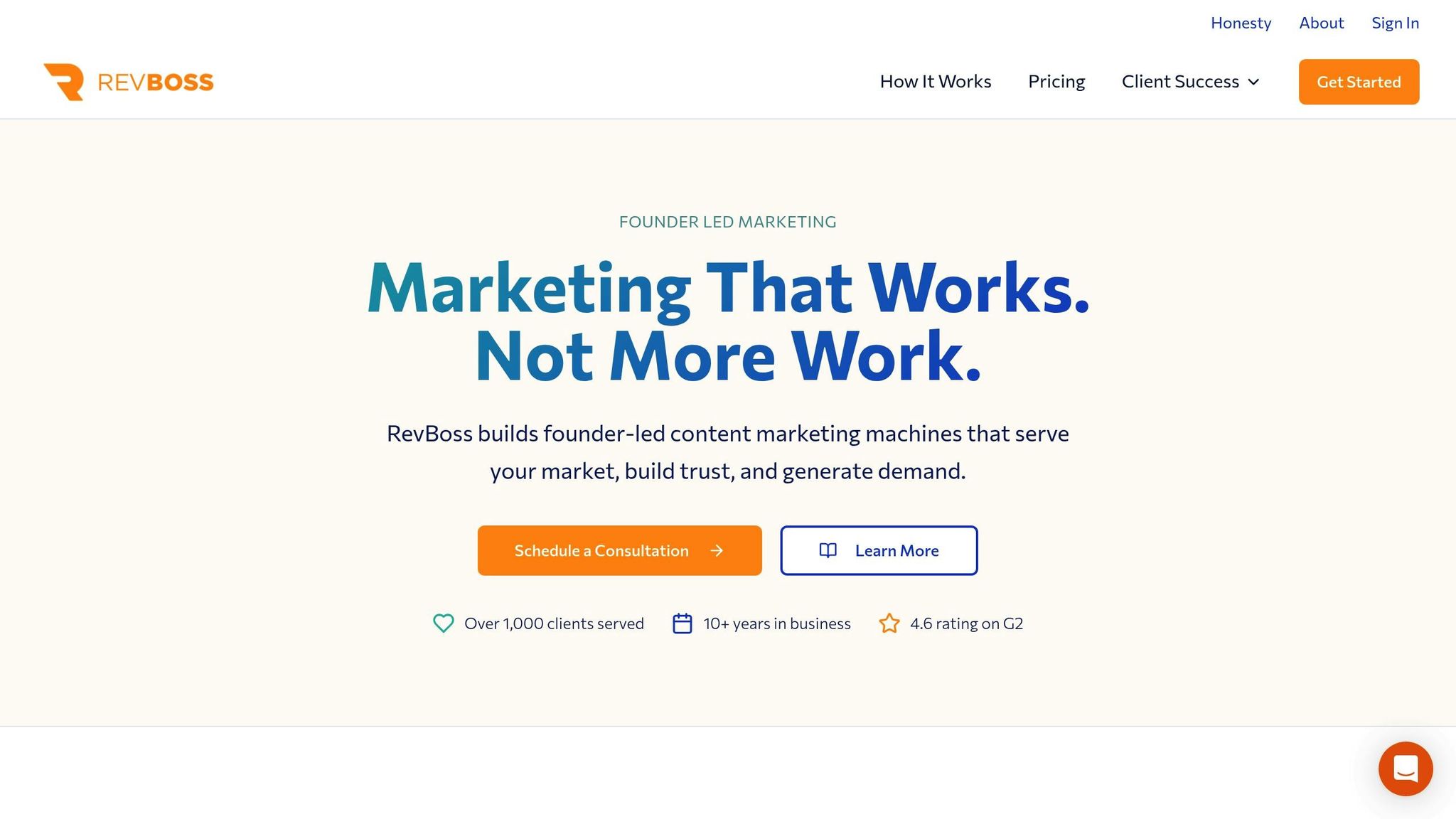
Building on the principles of automation and personalized workflows, RevBoss takes founder-led growth to the next level. Unlike traditional automation tools focused solely on transactional outreach, RevBoss creates content marketing systems that build trust, generate demand, and amplify your founder’s voice. This approach directly addresses the challenge of scaling without losing the personal brand that sets your business apart.
RevBoss emphasizes creating marketing content that truly serves your audience. As they put it, "Most B2B marketing is boring, soulless, and self-centered. We partner with our clients to develop interesting, educating, and entertaining marketing content that serves their audience. And we don't just create and wait. We execute campaigns that generate conversations and convert into pipeline".
This strategy helps your brand stand out in a crowded market. Instead of relying solely on cold emails or generic LinkedIn messages, RevBoss helps you build an audience that knows, likes, and trusts you - long before any direct outreach begins. Their focus is on sparking genuine conversations and building lasting relationships.
RevBoss has a proven record of success with founder-led businesses. As they note, "authenticity, trust, and audience are the only durable marketing differentiators in an AI-first market". Their approach ensures that the trust and personal connection at the heart of your initial outreach efforts are preserved, even as you scale to reach a larger audience.
RevBoss offers programs starting at $1,500 per month, with options including LinkedIn content and audience building, email newsletters, or full-scale content and activation campaigns. The benefit? They handle the heavy lifting of content creation and campaign execution, all while keeping your founder brand front and center.
Best Practices for Maintaining Scalable Outreach
Creating a scalable outreach system is just the first step. The real test is keeping it effective over time while holding onto the genuine connections that made your early efforts stand out. Companies with documented sales processes are 33% more likely to excel, but only if they consistently refine and improve their methods. Regular tweaks and updates ensure your outreach stays both efficient and authentic.
Balance Automation with Personal Touch
Scaling often comes with the risk of losing the personal touch that builds trust. While sales teams using automation tools see a 14.5% boost in productivity, the most successful ones know how to use automation selectively, not as a blanket solution.
Automate repetitive tasks, but save human interaction for moments that matter. For example, if a prospect replies to an email or clicks on a link in your sequence, that’s the time to shift gears and engage personally.
Make use of dynamic content to keep things personal even when using automation. Instead of sending out generic templates, tap into your CRM to reference specific details - like a prospect’s company, recent activity, or industry challenges. Mentioning a recent LinkedIn post or company milestone makes your message feel tailored, even if it’s part of an automated workflow.
You can also weave personal touches into automated systems. For instance, sending short, personalized video messages to high-priority leads can leave a strong impression. It doesn’t take long to record a quick video, but it shows effort and builds rapport. Many teams use this strategy for demo follow-ups or to engage with leads showing strong interest.
The trick is setting clear rules for when to use automation and when to step in personally. Train your team to spot signals like repeated email opens, website visits, or social media engagement - these are the moments when personal outreach can make all the difference.
Update Your ICP and Messaging Regularly
Keeping your outreach relevant requires more than just automation tweaks - it’s about staying aligned with your audience. Regularly revisiting your Ideal Customer Profile (ICP) and messaging framework ensures your efforts stay on target. Markets shift, customer needs evolve, and your product grows. Companies that adapt their ICP and messaging accordingly tend to maintain stronger engagement rates.
Set aside time each quarter to review performance data and identify trends. Pay attention to recurring objections or feedback from prospects, as they can guide updates to your messaging.
When changes are made, document them clearly and make sure the entire team is on the same page. Inconsistent messaging across team members confuses prospects and weakens your brand image. A centralized resource with the latest messaging and approved talking points helps everyone stay aligned.
Track and Optimize Key Metrics
To keep your outreach efforts on track, you need to measure both engagement and outcomes. Companies with standardized sales processes experience up to 28% higher revenue growth, largely because they rely on data to guide improvements.
Focus on metrics that directly impact revenue. For engagement, keep an eye on email open rates, reply rates, meeting bookings, and social media interactions. If reply rates suddenly drop, it might signal stale messaging or shifting market conditions.
On a broader scale, track metrics like pipeline growth and customer acquisition cost. These provide a clearer picture of whether your outreach is driving meaningful results or just increasing activity without real impact.
Set up regular reporting cycles to review these metrics with your team. Weekly check-ins allow for quick course corrections, while monthly reviews help identify long-term patterns and opportunities.
To encourage accountability, assign specific metrics to team members and tie their performance reviews to these outcomes. When everyone knows how their work contributes to the bigger picture, they’re more likely to focus on efforts that truly move the needle.
Finally, use A/B testing to fine-tune specific aspects of your outreach. Test different subject lines, message lengths, call-to-action phrases, and even the timing of your emails. Sometimes, small tweaks can lead to significant improvements.
Moving to Scalable Outreach for Long-Term Growth
Transitioning from founder-led outreach to a scalable system is all about creating sustainable growth that doesn't hinge on your daily involvement. The companies that nail this shift manage to build systems that stay true to the founder's vision while empowering their teams to work independently and effectively. It’s about taking the strategies that worked early on and evolving them into something that lasts.
To scale successfully, you need to turn individual insights into documented processes - essentially creating a playbook that guides your team toward consistent, independent growth.
Your scalable outreach system should mirror the principles that made your founder-led efforts work in the first place. A well-documented outreach process does more than just preserve your vision; it gives your team the tools to succeed. Embedding your values, messaging, and deep customer insights into every automated workflow and training program ensures that authenticity and trust remain your strongest assets, even as you expand. The key is to systematize what once felt personal.
Scaling doesn’t mean stepping away entirely. The most successful founders don’t disappear - they shift their focus. It’s about moving from doing the work to designing the systems that let others do it effectively. This shift allows you to maintain growth while freeing up your time for strategic thinking.
Technology plays a huge role here, but it’s not about replacing the human touch. Automation tools can take care of repetitive tasks like scheduling and follow-ups, leaving your team free to focus on meaningful, high-value interactions. The trick is knowing when to automate and when to step in personally.
RevBoss specializes in building content marketing systems that reflect your voice, serve your audience, and generate demand - all while staying true to your approach. With a track record of satisfied clients, they’re experts at scaling authenticity without losing the personal touch.
"Authenticity, trust, and audience are the only durable marketing differentiators in an AI-first market."
For this strategy to work, your mindset has to align with operational execution. Scaling isn’t a one-and-done project - it requires ongoing tweaks and improvements. Document your processes, keep your ICP up to date, invest in the right CRM and automation tools, and train your team to consistently reflect your vision. Regular updates based on performance data, market shifts, and customer feedback are critical. Companies that treat scaling as a one-time effort often see their effectiveness fade over time.
This final piece of the puzzle ties together everything discussed earlier. The goal is to amplify your founder’s influence through systems that expand your reach without losing the trust and authenticity that fueled your early wins. When done right, scalable outreach becomes a powerful advantage that drives long-term growth while preserving the relationships that matter most.
FAQs
How can my team maintain a personal touch in outreach while using automation tools?
Striking the right balance between automation and personalization is crucial for keeping outreach meaningful. Automation tools are great for handling repetitive tasks like scheduling or sending initial follow-ups, but your communication still needs to feel real and tailored to the recipient.
Put effort into creating content that mirrors your brand's voice and speaks directly to your audience's needs. Small touches - like personalized greetings or referencing previous interactions - can make even automated messages feel more sincere. By assigning tasks wisely and using tools that support your team's objectives, you can expand your outreach without sacrificing the human element.
What are the key elements of an Ideal Customer Profile (ICP), and how often should it be reviewed?
An Ideal Customer Profile (ICP) is a detailed description of the type of customer that would gain the most from what you offer. It’s like having a cheat sheet for spotting your best-fit clients. Here’s what it typically includes:
- Demographics: Think about the basics - industry, company size, revenue, and location.
- Behavioral traits: How do they buy? What challenges keep them up at night? What goals are they chasing?
- Firmographics: Specific details like their technology stack or business model.
It’s smart to revisit your ICP at least once a year - or whenever big shifts happen in your business, market trends, or customer feedback. Keeping it fresh ensures your outreach stays sharp and in sync with your audience and the ever-changing market.
How can I document and share outreach processes with my sales team to ensure consistency and scalability?
To make your outreach efforts run smoothly and consistently, start by crafting a detailed, step-by-step guide that maps out your entire workflow. Break it down into manageable stages, including everything from messaging templates and follow-up schedules to tips for adding a personal touch. Keep this information organized and easy to find by using shared documents or project management tools.
As your team grows, scalability becomes key. Train team members on these processes so they can confidently take ownership of tasks. Encourage feedback to spot areas for improvement and fine-tune the system. To save time and maintain consistency, consider using automation tools for repetitive tasks - this allows your team to focus on what really matters: building genuine connections and closing deals.