How to Share Personal Stories in B2B Marketing

In B2B marketing, personal stories aren’t just nice-to-have - they’re what set you apart. Buyers are no longer swayed by dry, transactional messaging. Instead, 52% prioritize personal factors over professional ones. Sharing your journey - failures, wins, and lessons - builds trust and connects with your audience on a human level. Founders like Adam Robinson and Tyler Denk have proven this by openly sharing their challenges and milestones, leading to rapid business growth and even funding success.
Here’s the gist:
- Why it works: People buy from people. Sharing your struggles and solutions makes your brand relatable and trustworthy.
- What to do: Match your story to your audience’s pain points. Use a simple structure: setup, challenge, action, outcome.
- How to share it: Choose the right platforms - LinkedIn, newsletters, podcasts, or video - and repurpose your content for maximum reach.
- Measure success: Track engagement, lead quality, and feedback to refine your storytelling.
The key? Be real, stay specific, and focus on solving your audience's problems. When done right, your personal stories become a growth engine that no competitor can copy.
Mastering the Art of Storytelling in B2B Marketing
Finding Stories That Connect With Your Audience
When it comes to storytelling, authenticity is just the beginning. The real magic happens when your experiences align with your audience's journey. It's not about having a treasure trove of stories - it's about choosing the ones that mirror the struggles, dreams, and challenges your customers face every day. By doing so, your personal journey becomes a bridge that connects directly to their world.
Match Stories With Customer Needs
Your Ideal Customer Profile (ICP) is your roadmap for crafting stories that hit home. Start by digging into your audience's biggest pain points, ambitions, and industry hurdles. Once you know what matters most to them, you can pull from your own experiences to address those areas. For instance, if your ICP is grappling with digital transformation, sharing your own battle with adopting new technology can strike a chord.
Take a page from IBM's playbook. Instead of leaning on generic corporate messaging, they tackled public education challenges head-on. By showcasing real solutions their initiatives brought to education, they created a narrative that resonated with both educators and tech stakeholders. Similarly, Salesforce often puts the spotlight on client success stories, making the customer the hero of the narrative. This approach not only builds trust but also shows a deep understanding of their clients' challenges.
The goal is to share stories that solve your audience's problems while also aligning with your business objectives. Once you've nailed down the type of stories that connect with your customers, it's time to uncover those golden nuggets from your own journey.
Ways to Discover Relevant Stories
Finding the right stories requires a mix of outward research and inward reflection. Start by listening to your customers. Interviews can reveal the exact language they use, their challenges, and their aspirations. These insights help you craft narratives that feel tailor-made for them.
Social listening is another powerful tool. By keeping tabs on conversations, trends, and sentiments across platforms like social media, forums, and industry news, you can uncover what’s top of mind for your audience. This real-time data can guide you in selecting personal stories that address their current challenges or tap into new opportunities.
Don’t overlook the value of self-reflection. Regularly journaling your experiences can help surface moments that shaped your journey. These pivotal moments can later become the foundation for authentic and impactful storytelling. For example, Eric Ries began documenting his startup lessons on his blog before turning them into a book. By testing which stories resonated with his audience, he refined his message and built a loyal following.
Set aside time each week to reflect on your experiences. Look for lessons that could help your customers steer clear of the same pitfalls you encountered.
To make your stories truly resonate, focus on the specifics. Use vivid details and real-life scenarios that mirror your audience’s world. Avoid sweeping generalizations. Instead, highlight concrete actions, outcomes, and lessons. For instance, Buffer advises that sharing exactly how a tool or method worked for you can make your story feel more relatable and engaging.
Finally, measure your storytelling success. Track metrics like engagement rates, lead generation, conversion rates, and qualitative feedback to see which stories are making an impact. These insights will help you fine-tune your approach over time.
Companies like RevBoss specialize in helping founder-led B2B businesses uncover and refine personal stories. By focusing on the founder’s personality and aligning it with market relevance, they create strategies that build trust, set your brand apart, and drive demand.
Building Your Personal Story: A Step-by-Step Process
Once you know which stories resonate with your audience, the next step is to shape them into something structured and impactful. The difference between a forgettable anecdote and a memorable story lies in how it's organized, the honesty behind it, and how much your audience can relate to it. Sharing your experiences with clarity and sincerity is what transforms them into stories that stick. Here's a framework to guide you in crafting stories that consistently connect.
The Story Framework: Setup, Challenge, Action, Outcome
Every great story has four key parts.
Setup is where you set the scene. Introduce the key players, describe the situation, and give your audience a sense of the starting point. Think of this as the moment where you draw people in and help them understand the context that led to the challenge.
Challenge is where the tension builds. This is the problem, obstacle, or gap you encountered. Be specific - talk about what went wrong, what wasn’t working, or what issue you identified. This is your chance to help your audience see their own struggles reflected in your experience.
Action outlines the steps you took to tackle the problem. Share your thought process, the tools or resources you relied on, and the decisions you made. This part is where your audience finds the practical takeaways they’re craving.
Outcome is all about results and lessons learned. Use real numbers, timelines, and measurable results to make your story concrete. For example, Adam Robinson from RB2B documented his journey of scaling his company to $5 million ARR in just one year. His posts followed this structure: starting with his role as a founder (Setup), describing the growth hurdles he faced (Challenge), explaining his strategies and decisions (Action), and wrapping up with actual revenue numbers and P&L statements (Outcome).
The Role of Openness and Specificity
To tell a story that sticks in the world of B2B, you need to strike a balance between being open and staying professional. Sharing both your wins and your missteps builds trust, and adding specific details makes your story credible and memorable.
Instead of saying something vague like, "We faced some challenges", dive into the specifics. Talk about what exactly went wrong, when it happened, and how it impacted you or your business. Tyler Denk from Beehiiv does this brilliantly. He shared key metrics about growing his newsletter "Big Desk Energy" and gave a detailed timeline of raising a $2.6 million seed round in just seven days.
Numbers, dates, and tangible outcomes turn your personal experiences into actionable insights your audience can rely on. And when you layer in first-person storytelling, you make your brand even more relatable.
Making the Founder and Brand Relatable
First-person storytelling creates a direct connection. Using "I" and "we" lets your audience see the human side of your brand. Sharing your emotions - whether it’s excitement, doubt, or determination - makes your story feel real.
A smart move is to make your ideal customer the hero of your story, even when you're sharing your own experiences. This allows your audience to see themselves in your shoes, imagining how your solutions could fit into their lives. For instance, Gal Aga, CEO of Aligned, often shares stories from his time as a Chief Revenue Officer on LinkedIn. Since Aligned targets sales leaders, these personal accounts resonate deeply with his audience, helping them feel understood and connected.
When you view your journey through the lens of your customer’s perspective, you’re essentially showing them a mirror. Your story becomes their story, making it all the more powerful.
"Authenticity, trust, and audience are the only durable marketing differentiators in an AI-first market."
By combining a clear structure with genuine honesty, your story does more than just inform - it builds a bridge to your audience. People connect with the moments where things didn’t go as planned, the mistakes you made, or the pivots you didn’t see coming. These vulnerable moments, paired with confident outcomes, create trust that lasts.
Companies like RevBoss understand this dynamic. They help founder-led B2B businesses craft content strategies rooted in real, personality-driven stories. By aligning the founder’s true experiences with market needs, they ensure that storytelling becomes a tool for trust and differentiation - without relying on the usual corporate fluff.
sbb-itb-9354cf2
Picking the Right Channels and Formats for Your Stories
Once you’ve shaped your personal story using a strong framework, the next big step is deciding where and how to share it. The platform you pick can make all the difference in how your story lands. Each channel comes with its own style, audience, and demands, so making the right choice ensures your story reaches the right ears. Let’s break down how different platforms can amplify your message.
Compare Key Marketing Channels
Every platform has its own role in storytelling. For instance, LinkedIn posts are great for reaching professional audiences with detailed and direct stories. Meanwhile, email newsletters give you the freedom to dive deep without worrying about character limits. One company, for example, cut its content production by 80% but saw double-digit revenue growth by focusing on newsletters. This format is ideal for sharing detailed customer success stories or lessons learned.
Podcasts are perfect for building thought leadership over time. Take Gojek, for example. Their team shared product insights at tech events, which not only boosted their credibility but also earned media attention and drove a staggering 900x growth in just 18 months. Podcasts allow for meaningful, long-form conversations that resonate deeply with listeners.
Video content, when done right, delivers impressive results. A financial services company’s Ocean’s 11–inspired video series exceeded its lead generation target by 515% and even earned international press coverage. Videos work particularly well for explaining complex B2B concepts. Companies like Cisco use interactive digital stories to showcase how their technology is used in real-world scenarios.
Live events and speaking engagements bring a personal touch and credibility. Eric Ries, for example, started blogging about his startup methodology back in 2008. This led to speaking opportunities, advisory roles, and eventually his bestselling book, The Lean Startup.
| Channel | Reach | Engagement | Resource Requirement | Best For |
|---|---|---|---|---|
| LinkedIn Posts | High | Medium-High | Low-Medium | Professional audiences, thought leadership |
| Email Newsletters | Medium-High | High | Medium | Nurturing leads, building loyalty |
| Podcasts | Medium | High | High | In-depth storytelling, thought leadership |
| Live Events | Low-Medium | Very High | High | Deep engagement, networking |
| Video Content | High | Medium-High | High | Complex narratives, visual storytelling |
The key is to align your chosen channel with your audience’s habits. Once you’ve nailed that, think about how to repurpose your content to get the most out of it.
Adding Storytelling to Marketing Workflows
Incorporating personal stories into your marketing doesn’t have to overwhelm your team. Repurposing content is your friend here. As Buffer’s co-founder put it, "The more personalized the articles are, the more interest you can raise from the reader".
Start by identifying your primary channel - the one where your audience is most active. Then, repurpose that content for other platforms. For example, a single podcast episode can be turned into blog posts, social media clips, newsletters, and even infographics.
Nationwide took this approach to heart by creating a company-wide process and an Office of Customer Advocacy to ensure storytelling remained central to their marketing efforts. This kind of systematic strategy keeps messaging consistent and reduces the burden on individual teams.
For founder-led businesses, having expert support can make all the difference. Companies like RevBoss specialize in helping B2B founders integrate storytelling into their marketing without adding extra workload. As they put it:
"Marketing That Works. Not More Work."
The smartest founders focus on the channels that deliver the most impact. Buffer’s approach of guest blogging for influencers is a great example of doubling down on what works instead of spreading resources too thin.
Another effective tactic is creating content themes that align with your business goals. GE, for instance, developed a Customer Experience Center to educate, market, and connect with its teams. This centralized hub ensured their stories stayed consistent across all platforms while simplifying the workload for individual team members.
The bottom line? Personal stories build trust and create genuine connections that fuel business growth. By sharing strategically and leaning on expert help when needed, you can make storytelling a seamless part of your marketing.
You don’t need to master every platform at once. Start with one channel where you can consistently share your stories, and as you learn what resonates with your audience, expand from there. With the right approach, your personal experiences can become powerful tools for building trust and standing out in your industry.
Measuring the Impact of Personal Storytelling
Once you've crafted meaningful stories and shared them through the right channels, the next step is figuring out how well they're working. Measuring the impact of storytelling involves tracking key metrics and gathering thoughtful feedback. Let’s break down the essentials for evaluating the effectiveness of your narrative.
Key Metrics to Monitor
To gauge storytelling success, focus on a mix of engagement rates, lead quality, and qualitative feedback. Together, these metrics provide both hard data and the human perspective you need to assess your impact.
Engagement rates help you understand how well your story is resonating. Keep an eye on likes, shares, comments, and even how long people are spending with your content.
Lead quality is another critical piece. It’s not just about generating leads but ensuring they’re more likely to convert. For example, BLP’s storytelling campaign didn’t just increase lead volume - it resulted in leads that were 515% more likely to convert compared to previous efforts.
Then there’s qualitative feedback, which adds depth to the numbers. Take Tyler Denk, for instance. He raised $2.6 million in just seven days after openly sharing his founder journey. The messages, comments, and conversations sparked by his transparency about building beehiiv revealed that investors connected with his honesty, not just his business metrics.
With personal motivations now outweighing professional ones in B2B buying decisions (52% vs. 48%), it’s more important than ever to track emotional resonance. Comments, direct messages, and sentiment analysis can provide a clearer picture of how your story is landing with your audience.
Improving and Scaling Through Feedback
Great storytelling isn’t static - it evolves. Successful founders use data and feedback to refine their narratives. For example, Buffer analyzed which guest posts drove the most user sign-ups, then doubled down on those platforms and formats, solidifying their presence in social media marketing.
Start by identifying which stories generate the most engagement. Look for patterns in topics, formats, or emotional tones that strike a chord with your audience. From there, experiment with variations to see if you can replicate that success. If stories about overcoming business challenges perform well, try exploring different types of challenges or adjusting the level of detail.
Gather feedback directly from your audience. Use surveys, open-ended questions in newsletters, or social media polls to get a sense of what’s resonating. Companies like GE and Nationwide have even created dedicated teams - like GE’s Customer Experience Center and Nationwide’s Office of Customer Advocacy - to systematically collect and act on storytelling feedback. These efforts ensure their messaging stays relevant and impactful.
Don’t underestimate the value of one-on-one conversations. Talking directly with key customers or partners can uncover hidden insights about how your stories are perceived and what emotions they evoke. These personal interactions often reveal new angles or highlight which parts of your journey resonate most deeply.
Regularly review your metrics - monthly or quarterly - to fine-tune your strategy. Identify the stories that consistently drive engagement, leads that convert more effectively, and recurring themes in feedback. Use these insights to sharpen your storytelling and scale what works.
Support From RevBoss for Optimization
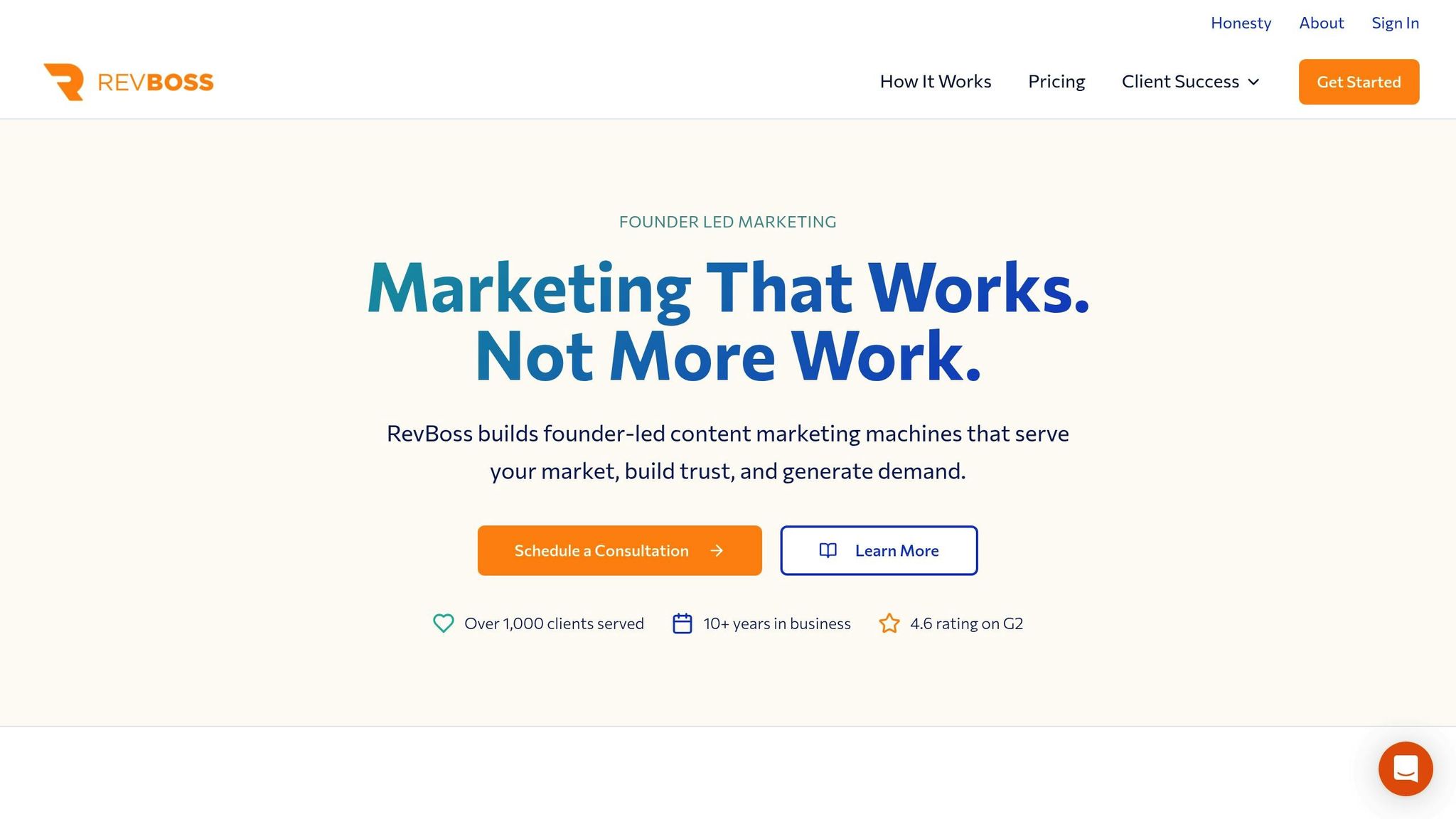
Measuring and optimizing storytelling can feel overwhelming, but expert support can make a big difference. That’s where RevBoss comes in.
RevBoss specializes in helping founders measure and refine their storytelling campaigns. Their approach goes beyond just creating content - they focus on executing campaigns that spark meaningful conversations and convert into real results. With regular performance reviews and data-driven adjustments, they help maximize both engagement and lead quality.
"We execute campaigns that generate conversations and convert into pipeline."
What makes their method stand out is their emphasis on building genuine connections, not just driving traffic. Over the past decade, more than 1,000 clients have trusted RevBoss to create founder-led marketing programs that deliver measurable growth. Their 4.6 rating on G2 speaks to their ability to produce trackable, scalable outcomes.
The RevBoss platform offers workflow tools and regular strategy calls to help founders understand what’s working. Instead of guessing, you’ll get clear data on engagement trends, lead quality improvements, and how your storytelling contributes to your pipeline.
"RevBoss builds founder-led content marketing machines that serve your market, build trust, and generate demand."
With their guidance, you can focus on running your business while your stories continue to build trust and drive growth. Their combination of expert insights and data-driven refinement ensures your storytelling efforts make a real impact on your business outcomes.
Conclusion: The Power of Personal Stories in B2B Growth
Personal stories have the unique ability to fuel B2B growth by creating genuine connections between founders and their audiences. In fact, B2B buyers are 50% more likely to purchase from brands whose leaders actively and openly engage on social media. Additionally, content that shares real-world challenges outperforms generic business advice by up to 5x in engagement.
To make your stories resonate, align them with your customers' needs using a simple structure: setup, challenge, action, and outcome. Share these stories on platforms your audience trusts, and don’t shy away from being specific and transparent. People connect more with real, imperfect experiences than with overly polished narratives.
The impact of this approach is clear. In 2023, the founder of Dirty Dough Cookies used LinkedIn to share candid stories about scaling from zero to 100 locations, which ultimately led to an eight-figure acquisition. Similarly, Mercha's founder chronicled their journey to find ethical manufacturing partners, which caught the attention of a major Australian retailer and secured a significant enterprise client.
Measuring your storytelling efforts is just as important. Track metrics like engagement rates, lead quality, and feedback to see what works best. Use these insights to refine your approach and double down on the stories that deliver the strongest results.
For founders eager to amplify their storytelling, RevBoss offers tailored support in building founder-led content marketing programs. With over a decade of experience, 1,000+ clients served, and a 4.6 G2 rating, they specialize in creating campaigns that spark meaningful conversations and drive growth.
"RevBoss builds founder-led content marketing machines that serve your market, build trust, and generate demand."
Their method centers on authenticity and trust - qualities that stand out in today’s AI-driven landscape. Instead of relying on impersonal, transactional content, they help founders craft stories that inform, entertain, and build lasting connections while driving measurable business outcomes.
When done right, personal storytelling becomes more than just a way to share experiences - it becomes a competitive edge. It’s a tool that builds trust, fosters connections, and delivers growth in ways no algorithm or automation can replicate. In the end, your stories are your strength.
FAQs
How do I choose personal stories that will connect with my B2B audience?
To connect with your B2B audience on a personal level, draw from your own experiences that mirror the challenges, aspirations, and values they face. Consider moments from your journey as a founder that showcase hard-earned lessons, creative problem-solving, or navigating the same industry hurdles they might encounter.
Keep it real. Skip the overly polished tales - people appreciate honesty and a touch of vulnerability. When done right, sharing these stories can strengthen trust, create meaningful connections, and make your brand stand out in a sea of competitors.
How can you measure the impact of personal storytelling in B2B marketing?
To gauge how well personal storytelling works in B2B marketing, keep an eye on key engagement metrics that show how your audience is connecting with the content. Look at social media interactions like likes, shares, and comments, as well as website traffic generated by story-driven content. Don’t forget to track lead conversions that can be linked to storytelling campaigns.
On top of the numbers, pay attention to qualitative feedback. Audience comments or direct messages can reveal how your stories resonate emotionally. Over time, consistent storytelling does more than just engage - it builds trust and strengthens your brand’s image. This often translates into higher demand and stronger customer relationships.
How can I use personal storytelling in my B2B marketing without overloading my team?
Integrating personal storytelling into your B2B marketing doesn’t have to be complicated. Start by pinpointing key moments or experiences that genuinely reflect your brand’s values and speak to your audience. Stories that showcase real challenges, triumphs, and authenticity tend to resonate the most, building trust and sparking engagement.
Make things easier on your team by weaving storytelling into your existing workflows. For instance, you can repurpose personal anecdotes for blog posts, social media content, or email campaigns. Focus on crafting meaningful stories that align with your audience’s interests rather than churning out a large volume.
If you’re looking for extra help, a service like RevBoss could be a game-changer. They specialize in founder-led marketing and can assist in shaping impactful narratives, simplifying processes, and running campaigns that foster trust and deliver results.