Top Founder-Led Marketing Success Stories

In today’s B2B world, traditional advertising is losing its edge, with 90% of decision-makers ignoring cold outreach. Rising customer acquisition costs and skepticism toward corporate messaging are driving change. Enter founder-led marketing: a strategy where founders share personal stories, expertise, and insights to build trust and drive growth.
This approach works because:
- 84% of C-suite executives use social media to inform decisions, and 82% of buyers trust companies with active, visible leadership.
- Founders sharing their journeys - challenges, wins, and values - create stronger emotional connections than traditional campaigns.
- Platforms like LinkedIn amplify these efforts, with founder posts generating 315% more engagement and 270% higher conversion rates.
Examples like Drift, Zoom, and Calendly show how founder involvement, storytelling, and direct engagement drive measurable results, from increased leads to multimillion-dollar revenues. Founder-led marketing isn’t just a trend - it’s reshaping how businesses connect with buyers.
How This B2B Founder Built a 50,000+ Community With LinkedIn
The Rise of Founder-Led Marketing
Founder-led marketing marks a shift from the usual corporate messaging to a more personal and relatable approach. It puts company founders front and center, making them the face and voice of their brand. Instead of hiding behind polished corporate campaigns, founders share their own stories and insights, creating connections that traditional methods simply can’t replicate.
This strategy thrives because it taps into something deeply human - people trust and connect with other people, not faceless organizations.
"Founder-led marketing is about building trust, telling your story, and creating connections that drive real results. And here's the kicker: no one can do it better than someone as close to the product."
American consumers are especially drawn to this approach. A striking 86% of Americans believe business transparency is more important now than ever. And it’s not just about building trust - it’s about driving results. CEOs who make marketing a central part of their growth strategy are twice as likely to achieve over 5% annual growth compared to their peers.
Real-World Wins with Founder-Led Marketing
The numbers back it up. In 2023, a SaaS company saw incredible results by having its founder openly share updates about product development and customer interactions. This transparency led to a surge in organic leads, lowered acquisition costs, and generated over $1 million in revenue [Forbes Business Council, 2025].
Another example: a SaaS founder adopted a thought leadership strategy, which increased inbound demo requests by 340% in just 90 days. Not only that, but the average contract value of these leads was 2.3 times higher than before [LinkedIn, 2025]. These examples highlight how founder-led marketing isn’t just a trend - it’s reshaping B2B engagement.
"Modern marketing is about building trust first. And people trust people way faster than they trust brands."
Why Founder-Led Marketing Works
There are several reasons why this approach is so effective:
- Deep Expertise and Passion: Founders know their products and industries inside out. They can speak directly to the problems they’re solving, which resonates with audiences.
- Agility in Decision-Making: With founders at the helm, marketing efforts can adapt quickly to market changes and seize new opportunities.
- Authenticity: Today’s buyers, especially millennials, value transparency and are even willing to pay more for products that demonstrate it.
Platforms like LinkedIn play a key role in this strategy. Founders use it to share articles, updates, and engage directly with their audience. This consistent presence not only builds credibility but also establishes them as thought leaders.
"In our current trust economy, a founder's voice is your most valuable marketing tool. Do not underestimate the power of being seen and heard."
The Power of Personal Branding
The numbers speak volumes: 63% of people believe CEOs with personal social profiles are better representatives of their companies than those without. For B2B companies, founder-led marketing addresses the growing need for trusted experts and thought leadership content - often before buyers even interact with a sales team.
Founder-led marketing isn’t just a tactic; it’s a rethinking of how businesses connect with their audiences in an increasingly crowded and competitive marketplace.
Key Elements of Successful Founder-Led Marketing
Founder-led marketing has become a powerful strategy for businesses, thanks to its ability to combine authenticity with measurable results. But achieving success requires more than simply putting the founder in the spotlight. The most impactful approaches blend genuine storytelling, thoughtful content strategies, and consistent engagement. Let’s break down the core elements that make these campaigns stand out.
Direct Founder Involvement and Genuine Connection
At the heart of any effective founder-led marketing effort is the founder’s direct involvement. It’s not enough to rely on ghostwritten pieces; the founder needs to share their personal insights, experiences, and vision. When founders speak directly to their audience, they showcase their expertise and passion, which helps to build credibility and trust.
Balanced Content Strategy and Distribution
A successful strategy starts with a well-rounded content approach. Many founders structure their LinkedIn content around three main pillars:
- 65% authority content: Posts that highlight industry insights, thought leadership, and educational value.
- 25% personal content: Stories that reflect the founder’s personality, values, and goals.
- 10% sales content: Subtle, context-driven messages that don’t feel overly promotional.
To bring personal stories to life, teams often organize "Story Sessions", explore company milestones, and conduct interviews with the founder’s peers to uncover meaningful narratives.
Engagement on the Right Platforms
Founder profiles tend to generate significantly higher engagement - 315% more, to be exact - and drive 270% higher conversion rates, contributing to over 40% of the pipeline for top B2B SaaS companies.
Consistency matters. Founders who post five times a week can see 8X the impact on their pipeline compared to sporadic posting. However, the sweet spot is typically 3–4 posts per week on LinkedIn, which not only boosts engagement but also strengthens authenticity metrics like comments, shares, and saves (430% higher on founder accounts).
Engaging with the audience is equally important. For example, responding to comments can increase reach by 3.5X, and using multiple content formats can lead to 2.7X more profile visits. These practices create opportunities for deeper, more meaningful connections with the audience.
Openness and Vulnerability
One of the most impactful aspects of founder-led marketing is the willingness to share both wins and setbacks. In fact, 70% of consumers report feeling more connected to brands whose founders openly discuss their challenges and achievements.
When founders share lessons learned from failures, they foster trust and relatability. Using a storytelling format that includes a challenge, a success, and a takeaway makes content 22 times more memorable.
Establishing Thought Leadership
Beyond social media, founders can expand their influence by contributing guest articles to respected industry publications or speaking at major events. These efforts not only enhance credibility but also help reach new audiences and drive lead generation.
Systematic Execution and Tracking Results
Founder-led marketing isn’t about winging it - it’s a structured process. With the right systems in place, businesses can see impressive results, like generating over $150K in six months. Success comes from creating content calendars, setting a regular posting rhythm, and establishing repeatable workflows for content creation and distribution.
"The very best thing you can do for your pipeline AND your company is to develop your personal brand and your thought leadership. Full stop."
- Jessica Schultz, Founder and CEO, Amplify Group
Focusing on one or two platforms where the target audience is most active allows founders to engage more deeply and maintain consistency over time.
1. RevBoss
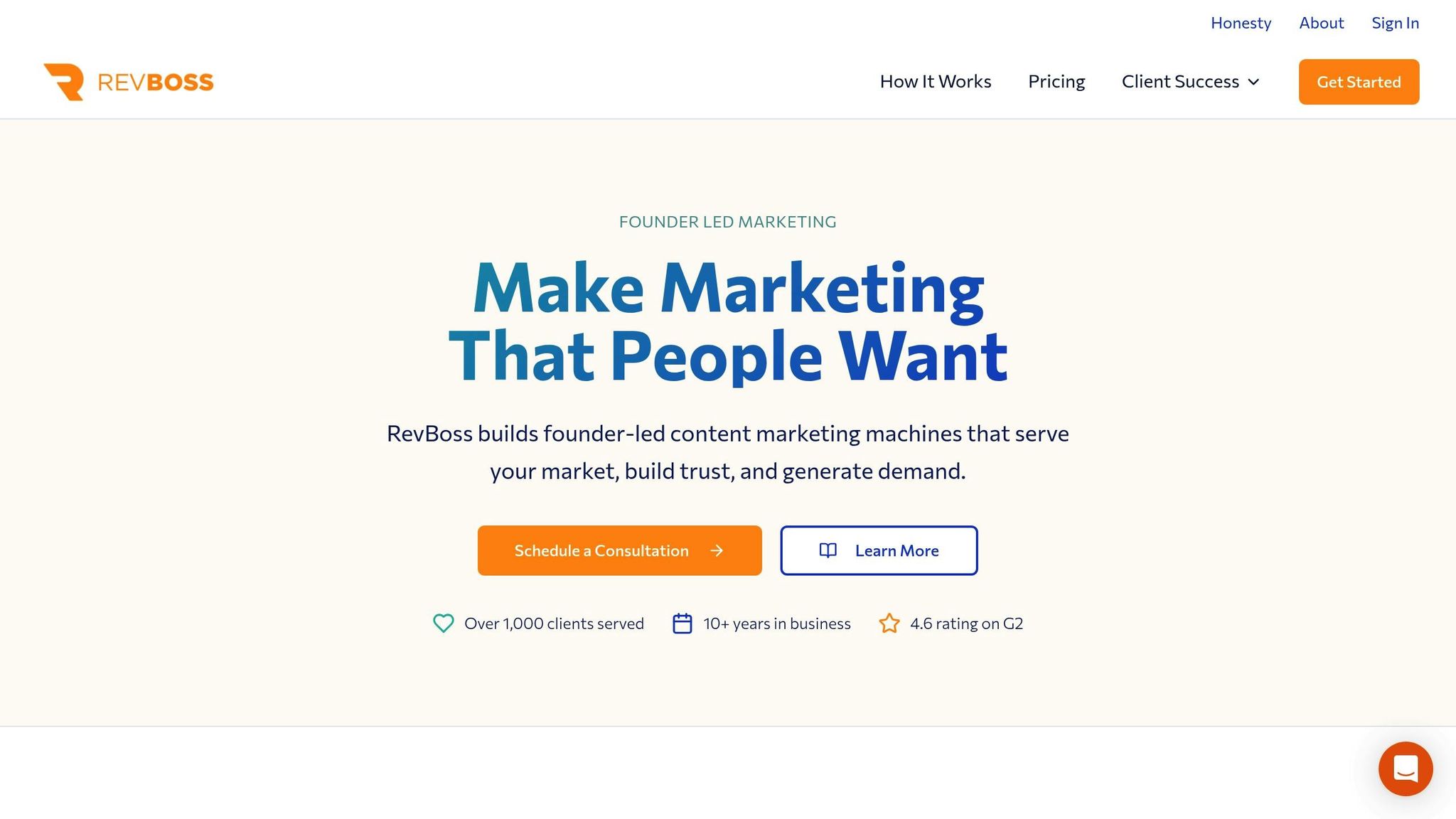
RevBoss is a standout example of how founder-led marketing can shift from traditional lead generation to a growth model rooted in trust and genuine connections. Founded in 2014 by Eric Boggs, the company focuses on helping B2B founders build personal brands and transform authentic relationships into measurable business outcomes. This approach highlights the power of personal storytelling in driving meaningful results.
Founder Involvement in Marketing Strategy
Eric Boggs redefined RevBoss by emphasizing trust and authenticity over outdated lead-generation tactics. He made a deliberate choice to steer the company toward audience-focused marketing built on genuine connections. Boggs’s leadership is woven into the fabric of the company, creating what he calls "founder-led content marketing machines" designed to serve the market rather than simply sell products [31,34].
Henry Kaestner of Sovereign's Capital, who led RevBoss's $1.1 million funding round, highlighted Boggs’s dedication:
"There's something different about eating, sleeping and drinking that, and that's Eric"
This hands-on approach has been instrumental in guiding other founders through similar transformations.
Using Personal Storytelling to Build Trust
Boggs’s strategic pivot centers on the use of personal storytelling to foster authentic connections. RevBoss reflects his own journey, focusing on creating a company that clients genuinely enjoy working with. This commitment to authenticity is captured in the company’s mission:
"We help founders and execs grow an audience, build trust, and turn that into pipeline. The trick is to create marketing content that people are actually happy to receive"
By prioritizing storytelling, Boggs has made trust the cornerstone of RevBoss’s marketing philosophy.
Influence on the U.S. B2B Market
RevBoss has become a key player in the founder-led marketing space, serving over 1,000 clients. With more than a decade of experience, the company has earned a 4.6 G2 rating, reflecting its positive impact on the market. Boggs and his team have positioned RevBoss as a leader in a major industry shift, emphasizing that:
"Authenticity, trust, and audience are the only durable marketing differentiators in an AI-first market"
RevBoss’s story underscores the growing importance of founder-driven narratives in reshaping B2B marketing strategies.
2. Drift
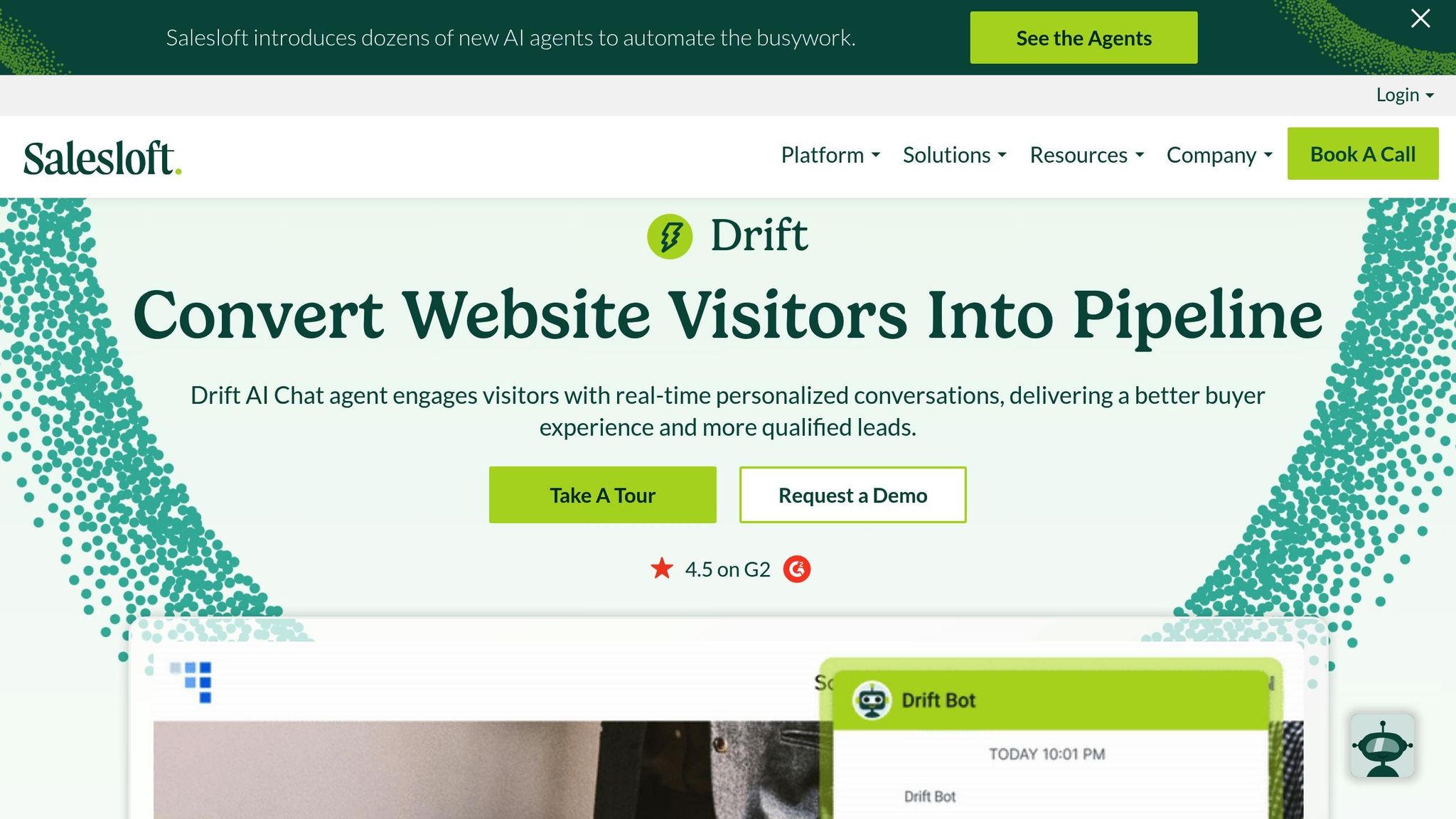
Drift made waves in the conversational marketing world by putting its founders at the forefront of its marketing strategy. David Cancel and Elias Torres built the company on a foundation of personal storytelling and genuine connections, proving that a founder-led approach can spark remarkable growth in the competitive B2B software space.
Founder Involvement in Marketing Strategy
David Cancel took a hands-on, analytical approach to marketing, digging into how customers make decisions and the cognitive biases that shape those choices. Instead of outsourcing to costly agencies, he personally led Drift's marketing efforts. As he explained:
"Even though I always built products for marketers and for salespeople, I wasn't a marketer or salesperson, so I self-taught marketing".
Cancel didn’t stop at strategy. He authored two books, sent out a weekly newsletter, wrote for major outlets like TechCrunch and Inc., and hosted podcasts. Drift also launched the "no forms" movement, encouraging people to rally around a mission beyond just software, which helped shine a light on the problem Drift aimed to solve. This direct involvement set the stage for Drift's unique storytelling approach, showing how founder-driven narratives can power a brand's growth.
Using Personal Stories to Build Trust
Drift embraced a personal and authentic approach at every level. Their website featured photos of the team and customers, emails were kept simple and personal, and they created spontaneous content to highlight their human side. For instance, when customers had questions about pricing, the VP of Operations, Will, recorded a detailed 20-minute whiteboard video to explain the structure.
Elias Torres also leaned into this personal approach by launching the podcast "Seeking Wisdom" during Drift’s early days. The podcast offered real-time insights into building a business and quickly gained traction, with over 100,000 downloads per month. Torres reflected on its success:
"We had a podcast called Seeking Wisdom. As we were in the early stages, there were a lot of businesses that were in there trying to figure out how to learn, how to build their businesses...And so, we got a podcast that was being downloaded over 100,000 times a month you know? And we grew from nothing".
This blend of personal storytelling and transparency helped Drift cultivate a loyal and engaged community.
Transforming the U.S. B2B Market
Drift’s founder-led efforts didn’t just grow their brand - they helped define and popularize "conversational marketing." They also reshaped how B2B companies interact with their customers. Their rise coincided with the chatbot market’s explosive growth, which hit $17.17 billion and is projected to soar to $102 billion by 2025. Cancel summed up their philosophy:
"So we're building community; we're building relationships. We call it 'do the things that don't scale'".
This approach redefined how businesses engage with their audiences while delivering measurable results.
Tangible Business Success
Drift’s strategy delivered impressive outcomes. In just five years, they gained over 50,000 customers, achieved 20X revenue growth in 2017, and generated billions in pipeline revenue. The company expanded rapidly, growing from 20 to 100 employees in 2017, with plans to reach 240 by the end of 2018. Their success culminated in a private equity acquisition valued at over $1 billion. The "Seeking Wisdom" podcast also played a crucial role in boosting brand awareness and attracting customers. These results highlight how authentic, story-driven strategies can lead to substantial business growth.
3. Basecamp
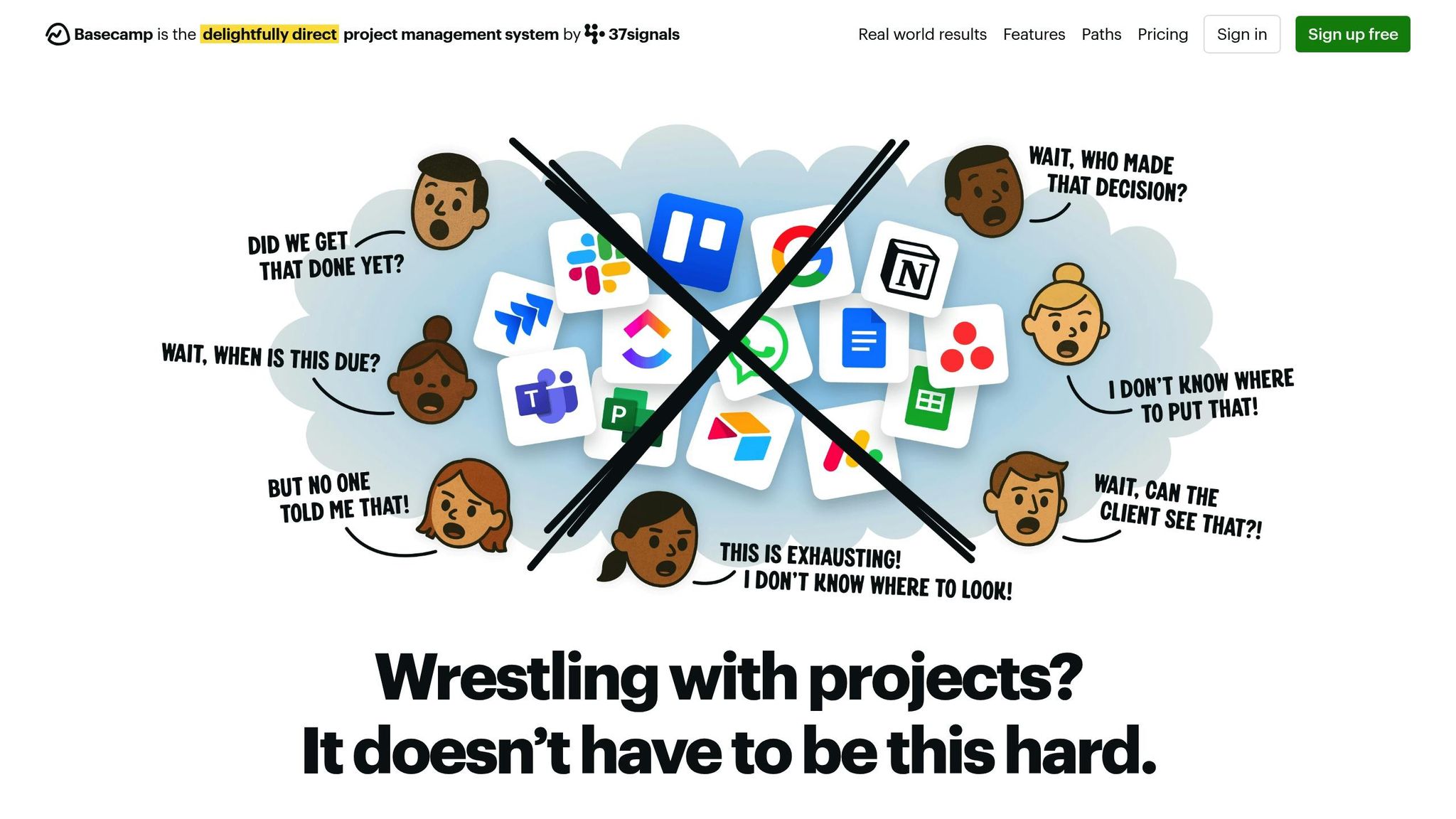
Basecamp stands out as a prime example of how founders can build a successful B2B company without following Silicon Valley's traditional playbook. Jason Fried and David Heinemeier Hansson have turned their personal philosophies on work and business into a marketing strategy that appeals to companies seeking a calmer, more balanced approach to productivity.
Founder Involvement in Marketing Strategy
Jason Fried and David Heinemeier Hansson are more than just the leaders of Basecamp - they actively shape the SaaS industry conversation through their personal brands. Both founders leverage platforms like Twitter and their blogs to share their unconventional views on business and challenge the norms of startup culture.
They’ve also authored influential books such as REWORK and It Doesn’t Have to Be Crazy at Work. These books not only promote their vision of a healthier work environment but also double as powerful marketing tools.
Hansson elaborated on their commitment to speaking out:
"We need an alternative model, voice, and example out there. There are other companies out there who work as we do; most of them just don't talk that loudly about it. At Basecamp, we feel that because we do speak out about it, there's so much compensation we have to do. The echo chamber emanating from Silicon Valley is so loud that it almost feels like a moral obligation. Now that we have an alternative way to work that delivers better life outcomes for both ourselves, our employees, and our customers, we need to share that."
This active engagement allows them to use storytelling as a way to build trust with their audience.
Using Personal Storytelling to Build Trust
Basecamp's founders have cultivated strong brand loyalty by openly sharing their beliefs about work-life balance and ethical business practices. Their storytelling consistently challenges the idea that success requires aggressive growth and long hours. This message resonates deeply with business owners who are disillusioned with the hustle culture of traditional startups.
Their transparency extends to their marketing content. For instance, the company’s "Paths" page directly addresses common buyer questions and highlights how they differ from competitors. This honest, straightforward approach has helped them build trust without relying on large advertising budgets.
By consistently sharing their perspectives, the founders strengthen the connection between the brand and its audience.
Impact on the U.S. B2B Market
Basecamp’s approach challenges Silicon Valley norms, showcasing how authentic founder narratives can drive steady, sustainable growth. Their advocacy for remote work and balanced business practices has helped normalize these ideas across the industry, especially as distributed teams have become more common.
They’ve also pushed back against the notion that rapid scaling and venture capital are the only paths to success. Instead, Basecamp has shown that steady, profitable growth is a viable alternative. This philosophy has inspired other B2B companies to prioritize sustainability over the pressure to scale quickly.
These principles aren’t just theoretical - they’ve translated into measurable business success.
Quantifiable Business Outcomes
Basecamp’s financial performance underscores the effectiveness of its unique approach. In 2024, the company generated $280 million in revenue - a 7.47% increase from $215.6 million in 2020, and a significant jump from $43.7 million in 2012.
With 252,000 customers across roughly 75,000 companies and 3.3 million users worldwide, Basecamp has proven its global appeal. In 2023, the company achieved $100 million in annual recurring revenue (ARR) with just 70 employees, highlighting its impressive efficiency and profitability.
A key factor in their success is brand recognition, as evidenced by the fact that 80.10% of their website traffic comes from direct visits - a testament to the strength of their personal marketing efforts.
Jason Fried’s perspective on traditional business metrics reflects their unconventional approach:
"How much is Basecamp worth? I don't know, and I don't care"
This mindset has allowed them to focus on what truly matters: sustainable growth and customer satisfaction, rather than chasing valuations or exit strategies.
sbb-itb-9354cf2
4. Zoom
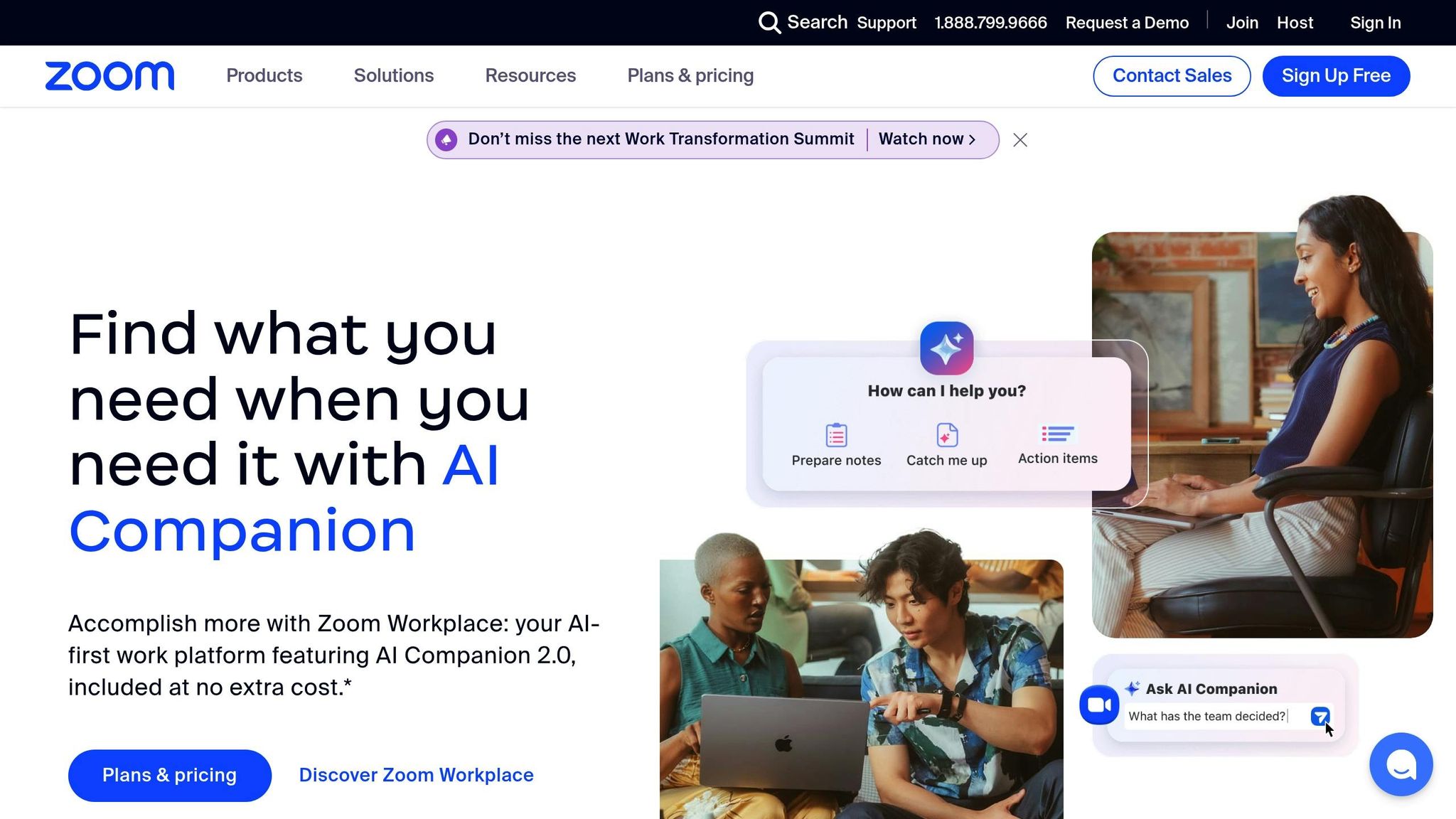
Zoom's incredible rise highlights how a founder's personal journey and a strong focus on customer satisfaction can reshape an industry. Eric Yuan's story - from facing repeated U.S. visa rejections to leading a company worth over US$100 billion - demonstrates the impact of hands-on, founder-driven leadership.
Founder Involvement in Marketing Strategy
Eric Yuan didn't just build Zoom; he became its most valuable advocate by staying directly involved with customers. He even reached out personally to users who canceled their subscriptions, asking for feedback to improve the product. Explaining the company's core values, Yuan once said:
"Our company culture is about delivering happiness. Our common value is care, meaning we care about the community and customers as well as ourselves."
This dedication to customers was evident from the start. Zoom didn't hire its first full-time marketer until it had already achieved US$7 million in annual recurring revenue in 2015. Yuan's direct approach created a foundation of trust, proving that genuine customer engagement can drive growth even without traditional marketing tactics.
Personal Storytelling as a Trust-Building Tool
Yuan's personal journey became central to Zoom's brand identity. He openly shared his struggles, including being denied a U.S. visa eight times before finally making it to California. By tying these experiences to Zoom's mission, he connected with customers in a way that felt real and relatable. Reflecting on his early vision, he said:
"I was 18 or 19 and envisioned a future where a simple click could bridge distances."
As an immigrant and Asian American founder, Yuan also faced unique challenges in earning trust:
"I think as an immigrant, as an Asian American founder, the biggest challenge at first was how to establish trust."
This openness resonated with audiences, offering a level of credibility that polished corporate messaging often lacks. Yuan's approach aligned with a broader trend in B2B marketing, where founder-led narratives are increasingly effective.
Driving Growth in the U.S. B2B Market
Zoom's success in the U.S. B2B market owes much to Yuan's hands-on leadership. His approach set new standards in the video conferencing space. When Walt Mossberg of the Wall Street Journal reviewed Zoom in August 2012, praising it for how it "just worked", the company gained 50,000 free users almost instantly. Yuan's willingness to address customer concerns directly became even more critical during the pandemic, helping Zoom maintain trust amid rapid growth.
Impressive Business Metrics
Under Yuan's leadership, Zoom achieved remarkable milestones:
- The platform gained 1 million users in its first year and surpassed 30,000 paying customers by 2017, while continuing to serve millions of free users.
- During the pandemic, its freemium model and word-of-mouth growth propelled daily meeting participants from 10 million to over 300 million in just four months. By the end of 2020, Zoom's market cap had reached US$106 billion.
- Financially, the company recorded US$4.5 billion in revenue in 2025, with projections for 2024 showing US$4.527 billion - a 3.06% increase from 2023.
- As of April 2024, Zoom served 3,883 business customers generating over US$100,000 annually, a 42.5% jump since January 2022.
- Yuan's leadership also earned him the top CEO rating on Glassdoor, further highlighting the impact of his authentic, customer-focused approach.
(Source:)
5. Calendly
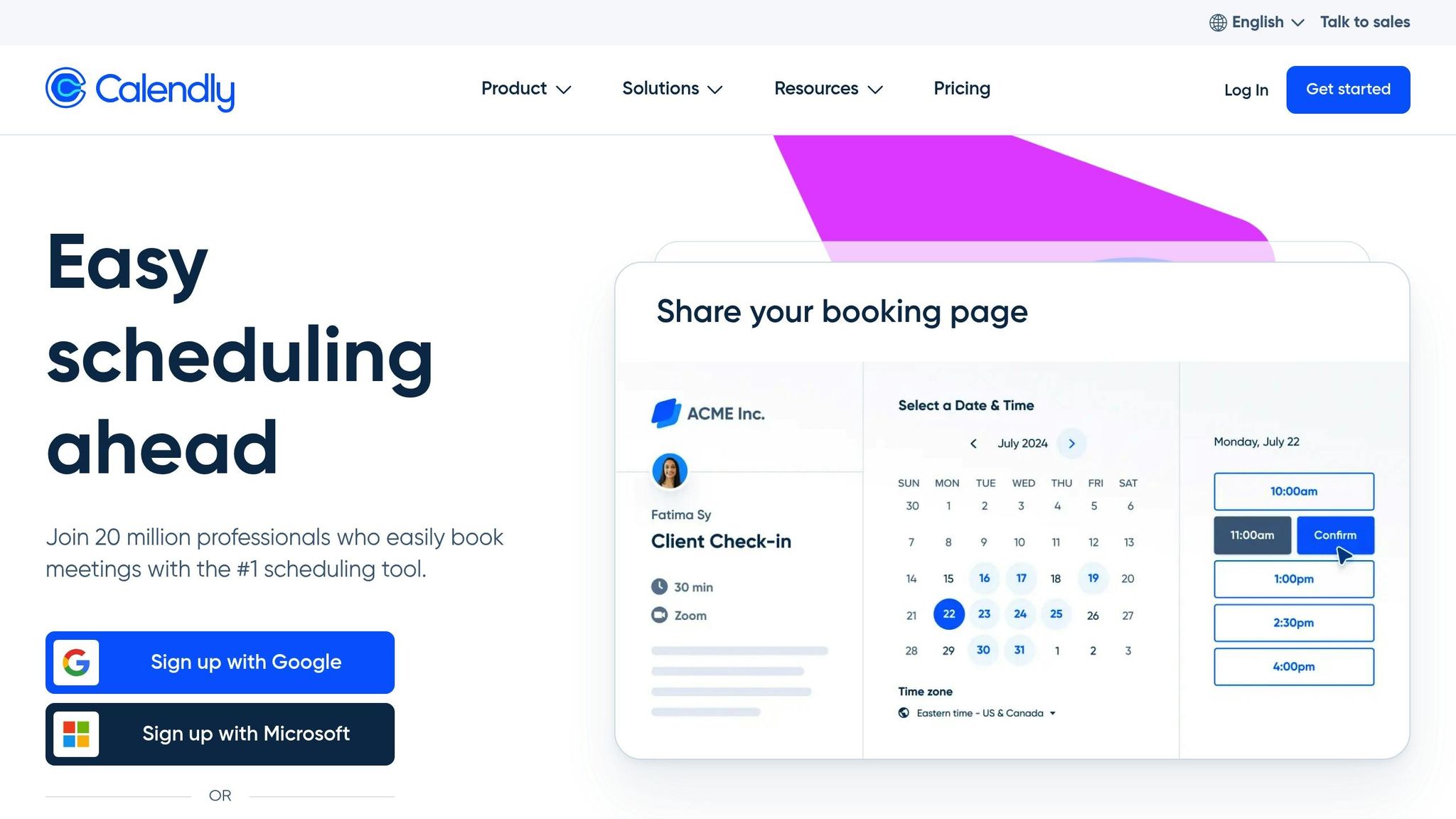
Calendly transformed a common scheduling headache into a $3 billion success story, fueled by its founder's personal journey. Tope Awotona's candid storytelling, rooted in his own challenges, struck a chord with B2B audiences, creating a relatable and powerful brand narrative.
Founder Involvement in Marketing Strategy
In 2013, Tope Awotona took a bold leap, pouring his entire life savings - around $200,000 - into building Calendly. Frustrated by inefficiencies in scheduling while working in enterprise software sales, he turned that frustration into the foundation of his company. His willingness to share the financial risks he took became a cornerstone of Calendly's marketing strategy. Reflecting on his decision, he said:
"I emptied my bank accounts and maxed out credit cards because I believed in this idea."
Awotona's story was further enriched by his background as a Black immigrant. He often highlighted how his past failures prepared him for success with Calendly, crediting his upbringing and his mother's wisdom:
"My mother always emphasized that education was the one thing nobody could take away from you."
He also expressed a strong desire to uplift others from similar backgrounds, saying:
"I just know the country that produced me. There are a million Topes in Nigeria…I'm not a diamond in the rough, and I want to get involved in some way to help with that."
This personal commitment became a defining element of Calendly's identity and helped the company stand out in the competitive scheduling software market.
Impact on U.S. B2B Market Growth
Awotona's hands-on approach played a pivotal role in Calendly's rise, helping it dominate the U.S. scheduling market with a 53% share by 2022. Summing up his business philosophy, he stated:
"We say no to a lot of things. Our success comes from doing one thing exceptionally well rather than many things adequately."
The COVID-19 pandemic further accelerated Calendly's growth, with monthly user growth hitting 5–6% in 2020. Its simplicity - epitomized by the phrase "send me your Calendly" - fueled a viral growth loop, expanding its reach to over 20 million users globally and embedding it in over 100,000 organizations.
Quantifiable Business Outcomes
Calendly's performance underscores the effectiveness of its founder-led strategy. By 2023, the company achieved $270 million in ARR and $276.1 million in total revenue. Enterprise growth surged 61% year-over-year, while high-value customer spending skyrocketed by 400%. Product improvements doubled the number of demos scheduled through inbound leads, and integrations with over 100 applications lifted customer renewal rates by 1.5%, adding $180,000 in annual profits. A $350 million investment further cemented its valuation at over $3 billion.
Through his personal story and strategic focus, Awotona not only shaped Calendly's brand but also set the stage for its dominance in the scheduling software market.
How Personal Stories Drive Brand Growth
Personal storytelling has reshaped how B2B companies connect with their customers, especially through founder-led marketing. Moving away from generic corporate messaging, founders who share their own experiences create stronger, more meaningful relationships. This shift mirrors the broader changes seen in successful founder-led marketing strategies.
The Trust Factor in B2B Relationships
Trust is at the heart of every successful B2B relationship, and personal stories are proving to be an effective way to build it. When founders share their genuine experiences, they create a human connection that transcends the typical vendor-client dynamic. Research highlights this impact: emotions influence up to 95% of purchasing decisions, and people retain 65% to 70% of information shared through stories, compared to just 5% to 10% of data presented as numbers. These findings make a strong case for incorporating personal experiences into marketing efforts.
From Corporate Messaging to Personality-Driven Strategies
The U.S. B2B market is shifting from traditional, one-directional messaging to engaging, personality-driven approaches. By focusing on storytelling and personalized interactions, brands can strengthen their relationships with customers. In fact, this approach has been shown to increase customer loyalty by 20%.
The Competitive Advantage of Authentic Storytelling
Every founder has a story that sets them apart - why they started their business, the obstacles they’ve faced, and the values that guide their mission. Sharing these narratives not only differentiates the brand but also makes it more relatable and memorable. Regular engagement by founders - whether through social media, podcasts, or live events - fosters direct connections, turning customers into loyal advocates.
Amplifying Personal Brands Through Strategic Partnerships
Many founders are teaming up with experts like RevBoss to scale their storytelling efforts into impactful campaigns. RevBoss, with over 1,000 clients served in more than a decade and a 4.6 rating on G2, exemplifies the power of personality-driven marketing. Their process involves crafting content that is engaging, educational, and entertaining, followed by targeted campaigns designed to spark conversations and convert leads. This approach not only builds trust with the ideal customer profile (ICP) but also positions founders as thought leaders. As RevBoss puts it:
"Authenticity, trust, and audience are the only durable marketing differentiators in an AI-first market".
This collaborative strategy provides a practical framework for founders looking to enhance their personal brand and marketing efforts.
Practical Implementation Strategies
To succeed with founder-led marketing, start with authentic storytelling. Share what you’re passionate about, your company’s origin story, behind-the-scenes moments, and customer testimonials. These elements build transparency and trust with your audience.
Comparison Table: Conventional vs. Founder-Led Marketing
Traditional B2B marketing often leans on formal campaigns and company-branded content, while founder-led marketing focuses on personal storytelling and genuine connections. The difference is striking: founder-driven content generates three times the engagement of standard company posts. Plus, 78% of B2B buyers research company leadership before making a decision, and 64% are more inclined to trust companies where leaders maintain an active online presence.
| Aspect | Conventional B2B Marketing | Founder-Led Marketing |
|---|---|---|
| Primary Focus | Company brand and corporate messaging | Personal brand and authentic storytelling |
| Content Source | Marketing teams and company pages | Founders and leadership team |
| Engagement Rate | Standard company page engagement | 3x higher engagement than company pages |
| Buyer Research | Focus on company and product information | 78% research company leadership first |
| Communication Style | Formal, corporate voice | Conversational, human-centered approach |
| Lead Generation | Email campaigns, paid ads, and SEO | Direct engagement and relationship building |
| Content Frequency | Scheduled campaign releases | Consistent personal sharing (3–4 times weekly optimal) |
| Measurement Focus | Performance metrics only | Performance and relationship strength |
The table makes it clear: prioritizing authenticity and personal engagement leads to significantly better results.
Take the case of Aligned, a company that transitioned from traditional marketing to a founder-led strategy. Initially, Aligned relied on conventional methods like company page posts, heavy ad spends, and limited leadership visibility. This approach brought in just 18 inbound leads per month with a modest 1.8% engagement rate.
Everything changed when CEO Gal Aga adopted a founder-led approach in 2023–2024. By posting 3–5 times a week, sharing personal insights, and directly engaging with prospects, the results skyrocketed. Sixty-five percent of Aligned's leads came directly from LinkedIn, with individual posts generating 100–150 inbound leads each. Aga’s LinkedIn profile reached over 1.5 million views weekly, and the company’s ARR tripled in 2024, achieving a 142% Net Revenue Retention rate.
Companies tracking both performance metrics and relationship quality report 57% better customer acquisition results. This shift reflects broader changes in how B2B buyers behave. LinkedIn’s algorithm now rewards genuine engagement and relationship-building over promotional content, making personal branding a must for modern leaders.
For founders, having a complete LinkedIn profile can increase weekly views by up to 40%. Using three or more content formats boosts profile visits by 2.7x, while responding to over 80% of comments increases reach by 3.5x. These numbers underline the power of consistent, authentic engagement in today’s B2B landscape.
Conclusion
Founder-led marketing is quickly becoming a cornerstone of success for U.S. B2B companies. Research highlights that 77% of consumers are more likely to buy from businesses where founders maintain an active and visible presence on social media.
Gary Chan, a Growth Marketing Specialist, emphasizes this point:
"Founder-led marketing builds credibility by sharing expertise and personal stories, expanding your network authentically, driving immediate trust in a market where 90% of decision-makers ignore cold outreach."
When founders consistently share their expertise and insights - posting 3-5 times a week - they create a ripple effect that traditional marketing struggles to achieve. Personal storytelling, in particular, has the power to humanize brands in ways corporate campaigns simply cannot. Angela Snyder, a LinkedIn and Personal Brand Coach, explains:
"Personal stories - when the writer is transparent and vulnerable - are more likely to resonate with other people. If people feel seen and heard, you've created a powerful connection that you can't get through an ad or elevator pitch."
This kind of consistent engagement keeps personal branding at the forefront, addressing the limitations of more conventional strategies.
Additionally, real-time feedback from audiences allows founders to fine-tune their messages, better align with market needs, and turn customers into loyal advocates - all of which contribute to revenue growth.
For B2B companies aiming to expand in today’s competitive environment, the shift is clear. Traditional marketing methods are losing their impact, while founder-led strategies are proving their worth. By embracing authentic storytelling, maintaining consistent engagement, and building a strong personal brand, companies are setting themselves up for sustainable growth.
Platforms like RevBoss showcase how personal narratives can fuel success. These examples make it clear: founder-led marketing is not just a passing trend - it’s the new standard for B2B growth. Founders who take on this role now are laying the groundwork for building trusted, market-leading brands in the future.
FAQs
What makes founder-led marketing different from traditional B2B strategies, and why is it often more successful?
Founder-led marketing takes a different path by putting the spotlight on the founder's personal brand, story, and vision. Instead of leaning heavily on impersonal tactics like email blasts or SEO, this approach uses the founder’s authenticity and passion to create a genuine connection with the audience.
This method works well because today’s buyers crave transparency and real relationships. By addressing the growing skepticism around traditional marketing, founder-led strategies foster trust and build stronger bonds with potential customers. In many cases, this approach can lead to noticeable results in just a few months. It’s especially effective in the B2B world, where trust and credibility are the backbone of lasting success.
What steps can founders take to create a successful founder-led marketing strategy?
To create an effective founder-led marketing strategy, focus on genuine storytelling that highlights your personal journey. Share your challenges, milestones, and lessons learned to build trust and make your brand relatable.
Stay active on social media by letting your personality and expertise shine through. This approach not only amplifies your voice but also helps you connect with your audience on a personal level - without the need for a big advertising budget. You can further establish yourself as a trusted voice in your industry by offering valuable insights and sharing snippets of your daily experiences.
By emphasizing honesty, expertise, and direct interaction, founders can build strong relationships and stand out in the competitive B2B landscape.
How do founder stories and transparency help build trust and drive growth in B2B businesses?
The Power of Founder Stories and Transparency in B2B Growth
Sharing founder stories and embracing transparency can significantly impact trust-building and growth in B2B businesses. When companies highlight the founder's journey, values, or even the challenges they’ve faced, it adds a personal touch to the brand. This approach makes the company feel more relatable and leaves a lasting impression. It’s not just about selling a product or service - it’s about sharing a purpose and vision that genuinely connects with the audience on an emotional level.
Transparency takes this connection a step further. Being upfront with clear communication, straightforward pricing, and honest messaging shows that a business values relationships over transactions. It’s about proving that integrity and trustworthiness aren’t just buzzwords - they’re part of how the company operates. Together, these elements build credibility and foster loyalty, laying the groundwork for sustainable, long-term success in the B2B world.