Why Most Small SaaS Founders Fail at Marketing (and How to Fix It in One Call a Week)
Most small SaaS founders struggle with marketing because they lack time, expertise, and clear strategies. They’re often juggling multiple roles, leading to inconsistent efforts, unclear messaging, and difficulty standing out in a crowded market.
Here’s the solution: a one-hour weekly marketing call. This structured approach helps founders stay consistent, plan effectively, and focus on efforts that drive results.
Key takeaways:
- Time-saving strategy: Dedicate one focused hour each week to review performance, plan content, and adjust campaigns.
- Repeatable frameworks: Use templates for content creation and audience segmentation to simplify execution.
- Alignment with strengths: Tailor marketing efforts to match the founder’s skills, whether it’s data-driven insights, technical tutorials, or relationship-building.
With tools like LinkedIn Sales Navigator, HubSpot, and Mailchimp, founders can automate tasks and focus on building trust with their audience. This approach ensures consistent growth without requiring extensive resources or expertise.
LOW COST Marketing Strategies That Actually Work (from 3x SaaS Founder)
Main Problems in Founder-Led SaaS Marketing
Small SaaS founders face more than just limited resources when it comes to marketing. These challenges often disrupt customer acquisition and revenue growth. By understanding these hurdles - like time constraints, inconsistent messaging, and a crowded market - it becomes clear why a simple, streamlined approach, like a weekly call, can make a big difference.
Time Shortage: The Biggest Obstacle
Marketing demands consistency, but founders often prioritize product development and customer support, leaving little room for marketing efforts.
This lack of time creates a frustrating cycle: inconsistent marketing leads to slower lead generation, forcing founders to lean more heavily on direct sales. And when marketing is done in short bursts with long gaps in between, it’s nearly impossible to maintain the momentum needed to build trust and brand recognition - key factors in effective B2B marketing.
On top of that, founders often underestimate how much time it takes to create high-quality marketing content. Writing a well-researched, engaging blog post or crafting a compelling email campaign isn’t a quick task. For founders juggling multiple responsibilities, carving out even a few extra hours for marketing can feel like an insurmountable challenge.
Inconsistent Messaging and Branding
Clearly articulating a value proposition can be tricky, and many small SaaS founders struggle with this, leading to mixed messages across various channels. For instance, a company might position itself as an "affordable alternative" one day and then pivot to "enterprise-grade features" the next. This inconsistency can confuse potential customers.
The problem often stems from trying to appeal to everyone. Founders may tailor their messaging to whoever they’re speaking with at the moment, which results in a lack of clarity. Add to this the absence of a unified strategy - especially when different team members handle communications - and inconsistencies in tone, branding, and product positioning become inevitable.
This lack of cohesion has real consequences. B2B buyers typically conduct thorough research before committing to a purchase. If they encounter conflicting messages across your website, emails, or social media, they may question your company’s expertise or reliability.
Market Saturation and Competition
The B2B SaaS space is more crowded than ever, with new products launching constantly. Having a great product is no longer enough - standing out requires a solid strategy and a consistent market presence, which many small founders struggle to maintain.
Generic marketing efforts simply don’t cut through the noise anymore. Occasional blog posts or infrequent newsletters won’t grab the attention of prospects who are already overwhelmed by a flood of information. To make an impact in this saturated market, marketing needs to be precise, deliberate, and consistent.
The crowded field also drives up customer acquisition costs. Competing for the same audiences and keywords becomes expensive, pushing many founders to rely on organic marketing. But organic strategies, while cost-effective, demand significant time and expertise - resources that are often in short supply.
Adding to the pressure, small SaaS founders are up against competitors with dedicated marketing teams and bigger budgets. Instead of trying to outspend or outproduce these larger players, founders need to focus on repeatable, efficient strategies that align with their resources. This is where a one-call-a-week framework can provide a practical and sustainable solution for founder-led growth. Addressing these core challenges is essential to making this approach work effectively.
The One-Call-a-Week Solution: Simple Founder-Led Marketing
This solution isn’t about having extra hours in the day or a bigger budget - it’s about working smarter with a structured approach. By consolidating marketing tasks into a single, focused call each week, you can simplify your efforts, stay on track, and ensure no important tasks slip through the cracks.
A single, well-organized call can bring clarity to your strategy, maintain momentum, and address common challenges like time constraints and inconsistent messaging.
Step 1: Setting Up the Weekly Call
Kick off your weekly call with a clear agenda that covers three key areas: reviewing past performance, planning upcoming content, and activating campaigns. The goal is to focus on actionable decisions, not just discussions.
Start by reviewing recent performance metrics - things like website traffic, email open rates, social media engagement, or leads generated. Then, move on to planning content for the week, such as blog posts, email newsletters, or social media updates. Finally, set aside time to evaluate and adjust your campaigns as needed. Keep the call centered on strategy while leaving the actual content creation for later.
Schedule this meeting at the same time every week, and treat it as non-negotiable. Having a consistent rhythm makes marketing feel less overwhelming and helps avoid the scattered decision-making that can derail progress.
Step 2: Using Repeatable Frameworks
Once your weekly call is in place, rely on repeatable frameworks to streamline your efforts. Frameworks and templates reduce decision fatigue and make execution faster and more consistent.
For example, structure your content around a simple formula: identify a problem your audience is facing, present your solution, and back it up with proof like case studies or data. This approach works across blog posts, emails, and social media updates.
When segmenting your audience, group them by where they are in the buying journey, their main challenges, and the channels they prefer. This helps you tailor your messaging for each segment.
Adopt a consistent cycle for managing campaigns: launch, monitor, and optimize. If a campaign underperforms, don’t hesitate to reassess your targeting or messaging and make adjustments quickly.
Step 3: Matching Marketing with Founder Goals
Marketing works best when it feels natural and aligns with your strengths and business goals. Instead of forcing yourself into tactics that don’t resonate, focus on approaches that play to your abilities.
If you’re data-driven, lean into creating content backed by research - industry insights, case studies, or detailed analysis. This positions you as a credible, thoughtful leader in your space.
For relationship-focused founders, direct engagement can be a game-changer. Spend time interacting in LinkedIn groups, joining industry forums, or holding one-on-one conversations to build trust and connections.
Technical founders might shine by sharing educational content. Tutorials, behind-the-scenes looks, or simplified explanations of complex topics can establish you as a go-to expert.
To ensure everything stays aligned, include a quick “founder check” during your weekly call. If a strategy feels unnatural or off-brand, don’t hesitate to adjust. This alignment not only makes marketing more effective but also creates a routine you can sustain over time.
Tools and Methods to Simplify Marketing
Using the right tools can transform marketing from a chaotic process into a streamlined system. For small SaaS founders, this means fewer headaches and more time to focus on what matters most - growing your business.
Content Strategy Templates for B2B SaaS
Templates can be a game-changer, especially when staring at a blank page feels overwhelming. They provide a structure to work within while leaving room for your personal style and expertise.
For blog posts or LinkedIn articles, try a template that includes three key elements: a challenge, your solution, and supporting data. This format works across various content types and keeps your message clear and impactful.
When it comes to email campaigns, opt for a value-first template. Start with helpful, actionable information before introducing any promotional content. Keep your emails simple: a strong subject line, one main idea, and a single call-to-action. This approach not only drives engagement but also builds trust with your audience.
Another tip: Develop content pillars that align with your expertise and your audience’s interests. For instance, if you’re a technical founder, focus on topics like product development stories, industry insights, or educational content. If you’re more relationship-oriented, highlight customer success stories, industry trends, and thought leadership. With these pillars in place, you’ll have a consistent framework to guide your weekly marketing efforts.
Templates and content pillars save time and ensure consistency, making it easier to create high-quality content week after week. Plus, they simplify execution on platforms like LinkedIn, where targeted tools can amplify your efforts.
LinkedIn Campaign Management Tools
LinkedIn is a go-to platform for B2B SaaS marketing, but managing campaigns manually can be a time drain. The right tools can help you scale your efforts while maintaining the personal touch that founder-led marketing thrives on.
LinkedIn Sales Navigator is a must-have for identifying and connecting with the right prospects. Its advanced filters - like company size, industry, job title, and location - make it easier to reach decision-makers who match your ideal customer profile.
For scheduling posts, tools like Buffer and Hootsuite let you plan content in advance, ensuring consistent visibility without the need to log in daily. These platforms offer flexible pricing options, so you can choose a plan that fits your team’s needs.
When it comes to direct outreach, LinkedIn’s native messaging tools combined with CRM integration can help you stay on top of conversations and follow-ups. Keep your outreach personal - automation is helpful, but overdoing it can come across as insincere.
Don’t forget to track engagement. While LinkedIn’s built-in analytics provide basic performance data, third-party tools can give you deeper insights into audience behavior and help you fine-tune your posting schedule for maximum impact.
Marketing Automation Platforms for Small Teams
Automation is a lifesaver for small teams, handling repetitive tasks so you can focus on strategy and relationship-building. The key is finding a platform that simplifies your workflow without losing the personal touch.
HubSpot is a great starting point, offering a free tier that includes email marketing, basic CRM tools, and lead tracking. As your needs grow, you can upgrade to access more advanced features, all while keeping your data and reporting in one place.
For email marketing, Mailchimp is a popular choice. Its drag-and-drop editor makes it easy to design professional campaigns, and its automation features let you nurture leads based on specific actions or timelines.
If you’re looking for something more advanced, ActiveCampaign combines email marketing, CRM, and sales automation into one platform. It’s ideal for creating detailed customer journeys tailored to user behavior and engagement levels.
Ease of use is critical. Complicated platforms with steep learning curves are more likely to gather dust than deliver results. Choose tools you can set up and manage during your weekly marketing calls without needing a tech expert on hand.
Integration is another factor to consider. Your automation platform should work seamlessly with your existing tools - like your CRM, website, and analytics systems - to ensure smooth data flow and a clear picture of your marketing performance.
sbb-itb-9354cf2
How RevBoss Drives Founder-Led Growth
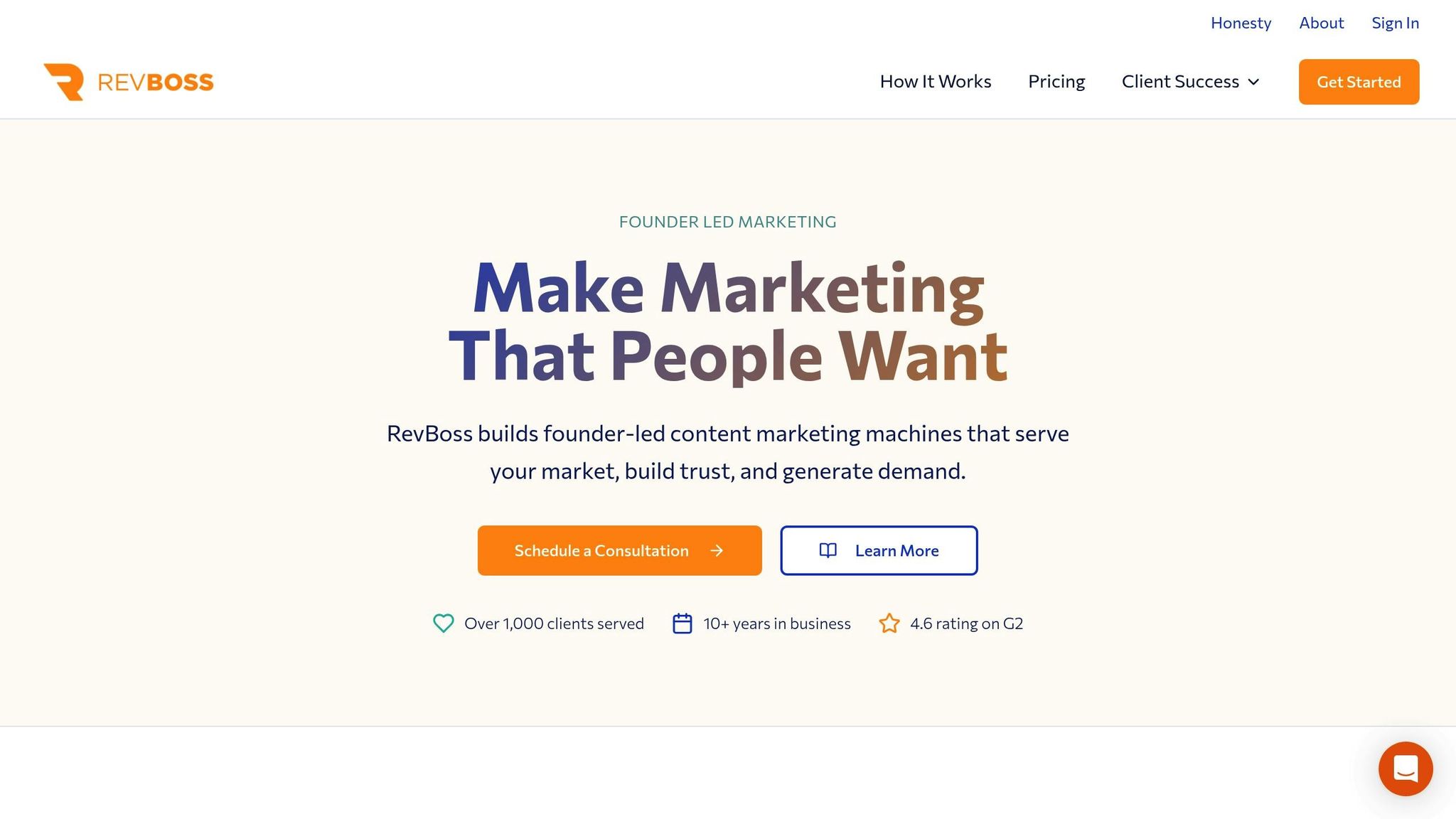
RevBoss turns the typical weekly check-in call into a powerful engine for growth, specifically designed for SaaS founders. This system combines content creation, audience interaction, and lead nurturing into one seamless process, saving founders time while delivering results.
The service understands that most founders don’t have the luxury of becoming marketing experts. They need a partner who gets both their technical skills and their business objectives. Instead of using cookie-cutter strategies, RevBoss crafts personalized approaches that amplify what founders already excel at.
Custom Content Strategies to Build Founder Brands
RevBoss specializes in creating tailored content strategies that turn technical know-how into compelling stories for B2B audiences. This process works hand-in-hand with the structured weekly strategy.
Here’s how it works: during weekly calls, founders share their insights, which RevBoss transforms into customized content. For technical founders, this might mean turning product knowledge into educational pieces that highlight industry expertise. Founders with a focus on relationships can use customer success stories to build trust and credibility with potential clients.
What sets this apart is the focus on personalization. Instead of relying on templates, RevBoss develops content frameworks that reflect each founder’s unique voice and style. This ensures that when prospects engage with the content, they get a clear sense of the founder’s vision and approach to solving problems.
The best part? Founders don’t have to spend hours writing or editing. RevBoss takes care of everything - from creating and optimizing the content to distributing it across various channels.
LinkedIn Audience Growth and Engagement
Once the content is ready, RevBoss amplifies its reach by focusing on LinkedIn, a key platform for connecting with decision-makers. They run targeted campaigns to connect founders with their ideal audience, focusing on professionals in the United States who match the founder’s customer profile.
Instead of casting a wide net, RevBoss ensures quality by zeroing in on connections that align with specific criteria like company size, industry, job title, and location.
Engagement doesn’t stop at just making connections. RevBoss crafts personalized conversation starters rooted in real insights about prospects’ industries and challenges. This approach sparks meaningful discussions, steering clear of generic sales pitches.
By leveraging LinkedIn’s advanced targeting tools, RevBoss continuously refines its campaigns based on engagement data. This ensures strategies evolve and improve over time, delivering better results.
Lead Activation Workflows for Trust-Based Growth
Turning LinkedIn connections into paying customers takes more than a casual follow-up. RevBoss uses carefully designed activation workflows to nurture these relationships and build trust.
These workflows include multiple touchpoints delivered at just the right time. Instead of pushing for an immediate sale, they focus on providing value upfront. Prospects might receive educational content, industry insights, or practical tools that address their real-world challenges.
This approach positions the founder as a trusted advisor rather than just another salesperson. By offering genuine value first, these workflows create a foundation of trust that leads to long-term growth.
Conclusion: Simplify Marketing to Drive Growth
For small SaaS founders, the way forward is straightforward: concentrate on strategies that deliver real results. Research shows that a structured and focused marketing plan can boost growth rates by 30% and increase leads by as much as 400%.
The one-call-per-week strategy offers a practical solution to the biggest hurdles of founder-led marketing: limited time, knowledge gaps, and lack of clear direction. By dedicating just one hour a week to focused marketing efforts, founders can ensure consistent execution while freeing up time to prioritize product development and customer success.
RevBoss has built its reputation by addressing these exact challenges. With over a decade of experience and more than 1,000 clients served, they’ve crafted an approach tailored to the needs of small SaaS founders. Their philosophy aligns seamlessly with the one-call framework, emphasizing trust, genuine audience engagement, and strategic growth.
"We help founders and execs grow an audience, build trust, and turn that into pipeline. The trick is to create marketing content that people are actually happy to receive. We've got the process, experience, and team to make it work."
The numbers back this up: 53% of all SaaS website traffic stems from blogs, and businesses that repurpose content achieve much higher ROI. This highlights the effectiveness of a repeatable, structured process that delivers consistent content while sparing founders the need to become marketing experts. It’s clear why a streamlined, weekly strategy is not just helpful - it’s essential.
For founders looking to escape the cycle of scattered, ineffective marketing, the solution is simple: commit one hour a week to a strategic approach. Whether you handle marketing internally or work with a specialized partner like RevBoss, the principles remain the same - focus, consistency, and steady progress toward your growth goals.
The choice is yours: stick with unpredictable, time-consuming marketing efforts that yield mixed results, or embrace a streamlined system that drives real growth. Your business will thank you.
FAQs
How can a weekly one-hour call help small SaaS founders improve their marketing efforts?
A simple weekly one-hour call can work wonders for small SaaS marketing efforts. It creates a steady, focused routine where founders can revisit progress, fine-tune strategies, and tackle challenges - all without interruptions. This regular check-in keeps marketing efforts aligned with overall business goals and ensures nothing important slips through the cracks.
Dedicating just 60 minutes each week helps founders stay organized, hold themselves accountable, and make quicker, smarter decisions. Over time, this consistent approach can lead to sharper campaigns, stronger results, and steady growth - all while respecting the tight schedules and limited resources that small SaaS businesses often face.
How can small SaaS founders create a clear and memorable brand message in a competitive B2B market?
Crafting a Standout Brand Message in B2B SaaS
In the competitive B2B SaaS world, creating a standout brand message starts with truly understanding your audience. What challenges are they facing? What matters most to them? Once you’ve nailed that down, focus on crafting a clear value proposition that speaks directly to those needs while showcasing how your product uniquely solves their problems.
Consistency is key. Develop a unified brand identity that ties together visuals, tone, and messaging. This identity should reflect your company’s values and set you apart from the competition. A straightforward messaging framework can help ensure your communication stays aligned across all platforms. On top of that, prioritize building trust by designing campaigns that feel relatable and human.
By keeping your message consistent and centered on your audience, you’ll create a brand that not only connects but also stands out in the crowded SaaS market.
How can small SaaS founders use tools like LinkedIn Sales Navigator and Mailchimp to simplify marketing and save time?
Small SaaS founders can tap into LinkedIn Sales Navigator to pinpoint and connect with the right prospects using its advanced filters. This tool makes lead generation not just quicker but also more precise, ensuring you're reaching the people who matter most. Pair that with Mailchimp, which simplifies email marketing by automating campaigns, segmenting your audience, and tracking engagement metrics, and you've got a powerful duo for streamlined outreach.
By combining these tools, founders can take repetitive tasks like lead nurturing and follow-ups off their plates. This automation frees up valuable time, allowing them to focus on big-picture strategies and scaling their business. It's an efficient way to amplify marketing efforts without adding extra work - ideal for founders balancing countless priorities.