Why Trust Matters In B2B Messaging

Trust is the cornerstone of effective B2B communication. Without it, even the most well-crafted messages fall flat. Decision-makers are overwhelmed with pitches, yet 84% of executives rely on trusted sources like social media for purchasing decisions. Building trust isn't optional - it's the difference between being ignored and creating lasting partnerships.
Key takeaways:
- Generic outreach fails: Impersonal messages erode credibility.
- Transparency wins: Clear, honest communication builds confidence.
- Sales-heavy tactics backfire: Focus on relationships over transactions.
- Consistency matters: Align messaging across all channels.
For founder-led businesses, leveraging personal stories and maintaining a relatable voice can make all the difference. Trust-based messaging drives higher engagement, better lead quality, and long-term loyalty. Start by being transparent, relatable, and consistent in every interaction.
Why Is It So Hard to Instill Trust in B2B Marketing?
Finding Trust Problems in B2B Messaging
Pinpointing where trust falters in B2B messaging is the first step toward repairing it. Many businesses unintentionally harm their credibility through common communication missteps that alienate prospects. The numbers speak volumes: 81% of consumers say trust significantly influences their buying decisions. At the same time, 80% of customers prefer engaging with brands that are transparent. Yet, despite this preference, many companies struggle to maintain trust. Let’s explore the key pitfalls - like impersonal outreach and pushy sales tactics - that can erode trust in B2B communication.
Generic and Impersonal Outreach
Nothing undermines credibility faster than a message that feels like it could’ve been sent to anyone. Generic, cookie-cutter outreach signals a lack of effort and understanding. This is especially damaging for founder-led businesses, where personal connection and authenticity are critical.
When companies rely on vague, one-size-fits-all messaging, they reduce prospects to numbers instead of addressing their unique challenges. The language often lacks specificity, the value propositions feel generic, and there’s no sign of research into the recipient’s business or industry.
Decision-makers can spot templated messages a mile away. They know when they’re receiving the same pitch as countless others. Worse, if this impersonal approach continues beyond the initial contact, it reinforces the idea that the company doesn’t genuinely care about their needs. This lack of attention to detail can quickly sour a potential relationship.
Lack of Transparency and Consistency
Transparency issues are another major trust killer. When companies aren’t upfront about their processes, capabilities, or limitations, prospects are left guessing - and guessing breeds doubt. For founder-led businesses, it’s especially important to ensure messaging reflects the leader's reputation for credibility and openness.
Inconsistencies across communication channels only add to the problem. As Scott McKelvey explains, "Inconsistent information creates confusion and doubt about your company – two major obstacles to a sale". If a website says one thing, marketing materials another, and the sales team yet another, prospects start to question whether the company can deliver on its promises.
The transparency gap often shows up in several ways: unclear pricing, vague timelines, or an unwillingness to discuss potential challenges. Overselling services or avoiding tough questions forces prospects to make decisions without all the facts, which naturally leads to skepticism.
Even internally, unclear communication takes a toll. 46% of employees cite a lack of transparent communication from leadership as a key reason they start job hunting. While this statistic reflects internal dynamics, it highlights how damaging unclear messaging can be to any relationship, including external B2B engagements.
Overemphasis on Sales Tactics
Another trust-breaking habit is an excessive focus on selling. When messaging is overly sales-driven, it reduces prospects to transactions rather than treating them as potential long-term partners. This approach often triggers defensive reactions and skepticism.
The problem arises when companies prioritize closing deals over building meaningful connections. Messaging becomes all about features, benefits, and calls-to-action, with little regard for the prospect’s actual needs or challenges. This sales-heavy strategy ignores the importance of relationship-building, which is essential in B2B dealings that often involve long-term commitments and significant investments.
Pushing too hard on sales creates pressure, not trust. Prospects who feel rushed or pressured are more likely to question the company’s motives. Are they genuinely interested in solving problems, or just chasing a quick sale?
As Richard Edelman observed about media, "Media's got to put facts first, avoid ideology and stop chasing clicks". The same principle applies to B2B messaging: prioritizing relationships over quick wins is key to building lasting trust.
The most effective B2B communication focuses on the long game. It’s about offering value, showcasing expertise, and building authentic connections - not just closing the next deal. Trust takes time, but the payoff is worth it.
How to Build Trust Through Clear Communication
Once you’ve pinpointed where trust breaks down, the next step is to rebuild it through clear, honest communication. Trust isn’t about crafting the perfect pitch; it’s about forming real, meaningful connections. When 67% of consumers say they need to trust a brand before continuing to buy its products or services, it’s obvious that trust isn’t just a nice bonus - it’s a critical part of doing business.
The secret? Ditch the corporate jargon and adopt a more human approach. Be upfront about what you can and can’t do, and make sure your tone stays consistent - whether someone’s interacting with you on LinkedIn, browsing your website, or chatting during a sales call.
Creating a Relatable Brand Voice
A relatable brand voice is the bridge between professionalism and genuine human connection. It’s the consistent tone and personality your company expresses across all communications. For founder-led businesses, this becomes even more important because people want to connect with the person behind the brand.
The best B2B brand voices strike a balance: they’re precise and professional but still warm and approachable. Think of Apple’s memorable “Think Different” campaign - it perfectly reflects their design-first philosophy across everything from ads to in-store experiences.
The starting point? Understand your audience. Market research can uncover their preferences, challenges, and communication styles. Once you know how they think and talk, you can align your messaging to resonate with them while staying true to your company’s values.
Keep your tone casual, steering away from overly formal corporate language. Use simple terms to make complex ideas easier to grasp. This doesn’t mean being unprofessional - it means being approachable. A touch of humor can also help, but it’s all about timing and context.
Storytelling is another powerful tool. Instead of rattling off features, share stories about how your product or service has solved real problems for actual people. These narratives spark emotional connections that go beyond logic.
Regularly gathering feedback from clients and team members ensures your brand voice stays relevant. What works today might feel outdated tomorrow, so periodic check-ins can keep your communication fresh and engaging.
Once your brand voice feels relatable and consistent, the next step is to communicate clearly about what you offer.
Clear Communication About Products and Services
Being transparent about your capabilities, limitations, and the value you bring is one of the fastest ways to earn credibility. B2B buyers care deeply about understanding how your solutions create value. Focus on the benefits you deliver but stay honest about what you can realistically achieve.
Using precise language is especially important for busy decision-makers. Skip the jargon and stick to conversational language. If technical terms are necessary, explain them in a way that’s easy to follow.
Tailor your messages to address specific client challenges. When possible, use their own words - this shows you’re listening and understand their perspective.
A value proposition framework can help keep your messaging consistent across all platforms. This framework should clearly outline how your product or service solves specific problems and delivers measurable results. When everyone on your team uses the same framework, prospects get a uniform message no matter who they’re speaking with.
Being upfront about what you can’t do doesn’t weaken your position - it strengthens it. If your solution isn’t the right fit, saying so shows integrity. This honesty often leads to referrals or future opportunities when the situation changes.
Maintaining uniform messaging across all channels reinforces this trust even further.
Consistency Across All Messaging Channels
Consistency is key to reinforcing the authenticity you’ve built through your brand voice and transparent messaging. When customers encounter the same tone, values, and messaging across blogs, webinars, and sales calls, it reassures them about your brand’s reliability.
Comprehensive brand guidelines are essential for ensuring this consistency. These guidelines should cover your tone, language, key messages, and overall positioning. But creating guidelines isn’t enough - they need to be actively used. Regular training ensures your team applies these standards consistently.
For example, a leading B2B industrial supply company reviews its brand standards annually, incorporating feedback from sales teams and regional offices. They also conduct regular audits and use automated workflows to ensure their messaging stays aligned and authentic.
Centralizing content creation is another way to maintain control over your messaging. While this doesn’t mean every piece of content has to come from one person, having clear approval processes and templates ensures consistency, even with multiple contributors.
Technology can also help. Tools like content management systems, brand asset libraries, and automated approval workflows streamline the process and keep branding consistent.
Regular audits of your messaging across all channels can reveal gaps between what your brand aims to communicate and what customers actually experience. These insights provide valuable opportunities to fine-tune your approach.
More than 85% of consumers say authenticity is a deciding factor when choosing which brands to support. This highlights why consistency is so important. Authentic brands maintain the same tone and values across every interaction, building trust through reliable, predictable communication.
sbb-itb-9354cf2
Case Study: Using Founder Personality to Build Trust
When founders share their personal stories, they turn what might feel like distant, impersonal interactions into meaningful connections. This approach helps prospects connect with the real person behind the business, building trust and transforming cold leads into warm relationships.
The Power of Founder-Led Storytelling
Founder-led storytelling thrives on vulnerability, expertise, and a personal touch. Content shared by company leaders generates three times more engagement, highlighting the effectiveness of authentic narratives.
"Modern marketing is about building trust first. And people trust people way faster than they trust brands."
The secret lies in telling stories that align with your audience's challenges and goals. For example, Gal Aga, CEO of Aligned, shares anecdotes from his time as a CRO. Since Aligned targets sales leaders, his stories resonate deeply with his audience, allowing them to see their own struggles and victories in his experiences. This connection is something that generic corporate messaging simply cannot replicate.
The impact of founder-led storytelling is clear. Adam Robinson scaled RB2B to $5M in annual recurring revenue within a year through this approach. Similarly, Tyler Denk raised $2.6M in seed funding in just seven days by sharing his content online. These examples reflect broader trends: 78% of B2B buyers research company leadership before making decisions, and 64% are more likely to engage with companies where leadership is visible online.
To tell these stories effectively, many founders use the STAR method (Situation, Task, Action, Result). This framework helps structure narratives that demonstrate expertise while honestly addressing challenges and outcomes.
How RevBoss Supports Founder-Led Growth
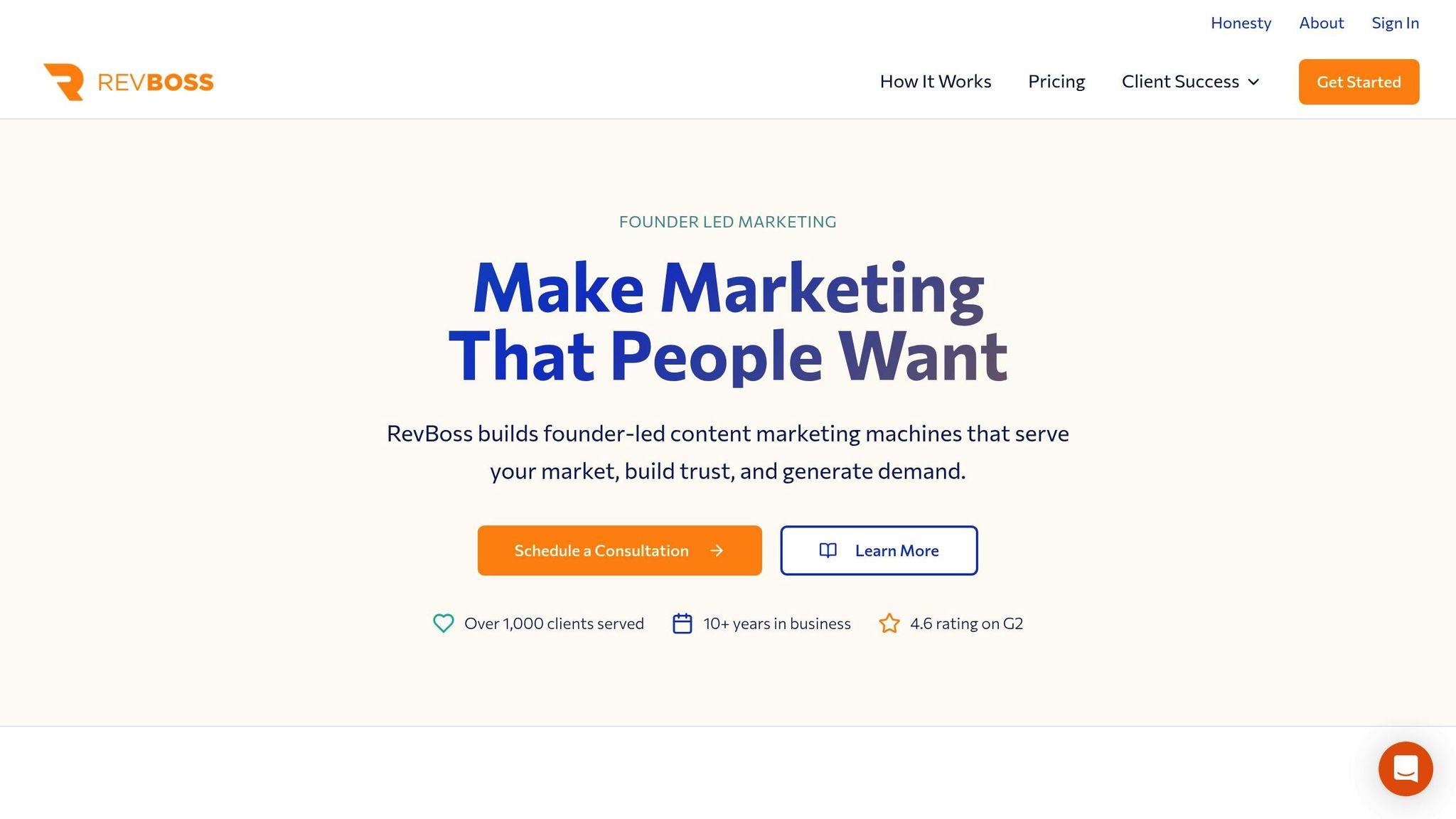
RevBoss takes the concept of founder-driven storytelling and turns it into a scalable marketing strategy. By focusing on trust-based content, they create marketing materials that prospects genuinely appreciate, avoiding intrusive tactics.
Their process begins with monthly interviews to capture a founder’s authentic voice and insights. These interviews are then transformed into various content formats - videos, written narratives, and graphics - while staying true to the founder’s personality. Using a mix of human expertise and AI tools, RevBoss ensures the content feels natural and relatable.
"The trick is to create marketing content that people are actually happy to receive. We've got the process, experience, and team to make it work. You should work with us."
A great example of this approach in action is Storyboard Media. In 2021, after a tough year, Storyboard partnered with RevBoss to attract new business. RevBoss leaned into Storyboard’s unique humor and personality to craft their messaging. Within five months, Storyboard closed their first deal from a RevBoss lead and became so busy they struggled to handle the influx of projects. The campaign delivered a 10x ROI, securing high-value contracts with billion-dollar companies.
"It validated our existence as a business by having more and more conversations. I realized we have something people want. Not only did we find more clients, but we found better clients."
RevBoss doesn’t stop at content creation. They help founders build an audience of potential buyers who are already familiar with the founder’s values and expertise. This audience development strategy lays the groundwork for genuine relationships rather than transactional interactions. Using email, LinkedIn, and paid media, RevBoss converts this engaged audience into qualified leads. Since prospects already trust the founder through their content, these conversations start on a foundation of credibility.
"RevBoss transformed my business trajectory."
RevBoss offers these programs starting at $3,000 per month, including custom content strategies, audience development, and access to their proprietary platform. This investment enables businesses to create authentic, trust-driven marketing systems that fuel long-term growth.
The benefits go far beyond immediate lead generation. Founders who consistently share their stories and expertise establish themselves as industry thought leaders. This visibility matters: 84% of C-suite executives use social media to guide purchasing decisions, and 75% of B2B buyers engage with peers on social platforms about their buying choices. By leveraging their authentic voices, founders not only create trust but also position their businesses for sustained success in the competitive B2B landscape.
Measuring Trust in B2B Messaging
Building trust is only half the equation; the other half lies in measuring its impact. Without tracking key metrics, you’re essentially navigating in the dark, unsure if your trust-building strategies are resonating or missing the mark. Let’s dive into the critical indicators that reveal whether your efforts are hitting home.
Signs of Trust in B2B Messaging
Trust in messaging doesn’t just show up in sales numbers - it’s reflected in deeper, more meaningful engagement. By focusing on the right metrics, you can gauge how well your audience connects with your brand.
Engagement rates are a strong indicator of trust. Messaging that resonates leads to higher email open rates, better click-through rates, and richer social media interactions. Gartner reports that 40% of B2B buyers use social media as part of their research process before making a decision. If your posts are sparking genuine comments, shares, and discussions, it’s a clear sign that your audience sees your brand as credible and worth engaging with.
Lead quality also improves when trust is present. Instead of attracting people who are just browsing or looking for discounts, trust-driven messaging brings in serious prospects. These leads ask insightful questions, engage in longer conversations, and come to meetings prepared to talk solutions.
Client retention is perhaps the ultimate measure of trust. Customers who stick around, refer others, and deepen their relationships with your company show that your messaging aligns with what you actually deliver. Marina Turea, Content Project Manager at Digital Authority Partners, highlights this:
"Effective B2B branding relies on trust to convert prospects into new customers and cultivate lasting relationships."
Companies like InnoGen AI take a systematic approach to tracking trust indicators. They monitor metrics such as Monthly Recurring Revenue (MRR), churn rates, and Customer Satisfaction Scores (CSAT). They also track lead-to-customer conversion rates, Customer Lifetime Value (CLV), and acquisition costs through tools like CRM platforms and analytics software.
Brand perception metrics add another layer of insight. Positive mentions in industry forums, references to your content, or requests for your opinions on key topics are all signs that your trust-building efforts are making an impact.
Comparing Sales Outreach vs. Trust-Based Messaging
The difference between traditional sales outreach and trust-based messaging becomes crystal clear when you look at the numbers. Traditional methods are losing ground, while trust-driven approaches are gaining momentum.
Traditional outreach struggles with declining effectiveness. For example, the average B2B cold email response rate has dropped to 5.1%, down from 7% the previous year. Cold calls fare even worse, with many prospects ignoring or blocking them entirely. In fact, only 2% of cold calls result in a meeting.
Here’s how trust-based messaging stacks up against traditional outreach:
| Metric | Traditional Sales Outreach | Trust-Based Messaging |
|---|---|---|
| Response Rate | Lower (5.1% for cold emails) | Higher |
| Lead Quality | Lower | Higher |
| Customer Retention | Lower | Higher |
| Focus | Product | Customer Needs |
| Relationship | Transactional | Relational |
| Measurement of Success | Conversions | Engagement, Trust |
Trust-based messaging flips the script. Instead of relying on high-volume tactics, it focuses on delivering value, building relationships, and educating the audience. Success isn’t just about immediate sales - it’s about fostering engagement, earning trust, and creating long-term loyalty.
Traditional outreach often feels impersonal and pushy, which can alienate prospects. Trust-based messaging, on the other hand, attracts people who are already inclined to listen because they’ve found value in your content and communications.
Steps for Continuous Improvement
Once you’ve identified trust indicators, the work doesn’t stop there. Continuous refinement is key to maintaining and growing trust over time. Here’s how to keep improving your trust-based messaging:
- Establish systematic feedback loops: Regularly gather input from prospects, customers, and even lost leads. Use surveys, polls, and social media to spark meaningful conversations. The goal is to make feedback collection a consistent part of your process, not a one-off activity.
- Monitor your brand presence: Keep an eye on how your brand is perceived across media channels. Set up Google Alerts for mentions of your company, key executives, or industry terms. Sentiment analysis can help you gauge whether mentions are positive, negative, or neutral.
- Track competitor activities: Study what others in your industry are doing - not to copy, but to identify gaps and opportunities for your own messaging.
- Respond promptly to feedback: Whether it’s a review or a social media comment, responding quickly shows that you value customer input. Address negative feedback with urgency, as it poses the greatest risk to trust.
- Leverage analytics tools: Use CRM platforms, marketing automation software, and social media analytics to gather data on how your messaging performs. Focus on metrics like engagement depth, conversation quality, and relationship progression - not just volume metrics.
- Train and audit regularly: Consistency is key. Role-play scenarios, review customer feedback, and train teams on ethical communication practices. These steps ensure that every interaction reinforces trust.
The numbers back up this proactive approach. 92% of business leaders say that actively building trust with customers improves their bottom line. Additionally, two-thirds of consumers rank transparency as one of the most important qualities in a company.
Ultimately, measuring trust isn’t just about collecting data - it’s about acting on it. The companies that excel are those that close the feedback loop, using what they learn to make meaningful improvements. Trust-building isn’t a one-time project; it’s an ongoing commitment.
Conclusion: Building Trust as a Long-Term Business Strategy
Trust isn’t just another business buzzword - it’s the foundation of success in today’s competitive B2B landscape. In fact, 93.7% of B2B marketers believe trust is the most important factor for brand success. And the numbers back it up: the 100 most trusted companies generate 2.5 times more value than their peers.
For founder-led businesses, trust offers both a unique advantage and a serious responsibility. Unlike larger corporations that rely heavily on brand recognition, founder-led companies have the chance to connect on a more personal level. This matters because 81% of B2B buyers won’t even consider a company unless they’ve heard of it. In this environment, trust becomes a key differentiator.
The benefits of trust go beyond just attracting new customers. Repeat customers spend 67% more and are four times easier to sell to. Plus, for B2B brands with strong reputations, decision-making time can shrink by up to 16 weeks. When 89% of customers return after a great service experience, the value of trust becomes undeniable.
As we’ve explored, trust in B2B communications is built on transparency, consistency, and personalization. Founder-led companies, in particular, can leverage these principles through clear messaging and authentic storytelling. By being upfront about what you offer, sharing measurable results, and addressing customer needs over quick wins, you lay the groundwork for lasting relationships.
Building trust isn’t about flashy logos or clever slogans - it’s about the human connection behind them. For founder-led businesses, this means leaning into your story, sharing valuable insights regularly, and engaging meaningfully with your audience. It’s about creating content that solves real problems, joining industry conversations, and forming partnerships that expand your reach.
As Vineet Gupta, founder of 2xsas, aptly said:
"Building a trusted brand isn't just a strategy; it's an investment in long-term success."
In a world where AI-driven content is becoming the norm, your brand’s authenticity and relationships set you apart. And when peer and customer recommendations are three times more persuasive than price alone, trust is not just a challenge - it’s one of the most rewarding investments you can make.
FAQs
How can businesses create authentic and trustworthy B2B messaging?
To craft genuine and reliable B2B messaging, businesses should prioritize transparency, consistency, and truly understanding their audience. Clearly explain your value proposition in a way that connects with your target market, and make sure your messaging reflects your brand's values and actions.
Earning trust also means proving your dependability. Highlight third-party endorsements like testimonials or case studies to demonstrate your expertise. Set achievable expectations with your audience and consistently deliver on your commitments to build credibility over time.
How can you tell if your B2B messaging is effectively building trust with your audience?
Building trust in B2B messaging often boils down to a few key factors. Consistency in your communication is essential - it shows reliability and helps set clear expectations. Being open and honest when sharing information and delivering on promises strengthens credibility. Pay attention to customer feedback, too. Positive responses from satisfaction surveys or glowing testimonials are strong indicators that trust is being established. A solid reputation, backed by referrals and repeat business, also reflects the strength of your relationships. By prioritizing genuine, relationship-focused communication, you can create lasting connections with your audience.
Why is founder-led storytelling so effective in building trust in B2B messaging?
In B2B messaging, storytelling from founders stands out as a powerful tool. When founders share their personal experiences, values, and vision, they bring a human touch to the business, making it more relatable and trustworthy.
This method works especially well in B2B settings, where trust plays a huge role in decision-making. Highlighting the founder’s voice and journey not only sets a company apart from competitors but also helps build deeper, more enduring relationships with clients.