Top Outreach Strategies For Founder-Led Brands

Founder-led brands have a unique edge: their personal voice and expertise. But scaling that connection? Tricky. This guide dives into actionable strategies to help founders build trust, personalize outreach, and grow without losing their touch. Key takeaways:
- Leverage tools like RevBoss to scale outreach while staying personal.
- Zero in on high-value accounts with Account-Based Marketing (ABM).
- Master LinkedIn networking for direct access to decision-makers.
- Use multichannel outreach to meet prospects where they are.
- Craft highly personalized messaging that stands out from generic pitches.
- Host webinars to deepen engagement and share expertise.
- Focus on content marketing to position yourself as an industry leader.
Each strategy balances trust, personalization, and scalability, helping founders amplify their voice and grow their reach effectively.
Best Cold Outreach Strategies for Early-Stage Startups and B2B
1. Use RevBoss for Founder-Led Content and Outreach
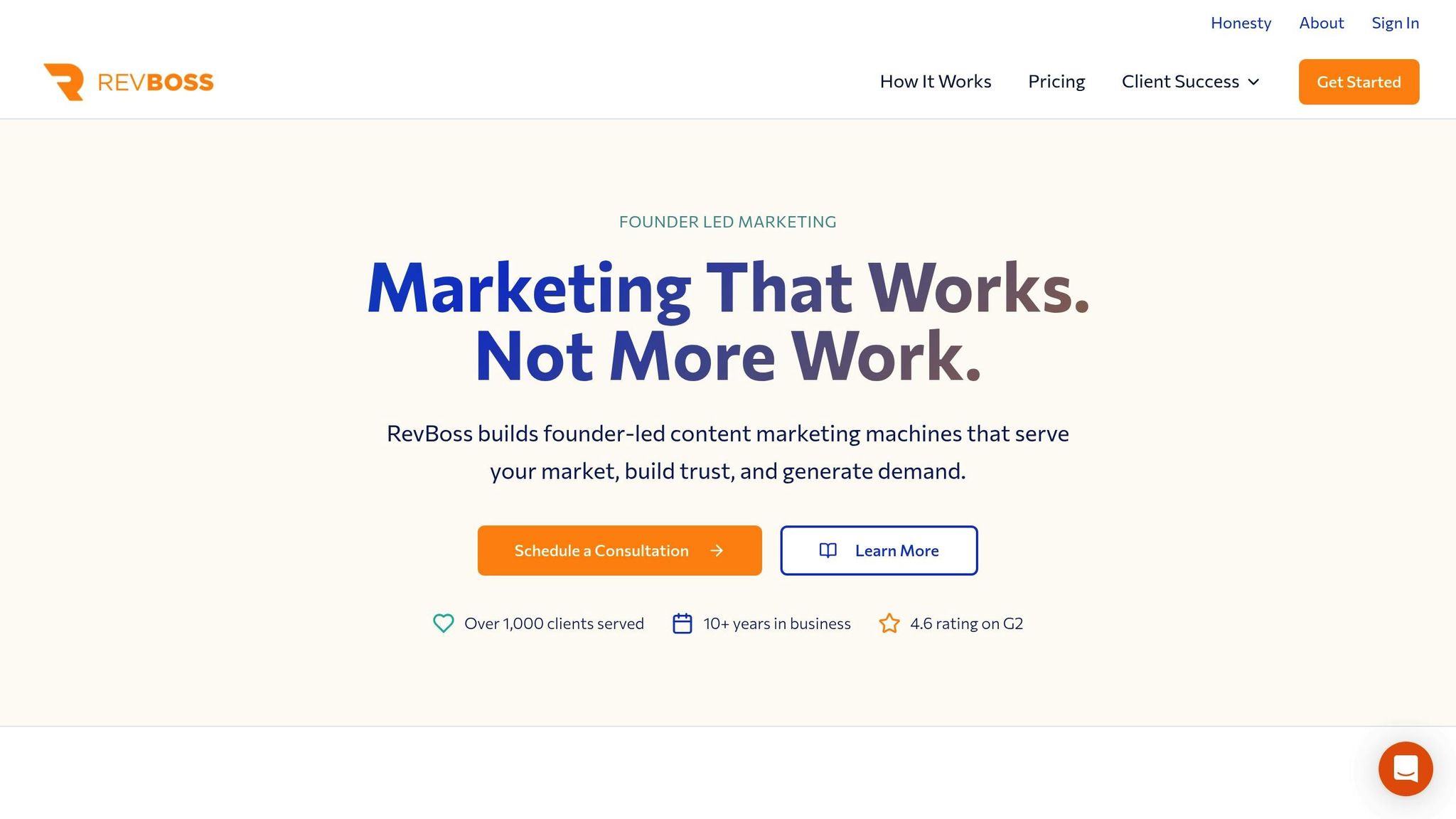
Founders juggle countless responsibilities - product development, team management, customer relationships - you name it. Adding scalable outreach to the mix? That’s a tall order. This is where RevBoss steps in, creating content marketing systems that amplify a founder’s voice while keeping things personal. It’s all about reaching more people without losing that human touch.
Focus on Trust and Credibility
RevBoss leans heavily on a founder’s personal story and expertise. In today’s AI-driven world, authenticity isn’t just a buzzword - it’s the secret sauce. Instead of bland, cookie-cutter corporate messaging, RevBoss helps founders tap into their unique voice to build trust and credibility.
"Most B2B marketing is boring, soulless, and self-centered. We partner with our clients to develop interesting, educating, and entertaining marketing content that serves their audience."
This trust-first strategy works. Take the example of a SaaS startup founder who used RevBoss’s LinkedIn-focused approach. By showcasing their expertise and sharing industry insights, they boosted their connection acceptance rates by 55%. The difference? They positioned themselves as an industry thought leader, not just another salesperson trying to make a pitch.
Personalization of Outreach Efforts
One of the biggest challenges founders face is personalizing outreach without spending endless hours crafting one-off messages. RevBoss tackles this by using ICP data and buyer personas to create tailored messaging that speaks directly to decision-makers’ needs. It’s not just about swapping out names in templates - it’s about starting meaningful conversations. By addressing industry pain points, company updates, or market trends, RevBoss users have seen email response rates climb 40% higher than traditional cold outreach methods.
Scalability for Founder-Led Teams
Founder-led teams are often strapped for time and resources, which makes scaling a challenge. RevBoss simplifies this by providing automated tools and repeatable processes for efficient outreach, no massive sales team required. From campaign management to audience development and lead activation, the platform grows with your business. It integrates LinkedIn, email, and content marketing into multi-channel workflows, letting founders keep their personal touch while reaching a wider audience.
The results speak for themselves: companies using RevBoss’s structured approach have seen 65% higher conversion rates compared to those relying on ad-hoc methods. It’s proof that having a clear plan beats winging it every time.
Alignment with B2B Audience Needs
B2B buyers are doing their homework - most complete a significant chunk of their research before ever speaking to sales. That’s why educational, trust-building content is critical. RevBoss gets this. Instead of hard-selling, the platform emphasizes creating value and building relationships. The payoff? Businesses that swapped traditional cold outreach for RevBoss’s trust-focused strategy saw 70% of inbound leads move further down the sales funnel.
And it doesn’t stop there. By integrating LinkedIn with other channels, RevBoss users have achieved a 287% higher purchase rate. Meeting buyers where they prefer to engage - while maintaining a consistent, authentic message - clearly works.
With over 1,000 clients and a strong 4.6 rating on G2, RevBoss has proven itself as a go-to solution for founder-led teams looking to scale their outreach while keeping it personal.
2. Use Account-Based Marketing (ABM) for Targeted Campaigns
Account-Based Marketing turns the traditional marketing playbook upside down. Instead of casting a wide net, ABM zeroes in on high-value businesses that align perfectly with your product or service. For founder-led brands, this approach is a natural fit. You’re not trying to appeal to everyone - you’re building meaningful relationships with the accounts that matter most. This focused strategy allows for highly personalized outreach, tapping into a founder’s deep industry knowledge and unique perspective.
Personalization of Outreach Efforts
ABM thrives on personalization, and founder-led brands are uniquely positioned to excel here. The detailed research and data collection ABM requires become much easier when a founder’s industry expertise and authentic voice come into play. ABM isn’t about generic pitches - it’s about understanding each target account’s specific challenges, goals, and decision-making process. When founders reach out with insights tailored to a prospect’s pain points, it resonates in a way that cookie-cutter marketing never could.
For founders, this process feels less like a chore and more like a chance to connect. They’ve built their solutions to address these exact challenges, giving them a natural ability to craft messaging that feels more like genuine advice than a sales pitch. This insider perspective transforms outreach into something that feels valuable and relevant.
Focus on Trust and Credibility
At its core, ABM is about relationships - building authentic connections with decision-makers and stakeholders within target accounts. Founder-led brands have a clear advantage here. When prospects interact with a founder, they’re engaging directly with the person who created the solution. This personal connection builds trust quickly and authentically. A founder’s story - their reason for starting the company - becomes a powerful tool for establishing credibility with high-value prospects.
ABM also shifts the focus from being just another vendor to becoming a trusted advisor. It’s about delivering value before asking for anything in return. Founders are particularly well-suited for this because they deeply understand both the technical aspects of their solution and the problems it solves. Instead of pushing a product, they can offer real insights and practical advice.
Alignment with B2B Audience Needs
ABM aligns perfectly with how B2B buyers make decisions. These purchases are often seen as investments, involving multiple stakeholders and lengthy evaluations. ABM’s relationship-first approach fits naturally with the way founder-led brands operate. Founders understand that their best customers are long-term partners, not just one-off buyers.
By positioning yourself as someone who truly understands a prospect’s business challenges, you can have more meaningful conversations. These discussions go beyond product features to address broader industry trends, competitive pressures, and growth opportunities - conversations that build trust and drive deeper engagement.
Scalability for Founder-Led Teams
While ABM might seem resource-intensive, it’s actually a smart choice for founder-led teams with limited resources. By focusing on a smaller number of high-value prospects, you can achieve stronger results without spreading yourself too thin. Every piece of outreach - whether it’s a custom case study, an industry-specific whitepaper, or a personalized video message - is purposeful and tailored.
ABM also plays to a founder’s natural strengths. Many founders are already skilled at networking and having strategic conversations with other business leaders. ABM simply gives them a framework to do this more systematically and at scale. With the right focus and tools, even a small team can execute ABM effectively, turning limited resources into maximum impact.
3. Build Relationships Through LinkedIn Networking
LinkedIn has become the go-to platform for B2B networking, making it a goldmine for founder-led brands. Unlike old-school sales tactics, LinkedIn offers a direct line to decision-makers, giving founders the chance to showcase their expertise and form genuine connections. It’s more than just a networking site - it’s a stage for meaningful conversations that can lead to real business opportunities. Plus, its professional vibe makes it the perfect space to engage with a B2B audience in a way that feels natural and impactful.
Focus on Trust and Credibility
As a founder, you bring instant credibility to the table on LinkedIn. Your title alone signals expertise, helping you stand out from the sea of generic messages.
Your profile is your digital handshake - it’s where you share not just your company’s story but your personal journey as an entrepreneur. This transparency makes your outreach feel more human and relatable, something corporate messaging often struggles to achieve.
Consistency is key to building trust. Regularly sharing insights, joining industry conversations, and engaging authentically with your network strengthens your reputation over time. When people see you as a reliable voice, it’s easier to connect with new prospects and deepen existing relationships.
Personalization of Outreach Efforts
LinkedIn’s treasure trove of professional data makes personalized outreach a breeze. Before you send a single message, you can dig into someone’s background, check out their recent posts, and even look for mutual connections. This prep work allows you to craft messages that feel thoughtful and relevant rather than spammy.
But personalization isn’t just about name-dropping their company or congratulating them on a new role. Go deeper - find common ground, whether it’s shared challenges, industry trends, or even a post they recently shared. Reference these specifics in your message, adding your perspective or offering insights that spark a real conversation. This approach transforms cold outreach into warm, engaging dialogue.
These tailored interactions fit seamlessly into the broader outreach strategies that founder-led brands rely on to scale their efforts.
Alignment with B2B Audience Needs
B2B decision-makers use LinkedIn differently than other social platforms. They’re there to find industry insights, connect with peers, and solve business problems. This professional mindset means your audience is already primed for business-focused conversations when they come across your content or messages.
LinkedIn also works well with the longer sales cycles typical in B2B. You can build relationships over time, staying on their radar by sharing useful content and engaging without being overbearing. This patient, steady approach mirrors how B2B buyers make decisions - through research, trust-building, and careful evaluation.
Another advantage? LinkedIn helps you engage with multiple stakeholders within the same organization. By connecting with different decision-makers, you can understand their unique concerns and tailor your approach. This multi-angle strategy is far more effective than focusing on just one contact.
Scalability for Founder-Led Teams
At first glance, LinkedIn networking might seem like a time sink, but with the right strategy, it’s incredibly efficient for founder-led teams. The secret lies in creating systems that amplify your efforts without eating up your entire day. For example, dedicate 30 minutes each morning to LinkedIn - respond to messages, comment on posts, and engage with your network.
Streamline your content creation by building a calendar around your expertise. Use insights from client conversations, industry events, or internal discussions to craft posts that add value to your audience. Repurposing these ideas keeps your content pipeline full without extra effort.
LinkedIn also offers tools like saved searches, connection notes, and follow-up reminders to help you stay organized as your network expands. These features ensure you don’t lose track of important prospects or let key relationships fall through the cracks.
Over time, consistent activity on LinkedIn pays off. As your network grows and your content gains traction, you’ll notice a shift - prospects start coming to you. That’s when you know your LinkedIn strategy is working: you’re no longer chasing opportunities; you’re attracting them.
4. Use Multichannel Outreach Strategies
Relying on a single outreach channel is like putting all your eggs in one basket - it’s risky and limits your ability to connect. Today’s B2B buyers interact with brands across multiple platforms before making decisions, so it’s crucial for founder-led companies to meet prospects where they already are. A multichannel approach blends email, social media, phone calls, direct mail, and even video messages into a well-rounded strategy. This increases your chances of reaching the right people at the right time.
Using multiple channels reinforces your message by spreading it across different touchpoints. Maybe someone skips your email but notices your LinkedIn post or responds to a personalized video. Each platform serves a unique role and caters to different communication preferences. When combined, this approach not only broadens your reach but also aligns seamlessly with principles like trust, personalization, and scalability.
Focus on Trust and Credibility
Trust isn’t built overnight, and it certainly isn’t built through a single channel. A consistent presence across platforms creates familiarity. When prospects see your name on LinkedIn, get an email from you, and then come across your content on an industry forum, it builds credibility in a way that one-off interactions can’t.
Each channel also lets you highlight different facets of your expertise. For instance, LinkedIn posts can showcase your strategic insights, emails can dive into your industry knowledge, and video messages can add a personal, human touch. Together, these elements paint a fuller picture of you as a founder and a leader in your field.
Alignment with B2B Audience Needs
B2B decision-makers don’t all communicate the same way, and their preferences often shift depending on where they are in the buying process. A multichannel strategy ensures you’re present at every stage of their journey.
Research shows that B2B buyers engage with multiple touchpoints before making a decision. By spreading your outreach across different platforms, you increase the odds of being one of those key interactions. Plus, within a single organization, different roles prefer different channels. The technical team might hang out on industry forums, while executives are more active on LinkedIn. A multichannel approach allows you to reach each stakeholder in the way they’re most comfortable, making it easier to build consensus within the organization.
Personalization of Outreach Efforts
The beauty of multichannel outreach lies in its ability to deliver personalized experiences. Insights from one platform can inform how you approach another, helping you create cohesive, targeted messaging that feels tailored to each prospect.
For example, you could record a short video addressing a specific challenge a prospect is facing, creating a moment that stands out. Use each channel for what it does best: LinkedIn for professional networking, email for detailed communication, and phone calls for real-time relationship building. When these touchpoints work together, they create a seamless and natural experience for your audience.
Scalability for Founder-Led Teams
Scaling multichannel outreach doesn’t have to mean doubling your workload - it’s about working smarter. Start by creating content you can tweak and repurpose across multiple platforms. A single industry insight could become a LinkedIn post, the topic of an email newsletter, and even talking points for phone calls.
Automation tools can help you handle the complexity without losing that personal touch. For example, you can set up email sequences triggered by LinkedIn interactions or use a CRM to track engagement across channels. These tools take care of the logistics, leaving you free to focus on high-value, personal interactions that close deals.
To streamline your efforts, develop channel-specific templates that maintain your personal voice. Whether it’s emails, LinkedIn messages, or phone scripts, having adaptable frameworks lets you quickly tailor your outreach for each prospect. Coordinate the timing of these touchpoints strategically - for example, send a LinkedIn connection request, follow up with an email a few days later, and then make a phone call. This keeps you on their radar without overwhelming them. By efficiently blending these channels, founders can extend their reach while keeping their outreach authentic and manageable.
sbb-itb-9354cf2
5. Create Highly Personalized Messaging
Let’s face it - generic outreach messages are a one-way ticket to the trash folder. Prospects can spot a template from a mile away, and they don’t hesitate to hit delete. What makes founder-led outreach stand out is the ability to craft highly personalized messages. This takes effort - research, empathy, and a clear grasp of your prospect’s business environment - but when done right, it turns cold emails into meaningful conversations.
Here’s how you can nail it by building trust, doing your homework, and using smarter frameworks.
Focus on Trust and Credibility
Relevance is the foundation of trust. When your message speaks directly to your prospect’s business, industry hurdles, or recent developments, it instantly sets you apart. Instead of thinking, “Ugh, another sales pitch,” they’ll see you as someone who actually gets it.
Do your homework: dive into their latest LinkedIn posts, scan their company’s news, and stay on top of industry trends. Reference specific details in your outreach to show you’ve put in the effort. This signals that you’re not just looking for a quick sale - you’re genuinely interested in helping them solve a problem.
Be real to build real connections. Share a short, relevant personal story that mirrors what they’re going through. This peer-to-peer approach shows you understand their challenges because you’ve been there. It’s not just about selling; it’s about connecting.
Personalization of Outreach Efforts
The secret to personalization is solid research, plain and simple.
Start by gathering the right intel: What’s their role? What’s their company up to? What pain points are likely keeping them up at night? Dig into company press releases, funding news, or recent product launches. Scroll through their LinkedIn activity to see what they’re talking about.
Then, craft messages that tie directly to these insights. For example, if you notice they’re scaling quickly, focus on how you’ve helped other companies navigate growth. If they’re entering new markets, highlight your experience with expansion challenges. Speak directly to their situation.
Match their tone and terminology. If they’re all about “customer acquisition costs,” don’t call it “marketing expenses.” Using their language creates a subtle but powerful sense of alignment.
Alignment with B2B Audience Needs
B2B buyers care about results, not bells and whistles. Your outreach should focus on the outcomes you can deliver, not just the features of your product or service. If they’re battling churn, talk about how you’ve helped others improve retention - make it about them, not you.
Time is precious for decision-makers. Keep your messages short but impactful. Lead with a sharp insight or a clear connection to their business, then quickly explain how you can help. Busy executives don’t have time for fluff, but they’ll appreciate a concise, thoughtful message.
Different stakeholders, different priorities. Tailor your approach depending on who you’re talking to. Technical teams might want to know how your solution works, while executives care about the bottom line. Adjust your message to match their focus.
Scalability for Founder-Led Teams
As a founder, your time is limited, but that doesn’t mean personalization has to fall by the wayside.
Work smarter with templates. Create templates with customizable sections for common scenarios or industries. These frameworks let you keep the personal touch while saving time.
Batch similar prospects. Group your outreach by industry, company size, or challenges. This way, you can research and craft messages in batches, making the process more efficient without sacrificing quality.
Use tech as a helper, not a crutch. Tools like CRM systems or sales intelligence platforms can provide quick insights about prospects. Use these as starting points, but always add your own analysis and perspective. The goal is to enhance your outreach, not make it robotic.
Measure and tweak. Keep an eye on what’s working. Which types of messages get responses? What research sources lead to the best conversations? Use this data to refine your approach while staying true to the authentic, founder-led style that makes your outreach stand out.
6. Host and Promote High-Value Webinars
Webinars are a fantastic way to connect directly with your audience, offering a deeper and more interactive platform for founder-led outreach. They’re like your secret weapon - giving you a full hour of undivided attention from people who are genuinely interested in what you have to say. Unlike cold emails or quick social media posts, webinars let you share your expertise, solve industry challenges in real time, and build trust that feels genuine and scalable. The trick? Make sure your content actually helps your audience instead of coming across as a thinly veiled sales pitch.
Webinars are an extension of your story, allowing you to reach more people without losing that personal, authentic touch.
Focus on Trust and Credibility
Your expertise is your superpower. As a founder, you bring unique insights and firsthand stories that no one else can replicate. Use webinars to highlight your deep knowledge of industry challenges and how you’ve tackled them. Share concise, real-world case studies to drive your points home.
Be honest about what you don’t know. Admitting gaps in your knowledge can be surprisingly powerful. It shows authenticity and makes you relatable to other leaders who face similar uncertainties.
Help first, sell later. The best webinars deliver actionable tips and strategies that attendees can use right away, even if they don’t become customers. This approach positions you as a trusted expert, not just another salesperson.
Align with B2B Audience Needs
B2B attendees are looking for solutions. Your content should tackle the real problems your audience faces daily. Focus on practical tools, frameworks, or strategies they can implement as soon as the session ends.
Data matters to decision-makers. Use concrete examples and measurable results to back up your recommendations. Whether it’s metrics from your own business or client success stories, solid proof goes a long way in building credibility.
Make it interactive. Features like polls, live Q&A sessions, and on-the-spot problem-solving keep your audience engaged and give them tailored value in real time.
Make It Scalable for Founder-Led Teams
Record everything. Turn your live webinars into evergreen content that keeps working for you. Chop recordings into smaller clips for social media, blog posts, or email campaigns to get even more mileage out of your efforts.
Partner up. Co-hosting webinars with non-competing businesses in related industries can double your audience without doubling your workload. Plus, it’s a great way to share the prep work.
Think long-term. Instead of one-off events, create a webinar series with a recurring theme. This builds anticipation, encourages repeat attendance, and provides a consistent framework for your content.
Automate your promotions. Set up email sequences, social media posts, and LinkedIn outreach templates to streamline your promotional efforts. Customizing these templates for each webinar ensures your messaging stays fresh without requiring a full rebuild every time.
By setting up these scalable systems, you can fine-tune your promotions to resonate with individual prospects while keeping the process efficient.
Personalize Your Outreach
Segment your invites. Tailor your webinar promotions based on audience interests. For example, a CFO might care about financial outcomes, while a marketing director is more interested in campaign ROI - even if they’re attending the same session.
Follow up with a personal touch. After the webinar, send customized follow-ups referencing specific questions or challenges attendees mentioned. This turns a group event into meaningful one-on-one conversations.
Use registration data wisely. Look at attendee questions and company details before the webinar to tweak your examples and case studies. This makes your presentation feel more relevant to the people you’re addressing.
Offer different entry points. Create webinars for different stages of the buyer’s journey. Early-stage prospects might need beginner-friendly content, while those closer to a decision will appreciate more advanced insights. Tailoring your content this way ensures you’re meeting prospects where they are.
7. Build Trust through Direct Content Marketing
Direct content marketing is where founder-led brands truly stand out. Unlike traditional approaches that can feel cold and corporate, this strategy thrives on your personal experiences and genuine voice. It's not about churning out generic posts; it's about crafting content that positions you as a trusted guide in your industry. When executed well, direct content marketing doesn't just inform - it draws prospects to you, eliminating the need for constant chasing.
When your content consistently provides value and demonstrates expertise, your audience begins to see you as the go-to authority - not just another vendor. Let’s dive into how trust, audience alignment, personalization, and scalability make direct content marketing a game-changer for outreach.
Build Trust and Credibility
Your personal story is one of your greatest assets. Sharing your challenges and the lessons you’ve learned creates an instant connection with other founders and decision-makers who face similar struggles. It’s not just relatable - it’s real.
Support your insights with tangible examples. Don’t just claim that "a strategy works"; show how it works with clear, specific examples that back up your point.
Tackle the hard stuff head-on. Address the challenges your prospects are wrestling with, whether it’s customer churn in SaaS or supply chain headaches in manufacturing. Showing that you truly understand their pain points builds trust.
Consistency matters. Regularly publishing valuable content signals your commitment to helping your audience and proves you’re here for the long haul.
Align with What B2B Buyers Need
B2B buyers aren’t looking for a sales pitch - they want education. Your content should help them make smarter decisions, stay ahead of industry trends, and solve real operational problems. Create resources they’ll want to bookmark, share with their teams, or refer back to during key discussions.
Speak their language. Whether you’re addressing a CFO focused on ROI or a VP of Sales prioritizing pipeline growth, tailor your content to their specific concerns. Using the right terminology and frameworks shows you understand their world.
Offer actionable tools. Step-by-step guides, templates, or checklists empower your audience to put your insights into action immediately. This practical approach makes your content more impactful.
Remember, B2B buying decisions often involve multiple stakeholders. Create content that resonates with everyone - from end users to top-level executives. This inclusive approach encourages internal sharing and helps build consensus around your solution, reinforcing your founder-led perspective.
Personalize Your Outreach
Divide and conquer. Segment your content by industry or role to make it more relevant. For instance, a piece on compliance challenges will hit home for healthcare professionals but might not resonate with e-commerce leaders. Tailoring your content ensures it feels personal.
Show you get it. Reference specific industry challenges or situations to prove you’re not just offering cookie-cutter advice.
Use your content as a bridge. After publishing something valuable, reach out to prospects who might benefit from it. Sharing insights that directly address their challenges positions you as a helpful resource - not just another salesperson.
If you notice recurring issues among your audience, consider creating a multi-part content series to tackle them from multiple angles. Not only does this provide in-depth value, but it also gives you multiple opportunities to engage with your audience.
Scale Without Losing Your Voice
Work smarter, not harder. Repurpose long-form articles into LinkedIn posts, newsletters, or social media snippets. This way, you get maximum mileage from your content while keeping your messaging consistent across platforms.
Build a system. Delegate tasks like research, editing, and distribution to your team. While your voice remains central, having a workflow in place lets you focus on the creative, high-level work that only you can do.
Stretch your content’s impact. Use one piece as the foundation for email campaigns, social media outreach, or even sales conversations. A unified message saves time and effort while keeping your strategy cohesive.
Let the data guide you. Keep track of what resonates most with your audience and double down on those topics. A data-driven approach allows you to refine your strategy and scale what’s working.
RevBoss specializes in helping founder-led brands build scalable content marketing systems that amplify their voice. Their approach ensures you can create authentic, founder-driven strategies that build trust and generate demand - all without turning content creation into a full-time job.
Conclusion
Founder-led outreach thrives on a mix of trust, credibility, and personalization, all wrapped into a strategy that feels genuine and uniquely yours. The seven strategies outlined here offer a solid framework to amplify your voice and showcase your expertise. Whether you're diving into RevBoss's founder-first approach, crafting targeted ABM campaigns, or building connections through LinkedIn, the goal is to show up as the knowledgeable and trustworthy leader your prospects need - not just another corporate voice.
Engaging across multiple channels consistently turns helpful insights into lasting trust. When you repeatedly address specific challenges, prospects start to see you as a go-to resource rather than just another vendor.
Personalization works best when it balances automation with a human touch. The trick is to streamline your efforts without losing that sense of genuine connection. Use each channel to highlight your expertise while keeping things scalable.
Your approach should also reflect the unique demands of your market. For instance, a SaaS founder targeting enterprise clients will handle ABM differently than a manufacturing consultant focused on mid-market companies. Your industry know-how, audience, and business model should shape how you apply these strategies.
Start with what plays to your strengths. If you’re comfortable on camera, webinars might be your sweet spot. If writing is your thing, lean into content marketing and LinkedIn networking. Once you’ve nailed a few key strategies, you can gradually layer in others to build a more rounded outreach plan.
Above all, consistency beats perfection. It’s far better to execute three strategies well over six months than to dabble in all seven without focus. Prospects need to see you showing up regularly with insights that matter before they’ll trust you with their business.
Leverage what makes you unique as a founder. By building authentic relationships and staying consistent, you can drive growth in ways that larger organizations often can’t.
FAQs
What are the best ways for founder-led brands to balance personalization and scalability in outreach?
Founder-led brands can strike a balance between personalization and scalability by breaking their audience into smaller, focused groups based on common interests, values, or behaviors. This way, messaging can feel more tailored without stretching resources too thin.
Tools like CRM systems and automation platforms are game-changers here. They simplify outreach while still keeping that personal touch intact. On top of that, having well-defined standard operating procedures (SOPs) ensures the quality of communication stays consistent, even as efforts grow. The focus should always be on meaningful, genuine interactions rather than falling into the trap of generic mass messaging.
By tapping into AI and data insights, brands can deliver experiences that feel custom-made, even as their audience grows. It’s about making every interaction feel personal and relevant, no matter the scale.
What makes Account-Based Marketing (ABM) a great strategy for founder-led brands, and how is it different from traditional marketing?
Account-Based Marketing (ABM) works wonders for founder-led brands because it zeroes in on creating personalized, meaningful connections with a select group of high-value accounts. This approach resonates well with the strengths of founder-led businesses, where trust and authenticity often take center stage. By customizing content and outreach for specific accounts, ABM helps build stronger relationships, boosts conversion rates, and speeds up deal-making.
What sets ABM apart from traditional marketing is its laser-focused strategy. While traditional methods aim to cast a wide net and gather as many leads as possible, ABM takes a more deliberate path. It brings sales and marketing teams together to engage a smaller, highly targeted audience. This "quality over quantity" mindset makes it a perfect fit for businesses that thrive on relationship-driven growth rather than quick, transactional wins.
How can founder-led brands use LinkedIn to strengthen networking and outreach, and what are the best ways to engage decision-makers effectively?
Founders can make the most of LinkedIn by actively connecting with their audience and sharing meaningful, relatable content. Dedicate at least 20 minutes daily to engage with posts, leave thoughtful comments, and post updates that demonstrate your expertise. This consistent activity not only builds trust but also increases your visibility on the platform.
When reaching out to decision-makers, focus on crafting personalized messages that address their unique challenges or goals. Start genuine conversations by sharing industry-specific insights and offering helpful perspectives - without coming across as salesy. By doing this, founders can establish themselves as credible voices in their field, forming connections that pave the way for business growth.