No Marketing Team? No Problem!

If you’re a founder juggling everything from product development to customer service, doing your own marketing might sound overwhelming - but it’s actually a huge advantage. Here’s why:
- You know your audience best. Your passion and deep understanding of your customers let you create messages that resonate.
- You can move fast. No corporate red tape means you can jump on trends and publish content quickly.
- Every dollar is under your control. You decide where to spend and what tools to use.
- People connect with people. Sharing your journey builds trust and loyalty that polished campaigns can’t replicate.
With the right tools and strategies, you can create impactful campaigns without a big team. From building your personal brand to leveraging AI and automation, this guide shows you how to market like a pro while keeping it personal.
Founder Led Marketing 101 - Content Creation for Business Owners
Building Your Personal Brand as a Founder
When you're running the marketing show solo, your personal brand can be your not-so-secret weapon. Unlike big corporations, you have something they can't replicate: a real story and an authentic voice. Building your personal brand is all about forming genuine connections that can turn strangers into loyal customers.
The Power of Being Genuine
Forget about trying to appear perfect. People connect with authenticity, not polish. Sharing the messy moments - those late nights, the small wins, and even the setbacks - makes you relatable. When you let people in on your journey, they see a bit of themselves in your struggles and root for your success.
Your story is your superpower. Maybe you started your business because you were fed up with flawed solutions, or perhaps you stumbled upon a market gap through personal experience. These narratives set you apart in ways no corporate ad campaign ever could. Explaining your "why" - the reasons behind your decisions, the pivots, even the rejections - builds trust. It shows people what you stand for and the thought process behind your choices.
And when you mess up (because you will), own it. Talk about what went wrong and what you learned from it. This kind of vulnerability doesn’t make you look weak - it makes you human. And people prefer doing business with humans, not faceless organizations.
Establishing Your Expertise
Positioning yourself as an expert doesn’t mean you need to have all the answers. You just need to know more than your audience about the problems you're solving.
Start with content that adds value. Share LinkedIn posts about trends in your industry, send out a weekly newsletter with lessons you’ve learned, or create short videos explaining tricky concepts. Tailor your content to the questions your audience asks most often. For example, if people frequently ask about project timelines, write about realistic planning. If pricing models in your industry seem confusing, break them down and explain the pros and cons of each.
Don’t just broadcast - engage. Join conversations in your industry. Comment thoughtfully on other leaders’ posts, participate in LinkedIn groups, and ask smart questions during virtual events. You don’t need to be the loudest voice in the room; you just need to be the most helpful.
Document your growth. Share key takeaways from conferences, or discuss how you’re applying ideas from an insightful book to your business. This positions you as someone who’s always learning and improving - exactly the kind of leader people want to follow.
Consistency is Key
Your personal brand has to show up consistently wherever your audience hangs out. This doesn’t mean copy-pasting the same content everywhere, but your voice, perspective, and message should feel cohesive across platforms.
Figure out your unique voice and lean into it. Are you the straight-shooting founder who calls out industry nonsense? The data-driven leader who always backs opinions with facts? The positive entrepreneur who finds opportunities in every challenge? Whatever your style, amplify it across your content.
Stick to a realistic content schedule. It’s better to post high-quality content less often than to flood your channels inconsistently. Your audience needs to trust that you’ll show up for them regularly.
Keep your messaging aligned. Your LinkedIn profile should echo the expertise you showcase in your newsletter. Your Twitter bio should match the value proposition on your website. When someone finds you on one platform and checks you out elsewhere, they should feel like they’re getting to know the same person - not someone entirely different.
Pay attention to what clicks with your audience. If people engage more with posts about customer success stories than technical breakdowns, lean into storytelling. If behind-the-scenes content gets more traction, share more of your daily grind. Let your audience's interests shape your strategy.
Building a personal brand takes time - it’s a marathon, not a sprint. The founders who make the biggest waves are the ones who show up consistently, month after month, year after year. Every post, every comment, every interaction builds your credibility and expands your reach. Over time, a strong personal brand not only earns trust but also becomes a powerful driver of your marketing efforts. Next, we’ll explore how technology can amplify your authentic brand story and help streamline your marketing.
Using AI and Automation to Simplify Marketing
After establishing your personal brand and authentic voice, technology steps in as your ultimate ally. AI tools and automation platforms can take over repetitive marketing tasks, freeing up your time to focus on strategy and connecting with your audience. The trick? Choosing tools that align with your goals.
Let’s break down how AI can supercharge your content creation efforts.
AI-Driven Content Creation
Gone are the days when creating consistent content meant hiring a team of writers, editors, and designers. Thanks to AI tools, you can now produce content across various formats without needing specialized skills.
- Blog posts and long-form content: AI tools like ChatGPT, Claude, or Jasper can help you outline, expand, and refine your ideas. They can even generate attention-grabbing headlines. By providing prompts based on your audience’s challenges and your unique perspective, you can create engaging articles with ease.
- Social media content: AI makes repurposing content a breeze. For instance, you can take a blog post or case study and use AI to adapt it for different platforms, tailoring it to suit each audience while staying true to your voice.
- Email campaigns: AI can transform your email marketing. Whether you’re crafting welcome sequences, newsletters, or follow-ups, it personalizes content for different audience segments and optimizes subject lines - all while keeping your tone intact.
Think of AI as your creative partner, not a replacement. You bring the strategy and insights, and AI handles the heavy lifting like formatting, expanding ideas, and optimizing content. This balance lets you retain the personal touch that makes your marketing authentic while boosting your output.
Streamlining Workflows with Automation
Marketing automation isn’t just for big corporations anymore. Today’s platforms make it easy for even solo entrepreneurs to set up smart workflows that nurture leads, engage audiences, and track performance - all without constant manual effort.
- Email marketing automation: Platforms like ConvertKit, Mailchimp, or ActiveCampaign enable you to create sequences that automatically send welcome emails, follow-ups, or re-engagement messages. Once set up, these workflows work behind the scenes to keep your leads engaged.
- Social media scheduling: Tools like Buffer, Hootsuite, or Later allow you to schedule posts across platforms, saving you from the grind of daily posting. You can batch-create content in one sitting and let automation handle the rest, ensuring your audience stays connected even when you’re busy.
- Lead scoring and management: Tools like HubSpot or Pipedrive help you prioritize prospects by assigning scores based on their interactions - like website visits or email opens. When someone hits a certain score, the system can trigger personalized follow-ups or flag them for immediate attention.
- Performance tracking and reporting: Platforms like Google Analytics, paired with automation tools like Zapier, can generate reports automatically. These reports highlight what’s driving traffic, which campaigns are converting, and where your audience engages most. This data helps you refine your strategy without the hassle of manual tracking.
The goal isn’t to automate everything - it’s to offload repetitive tasks so you can focus on the strategic and relationship-driven aspects of your business. Start small with one or two workflows, get them running smoothly, and expand as your needs grow.
How RevBoss Can Help
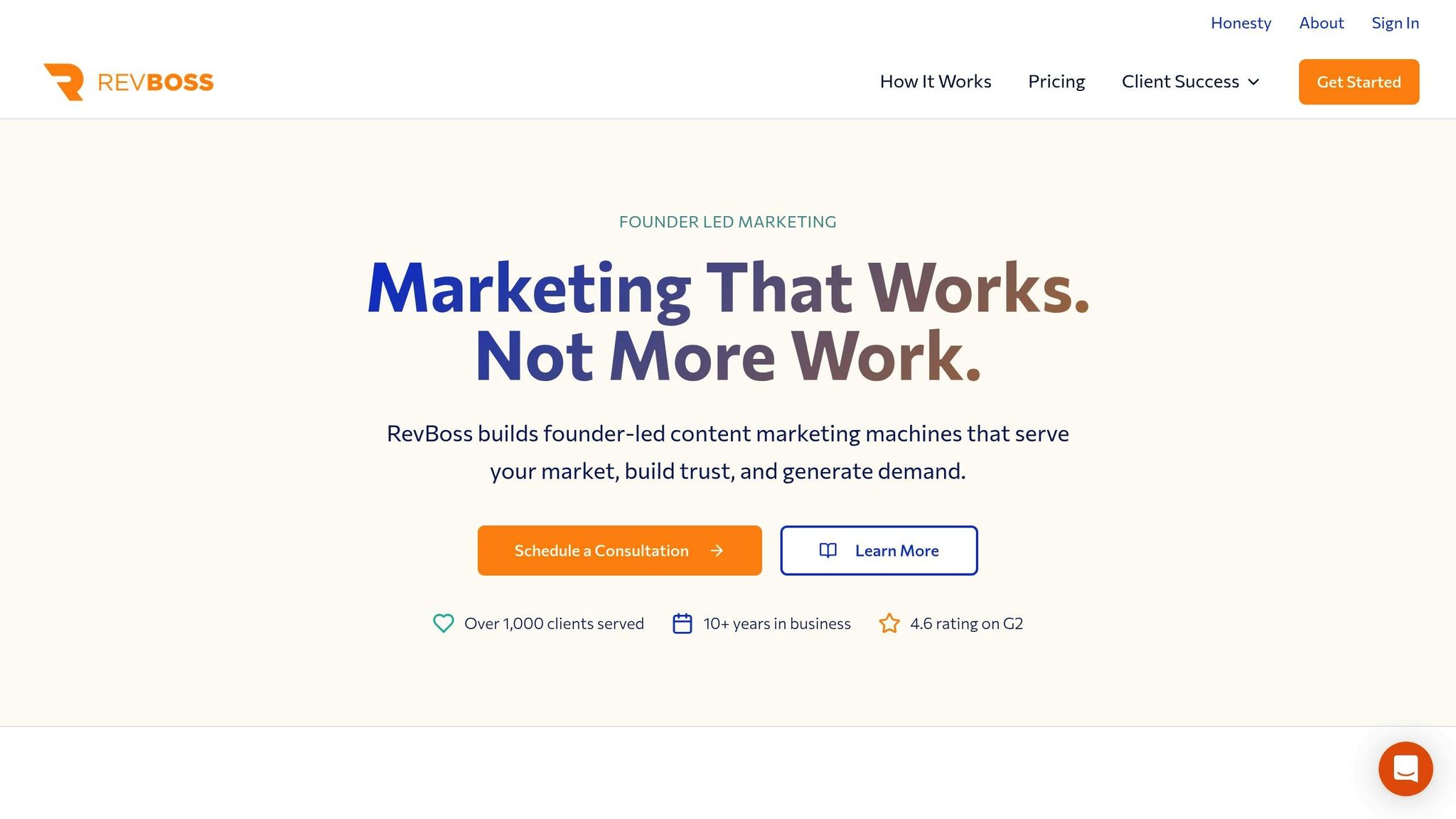
While AI and automation tools provide a strong foundation, sometimes you need expert guidance to tie everything together. That’s where RevBoss comes in, offering tailored strategies to maximize your marketing efforts.
- Custom content strategies: RevBoss helps you create content calendars that align with your business goals and audience needs. Instead of guessing what to post, every piece of content serves a clear purpose within your marketing funnel.
- LinkedIn audience growth campaigns: By combining personal branding principles with systematic workflows, RevBoss helps you grow your LinkedIn presence. They manage the technical aspects while ensuring your authentic voice remains front and center, building genuine connections rather than just racking up followers.
- Activation campaigns: Turning your audience into customers requires more than just great content. RevBoss designs campaigns that move people from being followers to prospects to paying clients, using a mix of outreach, personalized content, and strategic offers.
- Integrated workflows: RevBoss connects your LinkedIn, email marketing, and sales processes into one seamless system. For example, someone engaging with your LinkedIn content might receive a personalized connection request, enter a tailored email sequence, and then move into a sales funnel - all automatically but with a personal touch.
RevBoss offers these services starting at $1,500 per month, providing everything from content creation to lead activation. It’s like having a full marketing team without the overhead of hiring employees.
Whether you choose to build your marketing systems independently or partner with a service like RevBoss, the key is to scale your expertise and voice while keeping interactions meaningful. Your audience should never feel the technology behind the scenes - just the value and authenticity of your brand.
sbb-itb-9354cf2
Creating Campaigns That Show Your Personality
Campaigns that truly stick with your audience are the ones that feel personal and real. Instead of coming across as cold or cookie-cutter, they spark genuine connections by reflecting who you are.
The trick is to strike a balance between showcasing your expertise and letting your personality shine. You don’t need to spill every detail about your life, but letting your unique voice and perspective come through can make all the difference. It’s about being relatable while still delivering value.
Content That Connects
One of the best ways to let your personality shine is through behind-the-scenes newsletters. These updates can give your audience a peek into your world - whether it’s lessons you’ve learned, decisions you’ve made, or the small details of your daily grind. This kind of transparency builds a sense of intimacy and trust.
Even the most routine business activities can be turned into engaging content. For instance:
- Turn your weekly planning into a discussion about your strategic thinking.
- Share customer interactions as case studies that highlight problem-solving.
- Talk about reviewing financial reports to show the realities of running a business.
Video content is another great way to connect because it naturally puts your personality front and center. Whether you’re explaining an industry concept, giving a quick tour of your workspace, or sharing your take on current events, video makes it easier for your audience to see the real you.
Thought leadership posts work best when you offer your own opinions, predictions, or experiences. Don’t be afraid to take a stand on controversial topics or share a fresh perspective. People follow you because they want your insights, not a rehash of what everyone else is saying.
Interactive formats like polls, Q&A sessions, and live discussions are gold for connection. They allow for real-time conversations where your personality naturally shines through. Plus, these formats show your ability to think on your feet and engage with different viewpoints, which builds trust.
Once you’ve nailed down the type of content you want to create, the next step is to structure it in a way that makes it as impactful as possible.
Storytelling Frameworks for Campaigns
Storytelling isn’t just for bedtime - it’s a powerful tool for marketing. Here are a few frameworks to help your personality come through while keeping your audience hooked:
- Problem-Journey-Solution: Start by describing a problem, walk your audience through your journey to solve it, and then share the outcome. This approach makes you relatable by showing that you’ve faced real challenges. For instance, instead of just promoting a new feature, tell the story behind it. Share the customer feedback that sparked the idea, the hurdles your team had to overcome, and the moment you knew it was working. It’s storytelling that makes your audience feel like they’re part of your journey.
- Contrast Framework: Use this to highlight how your perspective stands out. Structure your message around ideas like, “Most people think X, but I’ve learned Y,” or, “The industry says A, but my experience shows B.” This not only showcases your personality but also positions you as someone who thinks differently.
- Day-in-the-life storytelling: Turn the ordinary into something engaging. Share how you approach decisions, navigate challenges, or interact with your team. Instead of just telling your audience who you are, this framework lets you show them.
- Failure-to-Insight Framework: Everyone loves a good comeback story. Share a specific failure, how it made you feel, the process of analyzing what went wrong, and the lessons you took away from it. Being open about your missteps creates a deeper connection than success stories alone ever could.
- Future-focused storytelling: Share your vision for what’s ahead - whether it’s trends in your industry, evolving customer needs, or where you see your business going. Frame it around phrases like, “Here’s what I see coming,” or, “This is where I think we’re headed.” Your predictions not only highlight your expertise but also give your audience a sense of what drives you.
These storytelling frameworks give you a solid structure while leaving plenty of room for your authentic voice to take center stage. They’re a great foundation for creating campaigns that not only grab attention but also build meaningful connections.
Simple Lead Generation Methods for Founders
With AI and automation making content and outreach more efficient, lead generation doesn’t have to be complicated. By focusing on high-impact actions and leveraging your deep knowledge of your business, you can keep things simple and effective. Your insight and personal touch are what set you apart.
Outbound Email Campaigns
Email outreach is still one of the most effective ways to generate leads - especially when it feels personal. The trick? Make it about them, not you.
Start by researching your prospects. Check out their LinkedIn activity, recent company news, or industry updates. This small investment in research helps you tailor messages that truly resonate.
Keep your emails short and friendly - ideally under 100 words. Introduce yourself, mention something specific about their business, and include a clear call-to-action, like asking for a quick 15-minute chat.
Consistency is key. Many deals take multiple follow-ups, so create a sequence of 4–5 emails spaced about a week apart. Each follow-up should offer something of value, like an insightful article or a comment on a relevant industry trend.
Track your outreach efforts with a simple spreadsheet. Monitor subject lines, response rates, and the best times to reach out. This helps you refine your approach over time.
LinkedIn Outreach
LinkedIn gives you direct access to decision-makers in a professional context, making it a goldmine for starting conversations.
First, make sure your profile is working for you. Highlight your expertise and the value you bring, not just your job title. Instead of a generic headline, craft one that speaks directly to the benefits you deliver.
When connecting, include a personalized note. Reference something specific from their profile - like a recent post or shared interest - and build rapport by engaging with their content thoughtfully. Once you’ve established a connection, it’s easier to transition into meaningful conversations about how you can help.
Messaging on LinkedIn should be strategic. After building rapport, your messages can delve into how you add value, but avoid turning the conversation into a hard sales pitch right away. Genuine connections go further.
Posting regularly on LinkedIn can also position you as an industry expert. Share insights, comment on trends, and engage with your network to naturally attract potential leads.
RevBoss Workflows for Lead Generation
For founders juggling a million tasks, tools like RevBoss can take some of the load off. RevBoss is a sales prospecting software and services platform that automates repetitive outreach tasks while keeping your interactions personal.
This tool helps you manage your outreach efficiently without losing the human touch. By automating routine tasks, you can focus on building authentic relationships while ensuring no leads fall through the cracks.
When you combine personalized email campaigns, strategic LinkedIn outreach, and the efficiency of tools like RevBoss, you create a well-rounded lead generation strategy. Start small - pick one method to focus on, refine your approach, and add more as you grow.
Conclusion: Founder-Led Marketing for Long-Term Growth
You don’t need a full-fledged marketing team to make an impact. In fact, running marketing yourself can be a game-changer. As the founder, you bring something no one else can: genuine passion for your business and an intimate understanding of your customers’ challenges.
The approaches we’ve covered - like building your personal brand and using automation - are designed to fuel steady growth. These methods work because they lean into what founders excel at. Developing your personal brand allows you to connect with people on a human level. Meanwhile, automation tools take care of repetitive tasks, giving you the bandwidth to focus on strategy and meaningful relationships. By injecting personality into your campaigns, you’ll stand out in markets where most B2B content feels bland and robotic.
When potential customers see you, the founder, actively engaging - sharing insights, responding to comments, and leading discussions - it sends a clear message: you’re committed and authentic.
The trick is to keep it simple and build gradually. Pick one area to focus on, like LinkedIn posts, email outreach, or personal storytelling, and work toward consistent results before branching out. Tools like RevBoss can help you scale your efforts. Starting at $1,500 per month, their programs turn your expertise into a structured marketing system that grows alongside your business.
Plenty of thriving companies owe their success to founder-led marketing. The personal connections you create now will lay the groundwork for lasting customer relationships. Remember, your marketing doesn’t have to be flawless - it just needs to be real and consistent.
FAQs
How can a founder build a personal brand without a marketing team?
Building a personal brand without a marketing team might sound daunting, but it really comes down to being real and staying consistent. Start by putting your story out there - share your values, experiences, and the lessons you’ve picked up along the way. Post regularly on platforms where your audience hangs out, whether that’s LinkedIn, TikTok, or somewhere else. The key? Keep your voice genuine and let your personality shine through - it’s what sets you apart.
To show you're the real deal, create a polished bio that highlights your expertise. Then, back it up with content that showcases your knowledge - this could be posts, quick videos, or even simple graphics. Don’t shy away from using tools like AI to help with content creation or scheduling. These can make it easier to stay consistent without eating up all your time. By focusing on these steps, you can build strong connections with your audience and grow your brand, even if you’re working solo.
How can solo entrepreneurs use AI and automation to handle marketing effectively?
Solo entrepreneurs have a lot on their plate, but AI and automation can make marketing tasks far less overwhelming. With AI-powered content tools, crafting blog posts, email campaigns, and social media updates becomes a breeze - fast and effective without sacrificing quality. Need to keep your audience engaged? Email automation platforms let you send personalized messages effortlessly, saving time while still keeping that human touch.
Want to take things up a notch? AI can handle more complex tasks like improving your SEO game, managing leads, and even analyzing customer behavior. These tools free you up to focus on scaling your business without worrying about the nitty-gritty of marketing logistics, all while keeping your strategies sharp and impactful - even if you're flying solo.
How can storytelling help small businesses create stronger connections with their customers?
Storytelling offers small businesses a unique way to form meaningful connections with their customers. By sharing the heart of your brand - your purpose and passion - you create a bridge of trust and emotional connection. Stories breathe life into your business, making it relatable and unforgettable.
Frameworks like highlighting customer struggles, celebrating their wins, or sharing your brand's journey can make your message clearer and more engaging. These approaches not only grab attention but also build genuine relationships that inspire loyalty and keep customers coming back.